



கம்பராமாயணம் 4665 · கிட்கிந்தா 13.54
பாடல் · The poem
Tap a word to see its gloss in the commentary and where else it occurs.
பொருள் · Meaning in Tamil
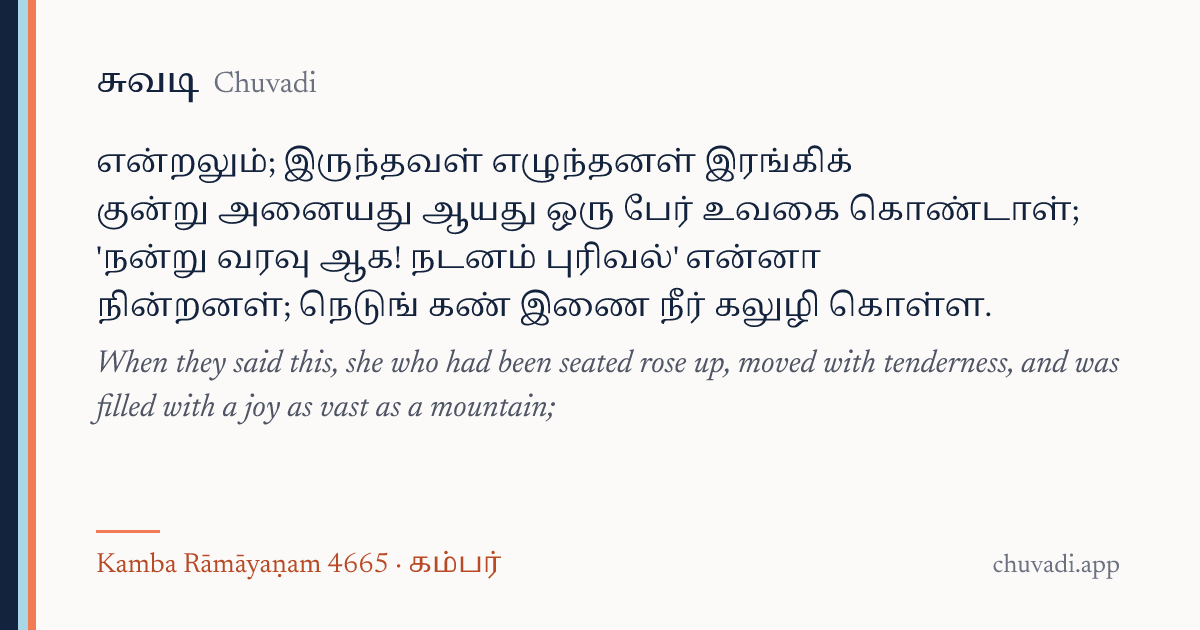
என்றலும் - என்று வானரர் கூறியவுடனே; இருந்தவள் - வீற்றிருந்தவளாகிய அந்தச் சுயம்பிரபை, எழுந்தனள் - எழுந்துநின்று; இரங்கி - (அந்த இராமதூதரிடம்) அன்பு கொண்டு; குன்று அனையது ஆயது - மலையையொத்ததாகிய; ஒரு பேர் உவகை கொண்டாள் - ஒப்பற்ற பெரு மகிழ்ச்சியையடைந்தாள்; வரவு நன்று ஆக - (வானரர்களைப் பார்த்து) உங்கள் வரவு நல்வரவு ஆகுக; நடனம் புரிவல் - ஆனந்தக் கூத்தாடுவேன்; என்னா - என்று சொல்லி; நெடுங்கண் இணை - (தன்) நீண்ட இரு கண்களிலிருந்தும்; நீர்கலுழி கொள்ள - ஆனந்தக் கண்ணீர் வெள்ளமாகப் பெருக; நின்றனள் - நின்றாள்.
இந்த வானரவீரர்களை இராமதூதர் என்று அறிந்தவுடன் சுயம்பிரபை தனது சாபம் நீங்குங்காலம் நெருங்கியதென்ற காரணத்தால் அவர்கள்மீது அன்பு பாராட்டி, வரவு கேட்டறிந்து கண்களில் ஆனந்தக் கண்ணீர் சொரிய மகிழ்ச்சியால் நடனம் செய்யலானாள் என்பது.
மகிழ்ச்சி மிகுதிக்குக் குன்று உவமை; உருவத்திற்குக் கூறப்படும் உவமை இங்கு எல்லையற்ற மகிழ்ச்சியான உணர்ச்சிக்காயிற்று.
ஆங்கிலம் · English translationAI
Translation
- When they said this, she who had been seated rose up, moved with tenderness,
- and was filled with a joy as vast as a mountain;
- 'Welcome be your coming! I will dance for joy,' she said,
- and stood there as a flood of tears poured from her two long eyes.
What the poem says
Hearing Irāmaṉ's name, Cuyampirapai's anger turns to overwhelming joy. She knows that the arrival of Irāmaṉ's messengers means her curse is about to end.
She welcomes them, weeping with happiness and ready to dance. Her joy is said to be as large as a mountain, a likeness normally used for size, here used for a feeling.