



கம்பராமாயணம் 4685 · கிட்கிந்தா 14.1
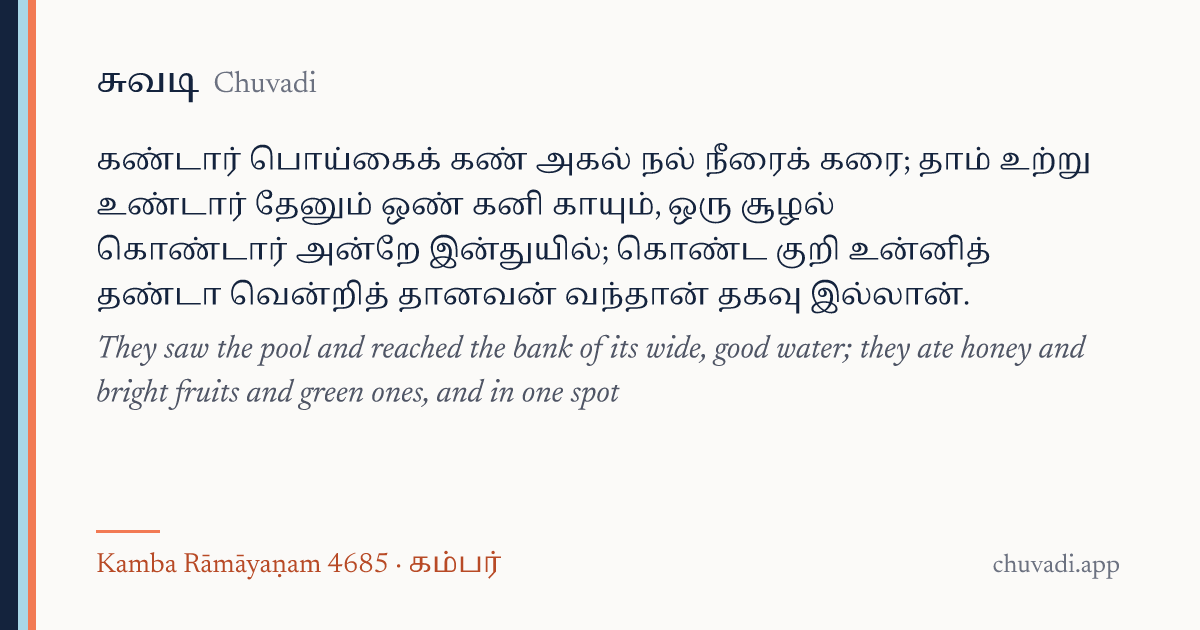
பாடல் · The poem
Tap a word to see its gloss in the commentary and where else it occurs.
பாட வேறுபாடு · Project Madurai reads
பொருள் · Meaning in Tamil
கண்டார் - (அப் பொய்கையைக்) கண்ட வானரவீரர்கள்; பொய்கைக் கண் - அந்தப் பொய்கையிலுள்ள; அகல்நீர்க் கரைதாம் உற்று - நீர்வளமுள்ள அகன்ற கரையையடைந்து; தேனும் ஒண்கனி காயும் உண்டார் - தேனையும் நல்ல பழங்களையும் காய்களையும் தின்றார்கள்; ஒரு சூழல் - அப் பொய்கையின் ஒரு பக்கத்தில்; இன்துயில் கொண்டார் - இனிய உறக்கத்தை மேற்கொண்டார்கள்; கொண்ட குறி உன்னி - (அவ்வாறு வானரர்கள் வந்து) படுத்துறங்குவதை அறிந்து; தண்டா வென்றி - குறையாத வெற்றியையுடைய, தகவு இல்லான் - நற்குணமில்லாத ஓர் அசுரன்; வந்தான் - (அவ் இடத்திற்கு) வரலானான்.
அன்று, ஓ: அசைகள். வானரவீரர்கள் தாங்கள் வந்து சேர்ந்த பொய்கைக் கரையிலே காய் கனி முதலியவற்றைத் தின்று ஆழ்ந்து உறக்கங் கொள்ள, அப்போது ஓர் அசுரன் அதனை அறிந்து அங்கு வந்தான் என்பது. தாக்குதற்கு ஏற்ற நேரம் எனக் கருதினான், அவ் அரக்கன். தானவர்: அரக்கரின் வேறான அசுரர். இங்குக் கூறப்பெற்ற அசுரன் துமிரன் என்பவன்.
ஆங்கிலம் · English translationAI
Translation
- They saw the pool and reached the bank of its wide, good water;
- they ate honey and bright fruits and green ones, and in one spot
- they gave themselves to sweet sleep; marking what they had done,
- a demon came, unfailing in victory and without any goodness.
What the poem says
A new section, the journey south, begins. The tired monkeys eat and fall asleep beside the lake, and an asura named Tumiraṉ, seeing them helpless, judges it the right moment to attack. The commentary notes that he is an asura, a demon of a different kind from the rākṣasas of Ilaṅkai.