



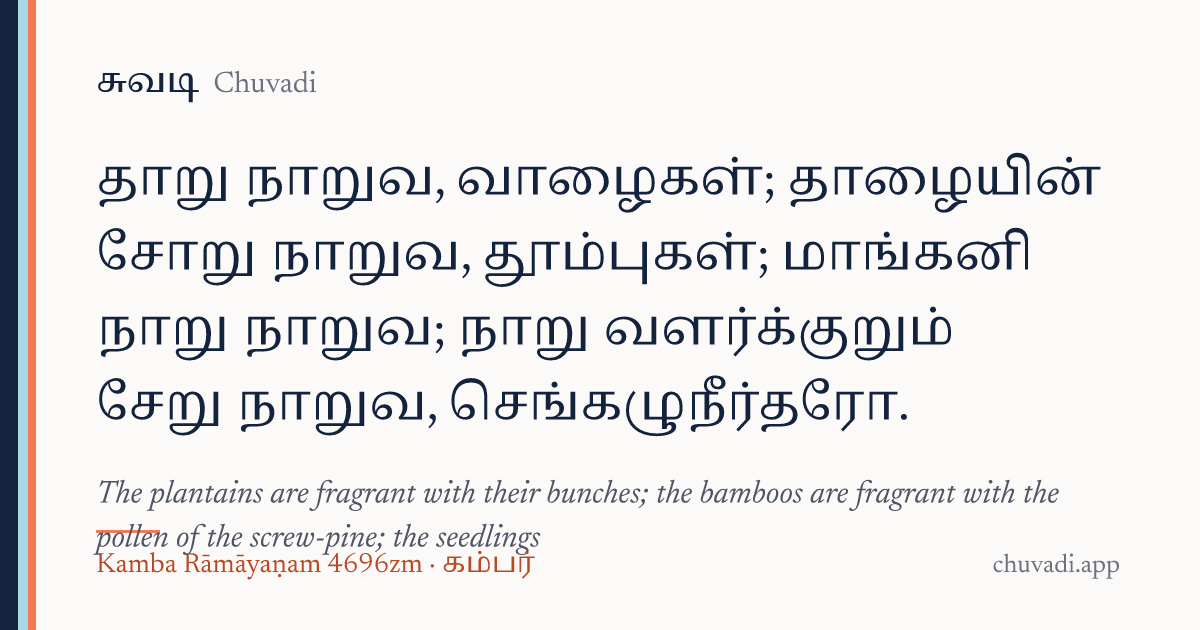
கம்பராமாயணம் 4696zm · கிட்கிந்தா 14.50
பாடல் · The poem
Tap a word to see its gloss in the commentary and where else it occurs.
பொருள் · Meaning in Tamil
வாழைகள் - வாழை மரங்கள்; தாறு நாறுவ - குலைகள் தள்ளி மணம் பரப்புவன; தூம்புகள் - மூங்கில்கள்; தாழையின் சோறு - தாழை மலர்களின் சுண்ணப் பொடிகள் படியப் பெற்று; நாறுவ - அந்த மணத்தையே வீசுவன; மாங்கனி - மாம்பழங்களின் நறுமணம், நாறு நாறுவ - நாற்றுகளில் கமழ்வன; நாறு வளர்க்குறும் சேறு - அந்த நாற்றை வளரச் செய்யும் சேறு; செங்கழு நீர் நாறுவ - (அங்கே மலர்ந்துள்ள) செங்கழு நீர்ப் பூக்களின் நறுமணத்தையே பரப்புவன.
அரோ: ஈற்றசை. தாழை மரமும் மூங்கிலும் ஒன்றற்கு ஒன்று பக்கத்திலிருப்பதால் தாழை மலரின் சுண்ணம் பொடிகள் படியப் பெற்று மூங்கில்கள் அந்த மணத்தை வீசுமாறும், நாற்றுகள் நன்றாக வளரப் பெற்ற நாற்றங்கால் செங்கழு நீர்மலரின் நறுமணத்தைப் பெறுமாறும் பெருமை வாய்ந்தது சோழநாடு என்பது.
ஆங்கிலம் · English translationAI
Translation
- The plantains are fragrant with their bunches; the bamboos
- are fragrant with the pollen of the screw-pine; the seedlings
- are fragrant with mangoes; and the mud that nurses the seedlings
- is fragrant with the red water-lily.
What the poem says
A verse built on the repeated word nāṟu, "be fragrant," which also means "seedling." In the Cōḻa land everything takes on the scent of its neighbour: bamboos smell of screw-pine pollen, seedlings of mangoes, the nursery mud of red lilies. The richness of the land is shown through a cascade of perfumes.