



கம்பராமாயணம் 4710 · கிட்கிந்தா 15.14
பாடல் · The poem
Tap a word to see its gloss in the commentary and where else it occurs.
பொருள் · Meaning in Tamil
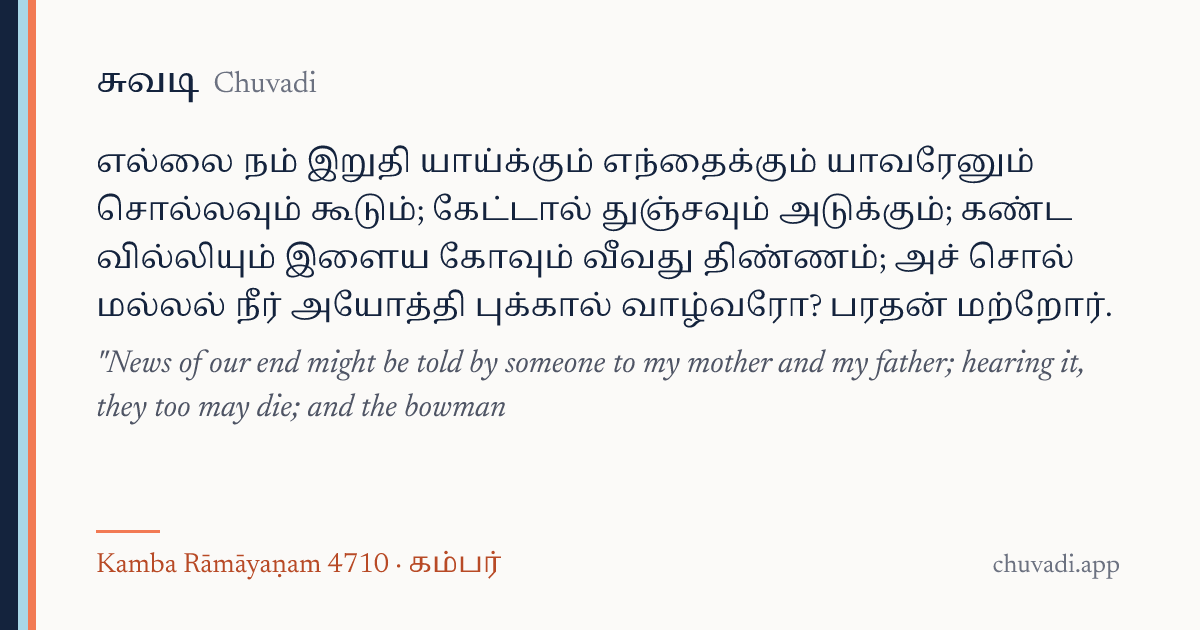
(நாம் எல்லோரும் இங்கே இறந்துவிட்டால்) நம் இறுதி எல்லை - இறத்தலாகிய நமது முடிவுச் செய்தியை; யாய்க்கும் - என்தாயாகிய தாரைக்கும், எந்தைக்கும் - என் சிறிய தந்தையான சுக்கிரீவனுக்கும்; யாவரேனும் - யாரேனும் ஒருவர்; சொல்லவும் கூடும் - போய்ச் சொல்லவும் இடம் ஏற்படும்; கேட்டால் - (அதனைக்) கேட்டறிந்தால், துஞ்சவும் அடுக்கும் - அவர்கள் மாண்டுபோகவும் கூடும்; கண்ட - (அத்துயர நிகழ்ச்சியை) நேரில் பார்த்த, வில்லியும் - வில் வீரனான இராமபிரானும், இளைய கோவும் - இளைய பெருமாளான இலக்குவனும்; வீவது திண்ணம் - இறந்துபோவது உறுதி; அச்சொல் - (இராமலக்குவர் இறந்த) அந்தச் செய்தி; மல்லல் நீர் அயோத்தி புக்கால் - வளம் பொருந்திய நீர் நிறைந்த அயோத்தி நகருக்கு எட்டினால்; பரதன் மற்றோர் - பரதனும் அங்குள்ள மற்றவரும்; வாழ்வரோ - உயிர் வாழ்வார்களோ?
நமது முடிவைத் தாரையும் சுக்கிரீவனும் மற்றவரால் அறிவார்கள். அதனால் அவர்க்கும் இராமலக்குவர்க்கும், பரதன் முதலியோர்க்கும் மரணமுண்டாகலாம் என வருந்தினான் அங்கதன் என்பது. 'சாதலை'த் 'துஞ்சுதல்' என்றது மங்கலவழக்கு.
ஆங்கிலம் · English translationAI
Translation
- "News of our end might be told by someone
- to my mother and my father; hearing it, they too may die; and the bowman
- who sees it, and the younger prince, will surely perish; and if that word
- reaches Ayōtti of abundant waters, will Paratan and the others live?"
What the poem says
Aṅkataṉ follows the chain of grief: news of their deaths might kill his mother Tārai and Cukkirīvaṉ; seeing the search fail, Irāmaṉ and Ilakkuvaṉ would die; and the news reaching Ayōtti would kill Paratan and the rest. The verse uses "sleep" as a gentle word for death.