



கம்பராமாயணம் 4711 · கிட்கிந்தா 15.15
பாடல் · The poem
Tap a word to see its gloss in the commentary and where else it occurs.
பாட வேறுபாடு · Project Madurai reads
பொருள் · Meaning in Tamil
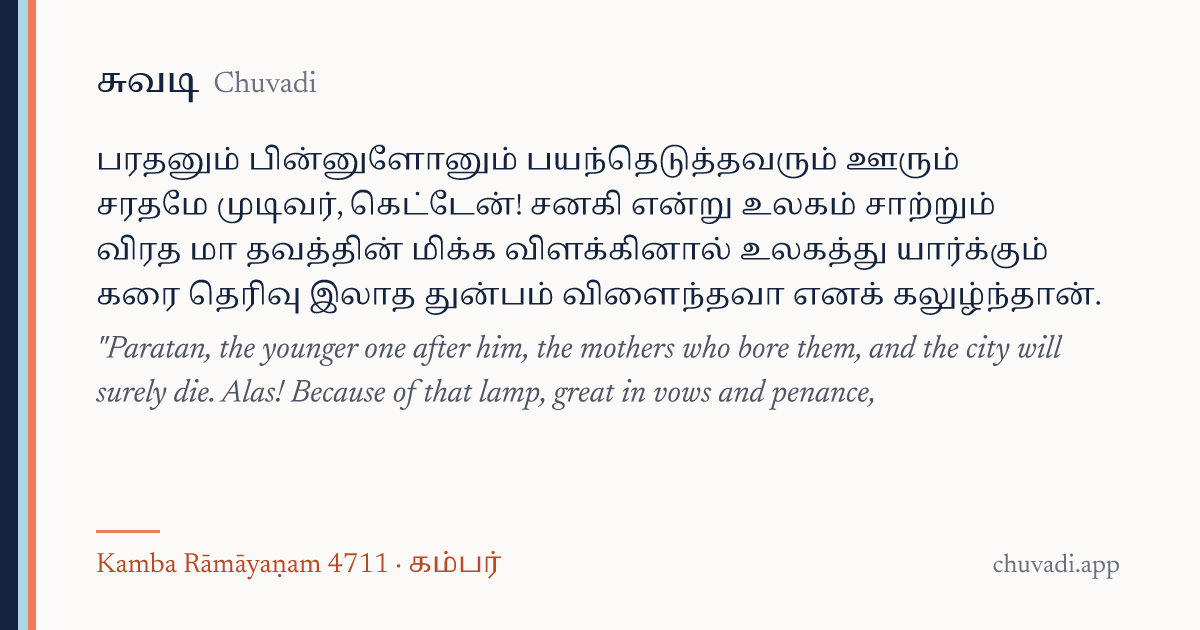
பரதனும் - பரதனும்; பின் உளோனும் - (அவனுக்குப் பின் பிறந்தவனான) சத்துருக்கனனும்; பயந்து எடுத்தவரும் - (இராமன் முதலிய நால்வரையும்) பெற்றெடுத்த தாய்மார் (கோசலை, சுமித்திரை, கைகேயி ஆகிய) மூவரும், ஊரும் - அந்த அயோத்தி நகர மக்களும்; சரதமே முடிவர் - மெய்யாகவே இறப்பார்கள்; கெட்டேன் - ஆ! கெடுவேன்; சனகி என்று உலகம் சாற்றும் - சீதை என்று உலகத்துச் சான்றோர் பாராட்டிக் கூறும்; விரத மா தவத்தின் மிக்க - விரதத்தோடு கூடிய பெருந்தவத்தால் மேம்பட்ட; விளக்கினால் - விளக்குப் போன்றவளான ஒரு மகளால்; உலகத்து யார்க்கும் - உலகத்திலுள்ள எவர்க்கும்; கரை தெரிவு இலாத துன்பம் - கரைகாண முடியாத பெருந்துன்பம்; விளைந்த ஆ - வந்து சேர்ந்ததே; என - என்று சொல்லி; கலுழ்ந்தான் - (அங்கதன்) கலங்கி வருந்தினான்.
ஊர்: இடவாகுபெயர். சீதை பிறந்த குலத்திற்கும் புகுந்த குலத்திற்கும் விளக்கம் செய்பவளாதலால் அவளை விளக்கு என்றார். கெட்டேன்: இரக்கக் குறிப்பையுணர்த்துவது. ஆ: இங்கே இரக்கத்தையும் வியப்பையும் உணர்த்தி நின்றது. இச் செய்யுள் உணர்த்தும் அவலச் சுவை காண்க.
ஆங்கிலம் · English translationAI
Translation
- "Paratan, the younger one after him, the mothers who bore them, and the city
- will surely die. Alas! Because of that lamp, great in vows and penance,
- whom the world calls Caṉaki, a sorrow
- with no shore in sight has come upon everyone," he wept.
What the poem says
Aṅkataṉ pictures disaster spreading to Catturukkaṉaṉ, the three queens and all of Ayōtti. Cītai, called Caṉaki as Caṉakaṉ's daughter, is called a lamp because she brings honour to the family she was born into and the one she married. The verse is meant to be read for its pathos.