



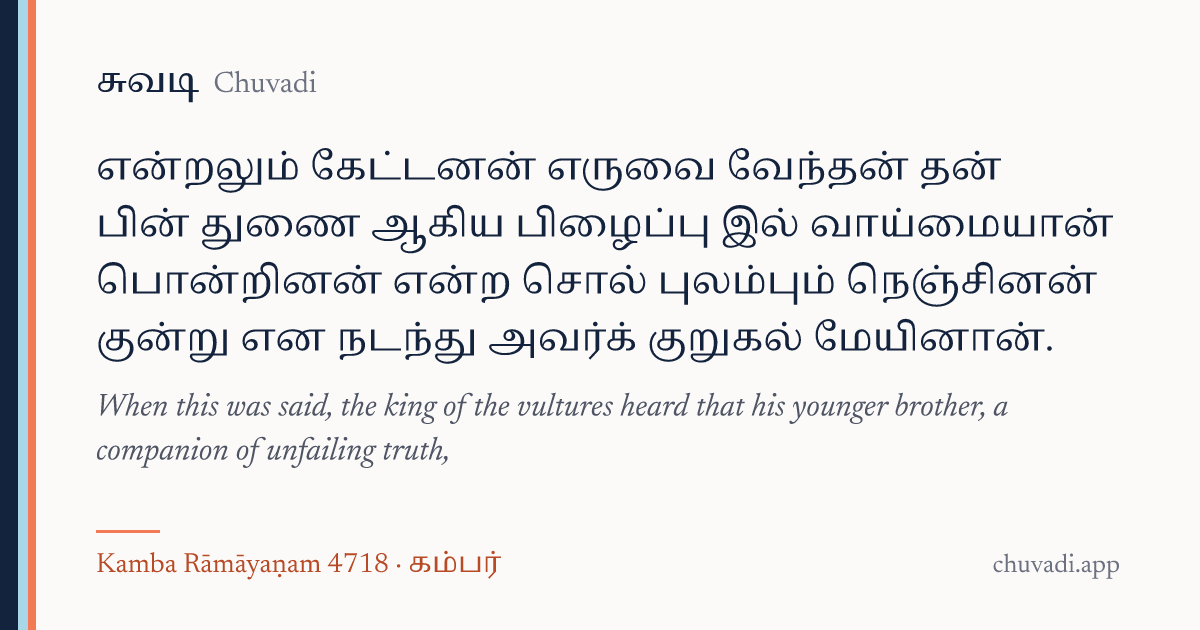
கம்பராமாயணம் 4718 · கிட்கிந்தா 15.22
பாடல் · The poem
Tap a word to see its gloss in the commentary and where else it occurs.
பொருள் · Meaning in Tamil
என்றலும் - என்று (அனுமன்) கூறியவுடனே; எருவை வேந்தன் - கழுகுகளுக்கு அரசனான சம்பாதி என்பவன்; தன் பின் துணையாகிய - தனக்குப் பின் பிறந்த தம்பியாகிய; பிழைப்பு இல் வாய்மையான் - தவறாத சத்தியத்தைக் கடைப்பிடிப்பவனான சடாயு; பொன்றினன் என்ற சொல் - இறந்தான் என்ற சொல்லை; கேட்டனன் - கேட்டு; புலம்பும் நெஞ்சினன் - சோகத்தால் புலம்பியழும் மனத்தையுடையவனாய், குன்று என நடந்து - மலை போல நடந்து வந்து; அவர்க் குறுகல் மேயினான் - அந்த வானர வீரர்களையணுகினான்.
தன் தம்பி சடாயு இறந்த செய்தியைக் கேட்ட சம்பாதி மிக வருந்தி, அதனுண்மையை வினாவியறிய விரும்பி அந்தத் துயரச் செய்தியைக் கூறிய அனுமனும் மற்ற வானரர்களும் இருக்குமிடத்திற்கு வந்தான் என்பது. சம்பாதியின் பெரிய உருவத்திற்கு மலை உவமை. பின்துணை - இளையவன், தம்பி. குன்றென நடந்து: இறகுகள் எரிந்து அழியப் பெற்றவனாதலால் நடந்து வந்தான் சம்பாதி. மேயினான்: மேவினான் என்ற சொல்லின் திரிபு.
ஆங்கிலம் · English translationAI
Translation
- When this was said, the king of the vultures heard
- that his younger brother, a companion of unfailing truth,
- had died; and at that word, his heart lamenting,
- he came walking like a mountain and drew near them.
What the poem says
Campāti, the elder brother of Caṭāyu and king of the vultures, has been living near this mountain. Overhearing that his brother is dead, he comes toward the monkeys in grief. He walks rather than flies, because his wings were burnt away long ago.