



கம்பராமாயணம் 4756 · கிட்கிந்தா 15.60
பாடல் · The poem
Tap a word to see its gloss in the commentary and where else it occurs.
பாட வேறுபாடு · Project Madurai reads
பொருள் · Meaning in Tamil
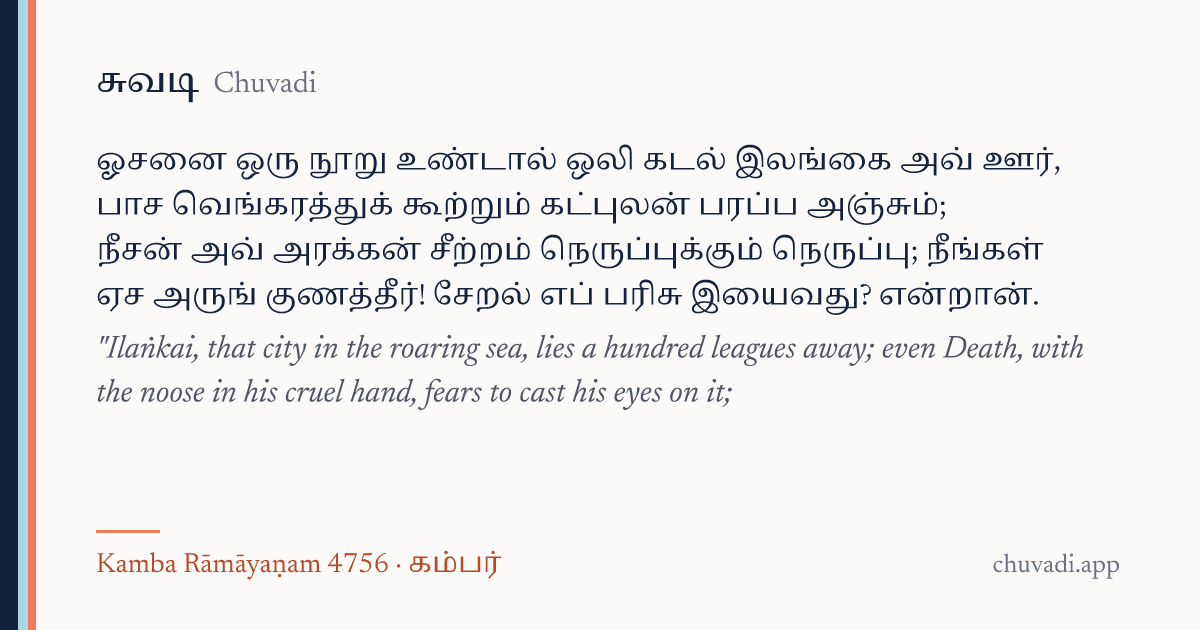
ஒலி கடல் இலங்கை - ஒலிக்கின்ற கடலால் சூழப்பட்ட அந்த இலங்கையானது; ஓசனை ஒரு நூறு உண்டு - (இங்கிருந்து) நூறு யோசனை தூரத்திலுள்ளது; அவ்ஊர் - அந்த இலங்கையிடத்து; வெம் பாசக் கரத்துக் கூற்றும் - கொடிய பாசக்கயிற்றைக் கையில் கொண்டுள்ள யமனும், கட் புலன் பரப்ப அஞ்சும் - (தனது) கண்ணால் ஏறிட்டுப் பார்க்கவும் அஞ்சுவான்; நீசன் அவ் அரக்கன் சீற்றம் - இழி செயல் செய்யும் அந்த இராவணனது கோபமோ; நெருப்புக்கும் நெருப்பு - நெருப்பையும் அழிக்க வல்ல ஒரு பெருந்தீயைப் போன்றது; ஏசு அறுங் குணத்தீர் - பழிப்பற்ற நற்பண்புடையவர்களே! நீங்கள் - ; சேறல் - (அங்கே) செல்லுவது; எப்பரிசு இயைவது - எவ்வாறு முடியுமோ? என்றான் - என்று (சம்பாதி) கூறினான்.
ஆல்: ஈற்றசை.
இலங்கையின் நிலையைப் பார்த்தால் எவ்வாறு அங்கே சென்று சீதையைக் காண்பது என்று திகைக்கிறான் சம்பாதி.
பாசம்: கயிற்று வடிவுடைய படைக்கருவி; யமனுக்கு உரியது.
ஆங்கிலம் · English translationAI
Translation
- "Ilaṅkai, that city in the roaring sea, lies a hundred leagues away;
- even Death, with the noose in his cruel hand, fears to cast his eyes on it;
- the fury of that base demon is fire to fire itself; you,
- whose virtues none can fault, how could you ever go there?" he said.
What the poem says
Campāti warns the monkeys of the difficulty ahead. Ilaṅkai lies a hundred yojanas across the sea; even Yama, the god of death, with his noose, dares not look at it; and Irāvaṇaṉ's anger could burn fire itself. How, he asks, can they possibly get there?