



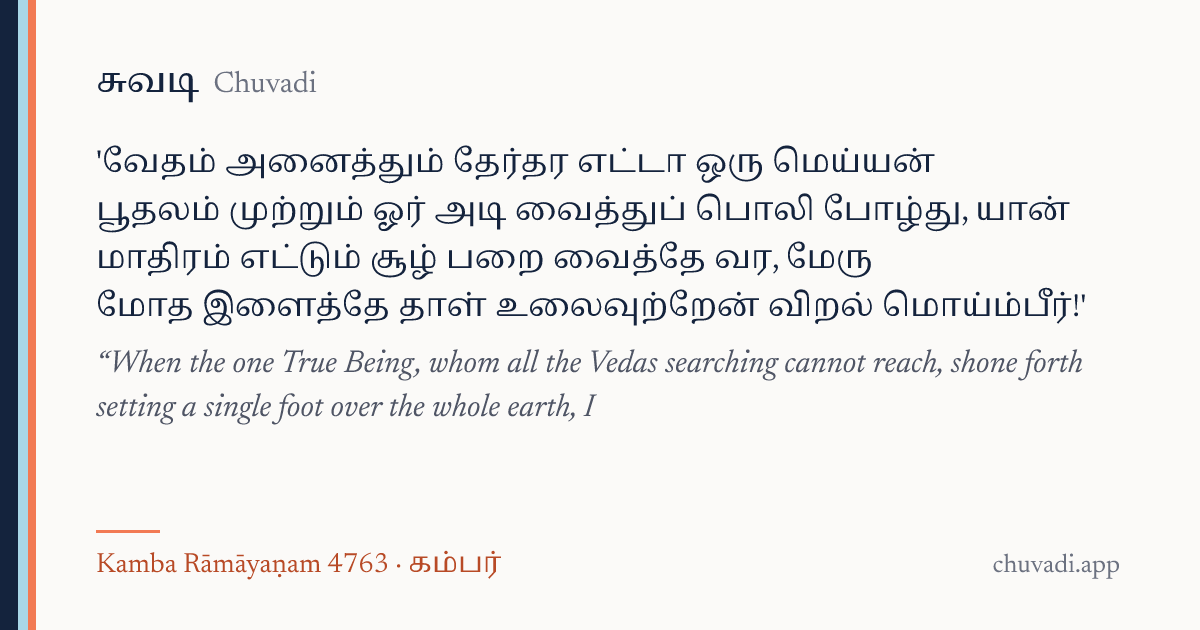
கம்பராமாயணம் 4763 · கிட்கிந்தா 16.4
பாடல் · The poem
Tap a word to see its gloss in the commentary and where else it occurs.
பொருள் · Meaning in Tamil
விறல் மொய்ம்பீர் - வலிய தோள்களையுடையவர்களே! வேதம் அனைத்தும் - வேதங்கள் யாவும்; தேர்தர எட்டா - தேடிப்பார்க்கவும் அகப்படாத; ஒரு மெய்யன் - ஒப்பற்ற வடிவுடைய திருமால்; பூதலம் முற்றும் ஓர் அடி வைத்து - (திரிவிக்கிரமனாகப்) பூமி முழுவதும் ஓர் அடியைவைத்து அதனுள் அடங்கச் செய்து; பொலி போழ்து - பேருருவம் எடுத்து விளங்கிய காலத்தில், மாதிரம் எட்டும் - (நான்) எட்டுத் திக்குகளிலும்; பறை வைத்தே - பறையடித்து அப் பெருமான் உலகமளக்கும் செய்தியைத் தெரிவித்தபடி; சூழ்வர - சுற்றிக் கொண்டு அவன்முன்னே செல்லும் போது; மேரு மோத - மேருமலை இடையே தாக்கியதால்; இளைத்து - (நான்) வலிமை குன்றி; தாள் உலைவுற்றேன் - என் கால்கள் வலியெடுத்து வருந்தினேன்;
திரிவிக்கிரம அவதார காலத்தில் உலகமுழுவதும் நிறைந்த திருமாலின் திருவடியை வணங்கிக் கொண்டே பலமுறை பூமியை வலம் வருகையில் மேருமலை எனது காலிற்பட்டுக் கால் சிறிது ஊனமானதால் இப்போது கடல்கடக்கும் வலிமையில்லாதவன் ஆயினேன் என்று சாம்பவான் கூறினான் என்பது.
மொய்ம்பு: தோள்.
எட்டு மாதிரங்கள்: கிழக்கு முதலான பெருந்திசைகள் நான்கு; தென்கிழக்கு முதலிய கோணத் திசைகள் நான்கு.
ஐந்து, ஆறு ஆகிய இரு செய்யுட்களும் ஒரு தொடராய் இயைந்து பொருள் முடிவு கொண்டதால் ஆறாவது செய்யுளின் ஈற்றிலுள்ள 'நாலு முகத்தான் உதவுற்றான்' என்ற தொடர் இங்கு எழுவாயாகக் கொள்ளப்படுதற்குரியது.
ஆங்கிலம் · English translationAI
Translation
- “When the one True Being, whom all the Vedas searching cannot reach,
- shone forth setting a single foot over the whole earth, I
- went round all eight directions beating the drum, and as Mēru
- struck against me I grew weak and my legs were hurt, O you of mighty shoulders!”
What the poem says
Cāmpavaṉ, the aged bear-king born of Piramaṉ, explains why he cannot make the leap. Long ago, when Tirumāl took the giant form of Tirivikkiramaṉ and covered the whole earth with one stride, Cāmpavaṉ ran round the world in all eight directions beating a drum to proclaim the event. In that rush Mount Mēru knocked against his leg, and he has been lame ever since. This verse and the next form one sentence; the speaker is named only at the end of the next verse.