



கம்பராமாயணம் 4789 · சுந்தர 2.1
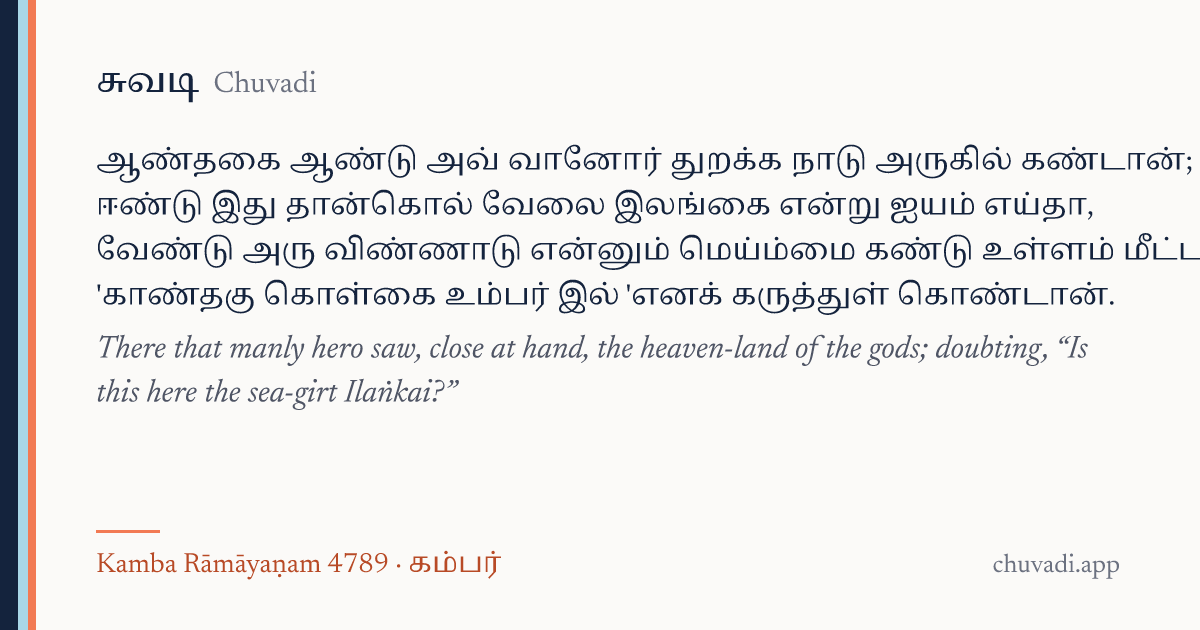
பாடல் · The poem
Tap a word to see its gloss in the commentary and where else it occurs.
பாட வேறுபாடு · Project Madurai reads
பொருள் · Meaning in Tamil
ஆண்தகை - ஆண்மையிற் சிறந்த அனுமன்; ஆண்டு - அங்கே; அவ்வானோர் - அந்தத் தேவர்களின்; துறக்க நாடு - சுவர்க்க லோகத்தை; அருகில் கண்டான் - பக்கத்தில் பார்த்தான்; (பார்த்த அனுமன்) ஈண்டு - இங்கே தெரிகின்ற; இது - இந்த உலகம்; வேலை இலங்கை - கடலால் சூழப்பட்ட இலங்கையோ; என்று ஐயம் எய்தா - என்று சந்தேகம் அடைந்து; வேண்டு அரும் - யாவரும் விரும்புகின்ற, அரிய; விண்ணாடு என்னும் - தேவநாடு என்கின்ற; மெய்ம்மை கண்டு - உண்மையைத் தெரிந்து; உள்ளம் மீட்டான் - (அங்கே தேடும்) எண்ணத்தை விலக்கி; காண்தகு கொள்கை - தேடிக் காண வேண்டிய கோட்பாடாகிய பிராட்டி; உம்பர் இல் என - விண்ணுலகில் இல்லை என்று; கருத்துள் கொண்டான் - மனத்தில் நினைத்துக்கொண்டான்.
ஆண்தகை - புலனடக்கம் பெற்றவன். 'காண்டகு தோகை' என்று பாடம் கொண்டு காணவேண்டிய பிராட்டி என்று உரைகூறுதல் உண்டு. “விண்நாடு வேண்டு அரு நாடு” என்றதால், இலங்கை பிறர் வெறுக்கும் நாடு என அறிக. மீட்டான் - மீட்டு, முற்றெச்சம். இல் - இல்லை. (விளம்-மா-மா-விளம்-மா-மா) என்னும் சீர்களை முறையே பெற்றுவரும் அறுசீர் விருத்தம். இராம காதையில் இத்தகைய விருத்தங்கள் 2536 பாடல்கள் உள்ளன என்று அமரர் கம்பனடிப்பொடி அவர்கள் வரைந்துள்ளார் (கம்பன் மணிமலர் 1970)
ஆங்கிலம் · English translationAI
Translation
- There that manly hero saw, close at hand, the heaven-land of the gods;
- doubting, “Is this here the sea-girt Ilaṅkai?”
- he saw the truth that it was the sky-realm all desire, and drew his mind back;
- “The one I must see is not up here,” he resolved within.
What the poem says
The Cuntara Kāṇṭam's first canto, the leaping of the sea, begins. Aṉumaṉ has risen so high that he finds himself beside Svarga, the heaven of the gods. For a moment he wonders whether this splendid place is Ilaṅkai. Then he realises it is heaven, the land everyone longs for, and decides Cītai cannot be there. The contrast hints that Ilaṅkai is a place others shun. The poet calls Aṉumaṉ āṇtakai, "the manly one", which the commentary reads as "master of his senses": he is not distracted by the delights of heaven.