



கம்பராமாயணம் 479 · பால 9.13
பாடல் · The poem
Tap a word to see its gloss in the commentary and where else it occurs.
பாட வேறுபாடு · Project Madurai reads
பொருள் · Meaning in Tamil
வாசவன் - இந்திரன். அஷ்ட வசுக்களுக்குத் தலைவன். எல்லாச் செல்வங்களும் உடையவன். ஐராவதத்தின் துதிக்கைக்குப் பனைமரம் உவமை. (திரட்சி, உருட்சி, நீட்சி வடிகால். துருவாசன் அம் மாலையை இந்திரனுக்குக் கொடுக்க, அவன் அங்குசத்தால் அதைப்பெற்று யானையின் தலைமேல் வைக்க, அந்த யானை அதைக் காலால் தேய்த்தது என்பது.
ஆங்கிலம் · English translationAI
Translation
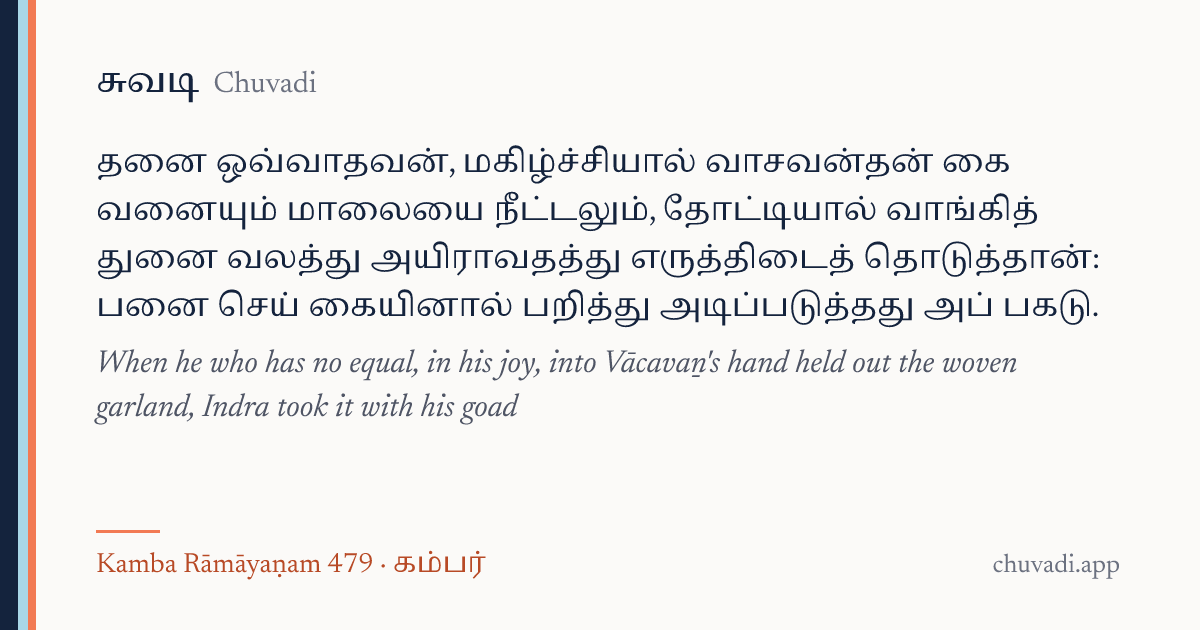
- When he who has no equal, in his joy, into Vācavaṉ's hand
- held out the woven garland, Indra took it with his goad
- and set it on the neck of swift, victorious Ayirāvatam;
- with its trunk like a palm tree that tusker plucked it off and trod it underfoot.
What the poem says
Delighted by the pageant, the sage offers the sacred garland to Indra, here called Vācavaṉ, lord of the eight Vasus. Indra does not take it in his hand. He lifts it with his elephant goad and drops it on Ayirāvatam's neck. The elephant pulls it off with its trunk, thick, round and long like a palm trunk, and crushes it underfoot. The casual insult to Lakṣmī's garland brings on the curse.