



கம்பராமாயணம் 4795 · சுந்தர 2.7
பாடல் · The poem
Tap a word to see its gloss in the commentary and where else it occurs.
பொருள் · Meaning in Tamil
தேக்கு உறு சிகரக் குன்றம் - தேக்கு மரங்கள் மிகுதியாகப் பெற்ற மகேந்திர மலை; திரிந்து - தன் இயல்பு வேறுபட்டு; மெய்ந் நெரிந்து சிந்த - உடல் சிதைந்து சிதற (அதனால்); விஞ்சை வேந்தர் - வித்தியாதரத் தலைவர்கள்; தூக்குறு தோலர் - உயர்த்திப் பற்றிய கேடகமுடையவராய்; வாளர் - வாளை ஏந்தியவராய்; துரிதத்தின் எழுந்த தோற்றம் - வேகமாக எழுந்த காட்சி; தாக்குறு செருவில் - மோதிச் செய்கின்ற போரில்; நேர்ந்தார் தாள் அற வீச - எதிர்த்த பகைவர்களின் முயற்சியற்றுப் போக ஆயுதங்களைச்சுழற்ற; மேக்கு உறத் தாவி - வானிலே நன்றாகப் பாய்ந்து; விசைத்தார் என்னப் பொலிந்தனர் - வேகம் பெற்றவர்களைப் போல விளங்கினார்கள். சலிப்பற்றது மலை. அஃது இன்று சலித்தது. நிலை திரிந்தது. சுழன்றது; அதனால் அங்குள்ள வித்தியாதரத் தலைவர்கள் ஏந்திய கேடகத்தோடும் தாங்கிய வாளோடும் விண்ணில் சென்றனர். அக் காட்சி பகைவரைத் தாக்க எழுந்தது போல் இருந்தது. பகைவரால் தாக்கப்பெற்று மேல் எழுந்த வீரர் என்றும் பொருள் கொள்ளலாம்.
ஆங்கிலம் · English translationAI
Translation
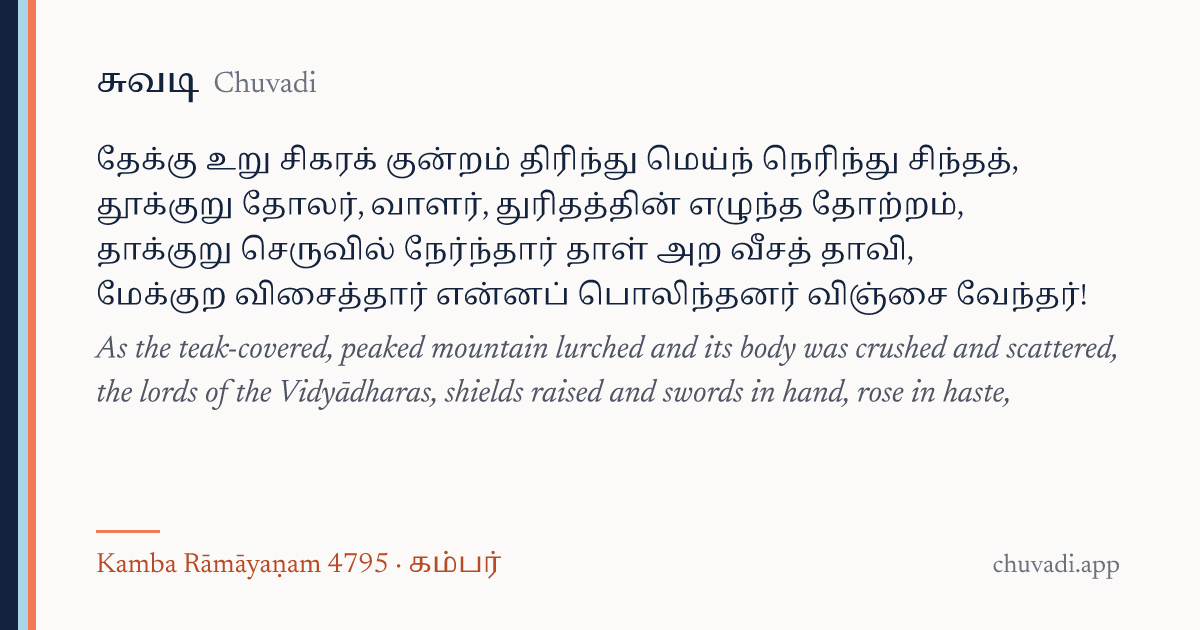
- As the teak-covered, peaked mountain lurched and its body was crushed and scattered,
- the lords of the Vidyādharas, shields raised and swords in hand, rose in haste,
- and the sight was as if, in a clash of battle, they had leapt up
- and soared high, whirling their weapons to cut down those who faced them.
What the poem says
The Vidyādharas, semi-divine beings who live on the mountain, are shaken out of their homes as it lurches and breaks apart. They spring into the sky with shields lifted and swords drawn. The poet says they look like warriors leaping up in the thick of battle to strike at their enemies, or, on another reading, like warriors hurled upward by an enemy's blow.