



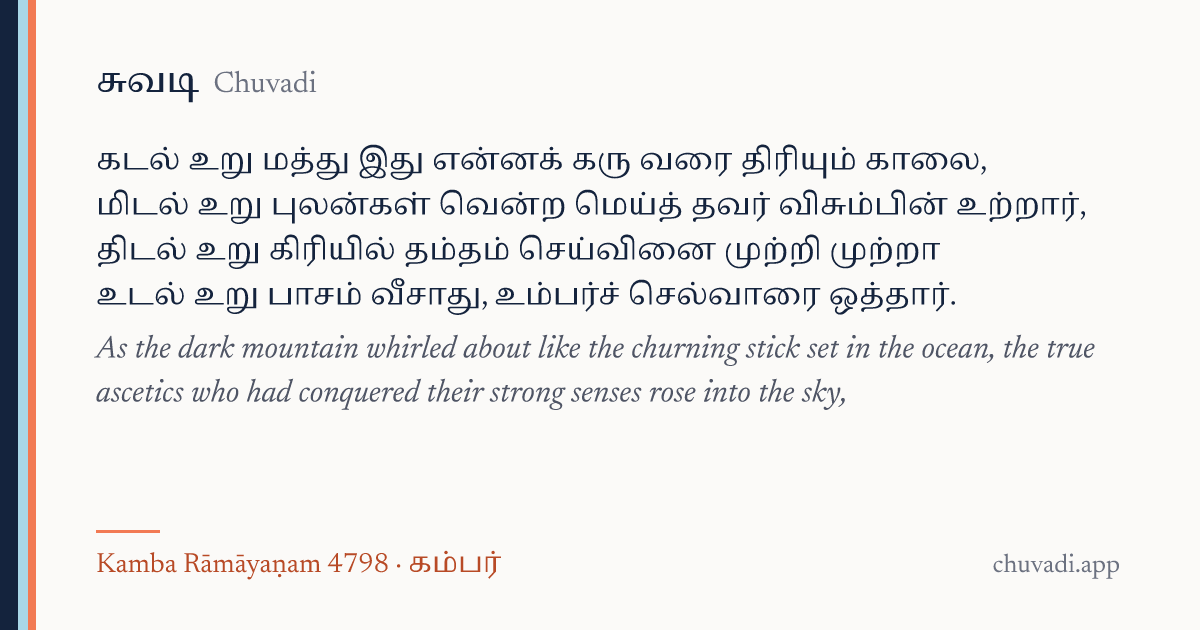
கம்பராமாயணம் 4798 · சுந்தர 2.10
பாடல் · The poem
Tap a word to see its gloss in the commentary and where else it occurs.
பாட வேறுபாடு · Project Madurai reads
பொருள் · Meaning in Tamil
கருவரை - கரிய மகேந்திரமலை; கடல்உறு - பாற் கடலைச் சார்ந்த; மத்து இது என்ன - மத்து என்று கூறும்படி; திரியும் காலை - சுழல்கின்ற சமயத்தில்; மிடல்உறு - வன்மை மிக்க; புலன்கள் வென்ற மெய்த்தவர் - ஐம்புலன்களும் பொறிவழியே போகாமல் அடக்கிய முனிவர்கள்; விசும்பின் உற்றார் - ஆகாயத்தை அடைந்தார்கள் (அவர்கள்); திடல்உறு கிரியில் - மேட்டுப் பாங்கான மலையில்; தம்தம் செய்வினை முற்றி முற்றா - தாம் தாம் செய்யவேண்டிய கடமைகளைத் தொடங்கி நிறைவு செய்யாமல்; உடல்உறு பாசம் வீசாது - உடலின்கண் கொண்ட பற்றை விடாமல்; உம்பர் செல்வாரை, ஒத்தார் - விண்ணுலகத்திற்குச் செல்பவரை ஒத்தார். முனிவர்கள் ஆகாயத்தை அடைந்தது பற்றை விடாமையால் சுவர்க்கம் அடைந்தவரை ஒத்தனர். திரிதல் - சுழல்தல். மண்ணகந்திரிய... மால்வரை திரிய காலும் கதிரொடு திரிய (3517). செய்ய வேண்டியவற்றை நிறைவேற்றியிருந்தால் முத்தி பெற்றிருப்பர். நிறைவேற்றாமையால் அவர்கள் சுவர்க்கம் சென்றனர். (கீதை - தியான யோகம் 40)
ஆங்கிலம் · English translationAI
Translation
- As the dark mountain whirled about like the churning stick set in the ocean,
- the true ascetics who had conquered their strong senses rose into the sky,
- and were like those who, on that high mountain, having begun their own works but not finished them,
- go up to heaven without casting off the bond that clings to the body.
What the poem says
As the mountain shakes and spins like the churning stick in the ocean of milk, the sages who were doing penance on it are thrown up into the sky. The poet compares them to ascetics who die before completing their discipline and, still holding some attachment to the body, go only to heaven rather than to final liberation. The commentary links this to the Bhagavad Gītā's teaching on the yogī whose practice is cut short.