



கம்பராமாயணம் 4816 · சுந்தர 2.28
பாடல் · The poem
Tap a word to see its gloss in the commentary and where else it occurs.
பாட வேறுபாடு · Project Madurai reads
பொருள் · Meaning in Tamil
நால்ஐந்துதடக்கை - இருபது பெரிய கரங்களையும்; பத்துத் தலைகளும் - பத்துத் தலைகளையும், உடையான் - உடைய இராவணன்; ஐம்புலன்கள் - ஐந்து புலன்களையும்; தானே அடக்கி - பிறர் உதவியின்றி ஒன்றியாக இருந்து ஒடுக்கி; வென்ற தவப்பயன் - வெற்றி கொண்ட தவத்தின் பயனான புண்ணியம்; அறுதலோடும் - அற்றுத் தீர்ந்தவுடன்; கெடக்குறி ஆக - உற்பாதமாக, மாகம் - வானத்தில்; கிழக்கு எழு வழக்கு நீங்கி - கீழ்த்திசையில் உதித்தலாகிய இயல்பிலிருந்து விலகி; வடக்கு எழுந்து - வடக்குத் திசையில் உதித்து; இலங்கை செல்லும் - இலங்கை நோக்கிப் போகும்; பருதி வானவனும் ஒத்தான் - சூரிய பகவானை ஒத்திருந்தான்.
தவப்பயன் - புண்ணியம். கெடக்குறி - ஒரு சொல். கெடலூழ் என்பதுபோல. (பெருங்கதை 25-168) கெட - கெட்டுப் போக; குறி - அடையாளமாய் என்றும் கூறலாம்.
ஆங்கிலம் · English translationAI
Translation
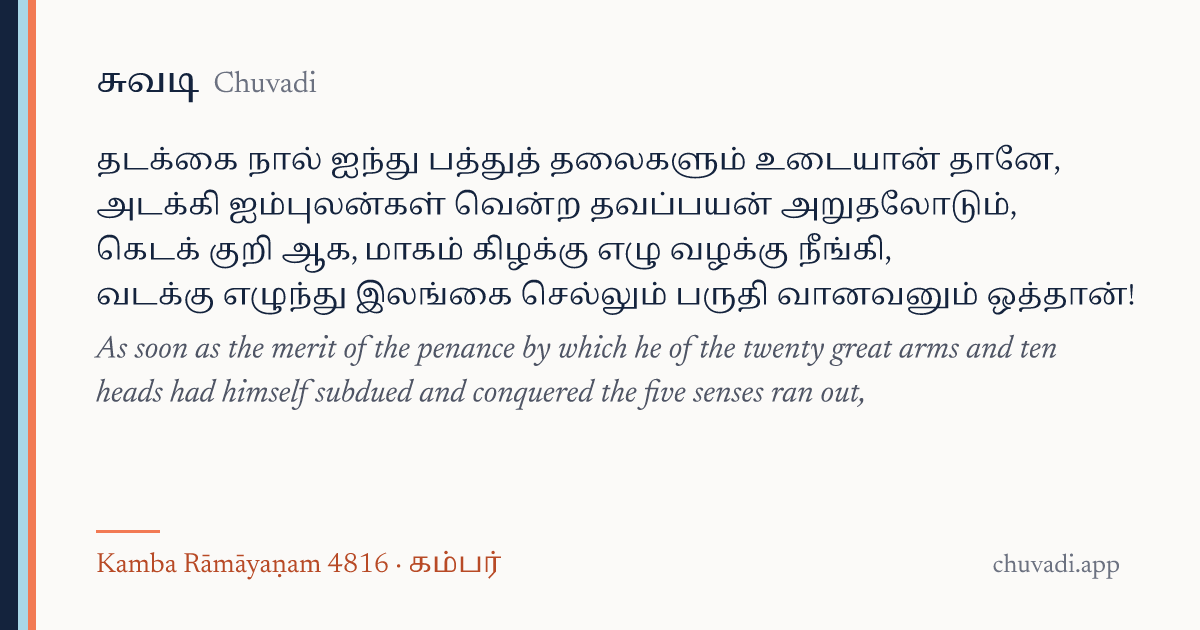
- As soon as the merit of the penance by which he of the twenty great arms and ten heads
- had himself subdued and conquered the five senses ran out,
- he was like the Sun god who, as an omen of ruin, abandons his custom of rising in the east
- and rises in the north, travelling across the sky towards Ilaṅkai.
What the poem says
Irāvaṇaṉ's power came from the merit of his great penance, in which he mastered his senses. That merit is now spent. Aṉumaṉ, golden and blazing, streaking southward, looks like the Sun breaking its law, rising in the north and moving toward Ilaṅkai: a portent of doom for the ten-headed king.