



கம்பராமாயணம் 4821 · சுந்தர 2.33
பாடல் · The poem
Tap a word to see its gloss in the commentary and where else it occurs.
பாட வேறுபாடு · Project Madurai reads
பொருள் · Meaning in Tamil
விளித்துப் பின்வேலை தாவும் - அறைகூவி பிறகு கடலைத் தாவுகின்ற; வீரன்வால் - வீரனுடைய வாலானது; வேதம் எய்க்கும் - வேதங்களை அறிந்துள்ள; அளி துப்பின் அனுமன் என்னும் - கருணையையும் உற்சாகத்தையும் உடைய அனுமனாகிய; அருந்துணை பெற்றதாயும் - அரிய உதவியை அடைந்ததாய்; களித்துப்புன் தொழில்மேல்நின்ற அரக்கர் - கள்ளுண்டு களித்து, அற்பத் தொழிலை மேற்கொண்ட அரக்கர்கள்; கண்ணுறுவர் என்ன - கண்டு கொள்வார்களோ என்று கருத; ஒளித்து பின் செல்லும் - மறைந்து அனுமனுக்குப் பின்னே போகின்ற; காலபாசத்தை ஒத்தது - யமனுடைய பாசத்தைப் போன்றிருந்தது. அனுமன் வால் துப்பறியும் அரக்கர்களுக்கு அஞ்சி அனுமனுக்குப் பின்னே மறைந்து போகும் காலபாசத்தை ஒத்தது. துப்பு - அறிவை உணர்த்தி ஆராய்ச்சியை விளக்கிற்று. கள்ளுண்டு ஆராயும் இயல்பு பேசப்பெற்றது. இன் - அல்வழிச் சாரியை. துப்புத் தொழில் என்க. ஆராயும் தொழில். அன்று, ஏ - அசைகள்.
ஆங்கிலம் · English translationAI
Translation
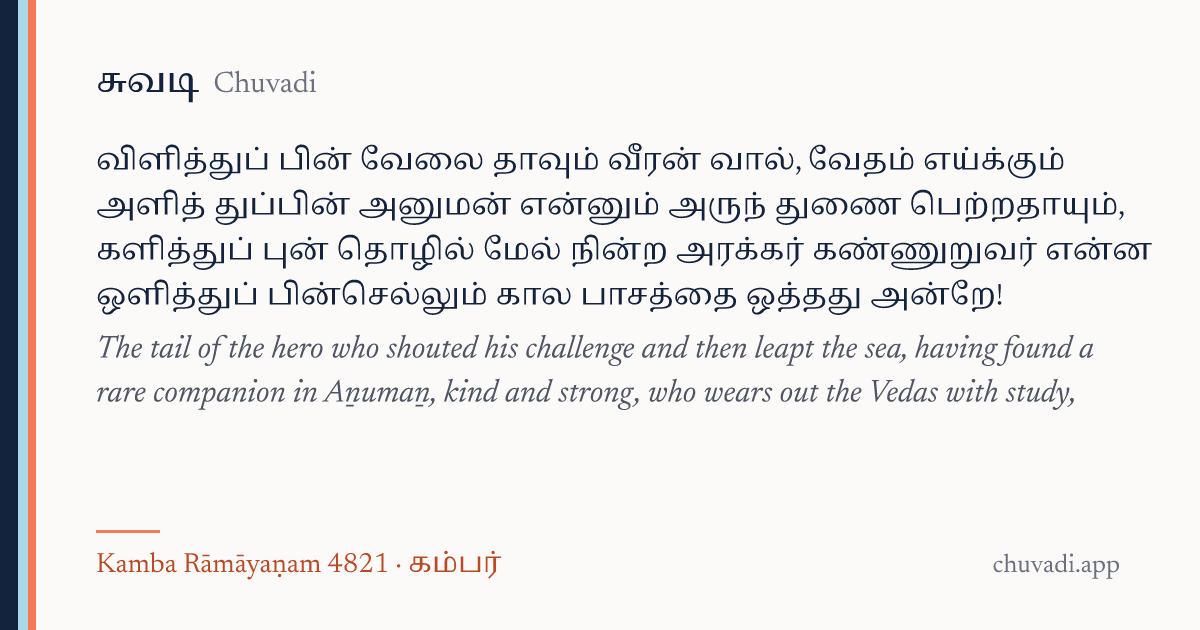
- The tail of the hero who shouted his challenge and then leapt the sea,
- having found a rare companion in Aṉumaṉ, kind and strong, who wears out the Vedas with study,
- was like the noose of Death following behind him in hiding,
- fearing that the demons, drunk and bent on base deeds, might catch sight of it.
What the poem says
The poet pictures Aṉumaṉ's tail trailing behind him as Yama's noose, the cord with which Death drags away the souls of the dying. It hides behind Aṉumaṉ, using him as cover, so that the drunken, spying demons will not notice it coming for them. The image foreshadows the burning of Ilaṅkai, which will be done with this tail.