



கம்பராமாயணம் 4853 · சுந்தர 2.65
பாடல் · The poem
Tap a word to see its gloss in the commentary and where else it occurs.
பாட வேறுபாடு · Project Madurai reads
பொருள் · Meaning in Tamil
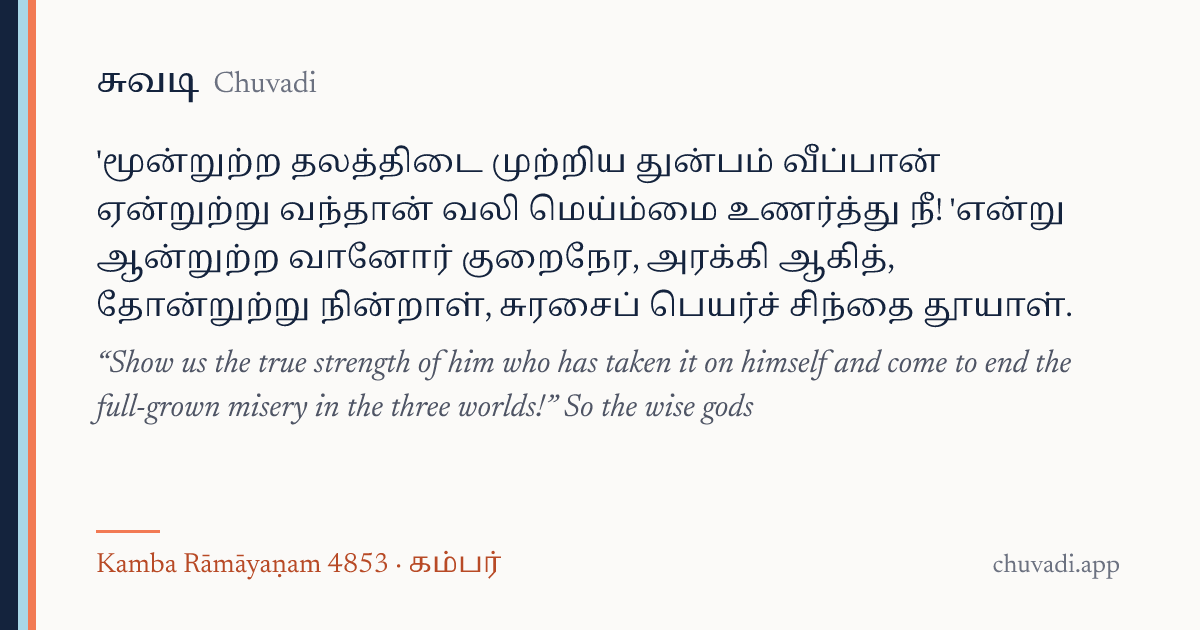
ஆன்று உற்றவானோர் - அறிவு நிரம்பி அங்கு வந்த தேவர்கள்; உற்ற மூன்று தலத்திடை - பொருந்திய மூன்று உலகத்தில்; முற்றிய துன்பம் வீப்பான் - முதிர்ந்த துன்பத்தை ஒழிக்கும்படி; ஏன்றுற்று வந்தான் - ஏற்றுக்கொண்டு வந்துள்ள அனுமானின்; மெய்ம்மை வலி நீ உணர்த்து - வலியின் உண்மையை எங்கட்கு நீ அறிவிப்பாயாக; என்று குறை நேர - என்று வேண்டிக் கொள்ள; சுரசைப்பெயர் சிந்தை தூயாள் - சுரசை என்ற பெயரை உடைய தூய மனத்தை உடையவள்; அரக்கி ஆகி தோன்றுற்றுநின்றாள் - (அனுமனுக்கு எதிரில்) அரக்கி வடிவத்துடன் தோன்றி நின்றாள். அனுமன் வலிமையை எங்கட்கு அறிவிக்க என்று தேவர் வேண்டிக் கொள்ள சுரசை அரக்கியாகி அனுமனுக்கு எதிரே தோன்றினாள். சுரசையை, தாட்சாயணி என்றும், நாகமாதா என்றும் கூறுவர். வால்மீகம், நாகமாதா (சுந்தர 1-162) என்றும், தாட்சாயணி (சுந்தர 187) என்றும் கூறும்.
ஆங்கிலம் · English translationAI
Translation
- “Show us the true strength of him who has taken it on himself and come
- to end the full-grown misery in the three worlds!” So the wise gods
- who had gathered there begged; and she whose name was Curacai, pure of heart,
- took the form of a demoness and appeared and stood before him.
What the poem says
A second episode begins. The gods want to see for themselves how strong Aṉumaṉ really is, the one who has taken it on himself to end the suffering of the three worlds. So they ask Curacai (Surasā), a pure-hearted divine being, mother of the serpents in Vālmīki's account, to test him. She takes the shape of a demoness and blocks his path.