



கம்பராமாயணம் 4855 · சுந்தர 2.67
பாடல் · The poem
Tap a word to see its gloss in the commentary and where else it occurs.
பாட வேறுபாடு · Project Madurai reads
பொருள் · Meaning in Tamil
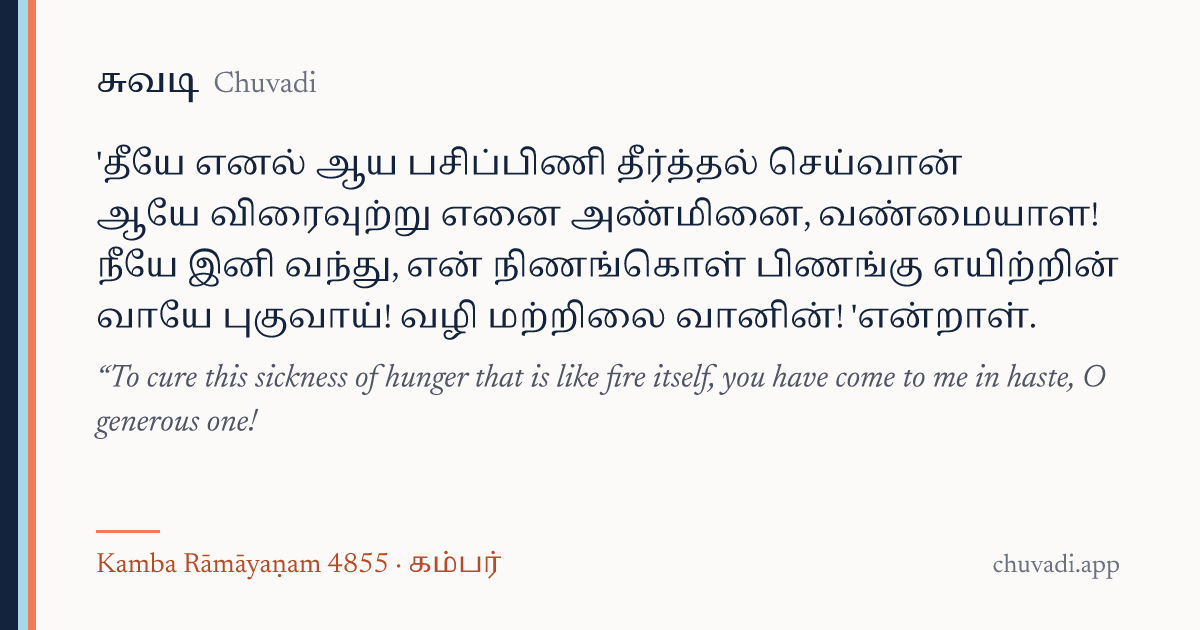
(சுரசை அனுமனை நோக்கி) வண்மையாள! - கொடைப் பண்புடையவனே; தீயே எனல் ஆய - நெருப்பே என்று கூறத்தக்க; பசிப்பிணி - பசியாகிய நோயை; தீர்த்தல் செய்வான் ஆயே - நீக்குதலைச் செய்பவனாக ஆகி; விரைவுற்று எனை அண்மினை - விரைவாக என்னைச் சார்ந்தாய்; இனி - இப்போது; நீயே வந்து - நீயாக வந்து; என் நிணங்கொள் பிணங்கு - எனது கொழுப்பைக் கொண்ட ஒன்றோடொன்று பின்னியிருக்கும்; எயிற்றின் வாயே - கோரைப் பற்களையுடைய வாயிலே; புகுவாய் - நுழைவாயாக; வானின் - ஆகாயத்தின்கண்; மாற்றுவழி இலை - வேறு வழியில்லை என்று; என்றாள் - கூறினாள்.
நீ என்னுடையபசிப்பிணி தீர்க்க வந்துள்ளாய். வண்மையுடையவனே நீயே என் வாய்ப்பக்கம் வருக என்று சுரசை கூறினாள். பிணங்கு எயிற்றில் - ஒன்றோடொன்று பின்னிய பற்கள். எயிறு - வளைந்த பற்கள் என்றே உரை கூறப்பெற்றது. நான்தான் உண்பேன் - நான்தான் உண்பேன் என்று தம்முள் பிணங்கும் எயிறு என்று கூறினும் அமையும்.
ஆங்கிலம் · English translationAI
Translation
- “To cure this sickness of hunger that is like fire itself,
- you have come to me in haste, O generous one!
- Now come of your own accord and enter my mouth with its fat-smeared, tangled fangs!
- There is no other way through the sky!” she said.
What the poem says
Curacai taunts Aṉumaṉ, calling him "generous" because he has hurried straight to her as if to relieve her burning hunger. She tells him to walk into her mouth, with its crowded, fat-greased fangs, of his own accord: there is no other way past her through the sky. The commentary adds that the fangs could be pictured as jostling each other, each wanting to eat first.