



கம்பராமாயணம் 4871 · சுந்தர 2.83
பாடல் · The poem
Tap a word to see its gloss in the commentary and where else it occurs.
பொருள் · Meaning in Tamil
கள்வாய் அரக்கி - கள்ஒழுகும் வாயை உடைய அங்கார தாரை; கதற - கூக்குரலிடும்படி (உடலைப் பிளந்து); வார்குடல் கொள் தடக்கையன் - நீண்ட குடலைப் பற்றிய நீண்ட கையை உடைய அனுமன்; கணத்தில் - ஒருநொடிக்குள்; விசும்பின்மிசை - ஆகாயத்தின்கண் சென்று; கொண்டான் - சேர்ந்தான் (அந்த அனுமன்); முள்வாய் பொருப்பின் முழை - முட்செடிகள்முளைத்த மலையின் குகையை; எய்தி - அடைந்து, மிகநொய்தின் - மிகஎளிமையாக; உள்வாழ் அரக்கொடு - அந்த மலைக்குள் வாழ்கின்றபாம்புகளை எடுத்துக்கொண்டு; எழு திண் - மேலே பறந்து வந்தவலிமையான; கலுழன் ஒத்தான் - கருடனை ஒத்திருந்தான். அங்கார தாரை மலை போன்றிருந்தாள். அவள் வாய் குகை போன்றிருந்தது. அதில் நுழைந்து குடலுடன் வந்த அனுமன் மலைக் குகையில் புகுந்த பாம்புடன் மேலே வந்த கருடனை ஒத்திருந்தான். உவமையணி - அரா என்பது 'அர' எனக்குறுகி நின்றது.
ஆங்கிலம் · English translationAI
Translation
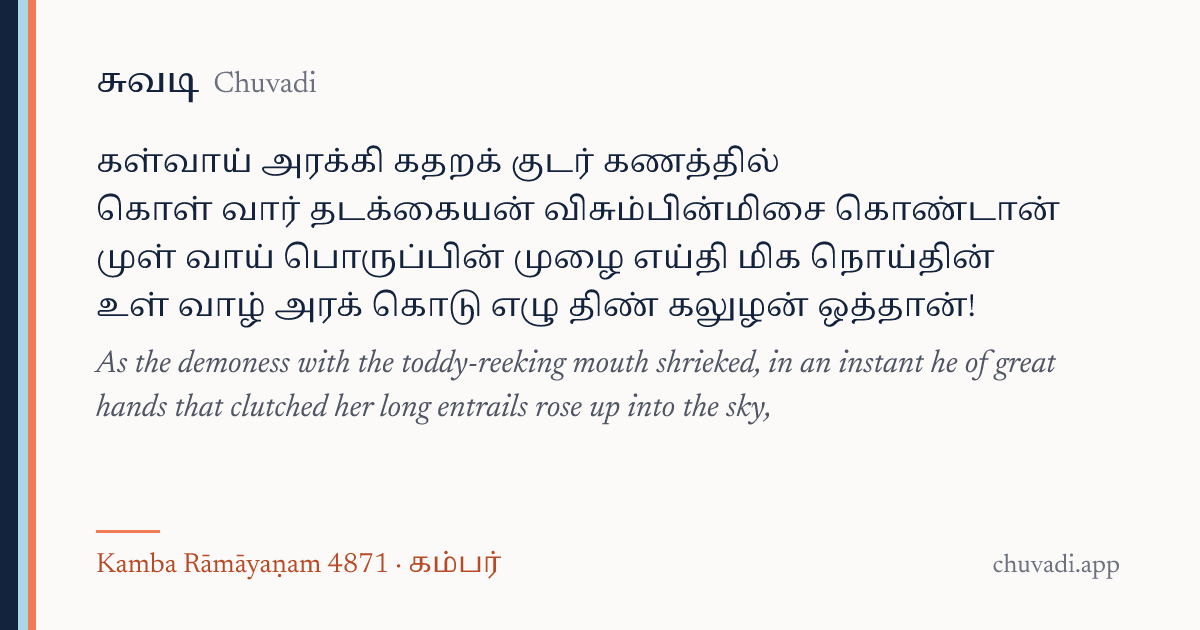
- As the demoness with the toddy-reeking mouth shrieked, in an instant
- he of great hands that clutched her long entrails rose up into the sky,
- like mighty Kaluḻaṉ who enters the cave of a thorny mountain
- and with the greatest ease rises again carrying the serpents that live inside.
What the poem says
Aṉumaṉ has torn through Aṅkāratārai's belly. As she screams he springs back into the sky with her long entrails clutched in his hands. He looks like Garuḍa diving into a mountain cave and flying out with the snakes that lived there; the demoness is the mountain, her mouth the cave, and her guts the serpents.