



கம்பராமாயணம் 4915 · சுந்தர 3.33
பாடல் · The poem
Tap a word to see its gloss in the commentary and where else it occurs.
பாட வேறுபாடு · Project Madurai reads
பொருள் · Meaning in Tamil
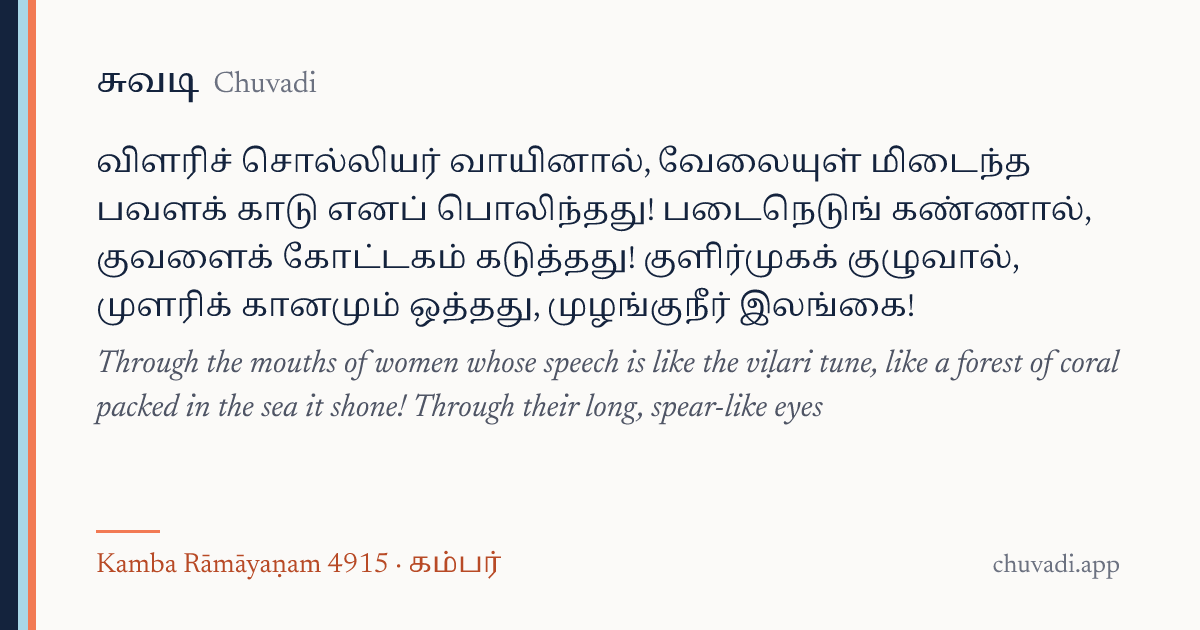
முழங்குநீர் இலங்கை - ஒலிக்கும் கடலால் சூழப்பெற்ற இலங்கை; விளரிச் சொல்லியர் - விளரிப்பண் போன்ற மொழி பேசும் அரக்கியர்களின்; வாயினால் - (சிவந்து வாயினால்; வேலையுள் மிடைந்த - கடலில் நெருங்கிக் கிடக்கும்; பவளக் காடு எனப்பொலிந்தது - பவளக்காடுபோல் விளங்கிற்று; படைநெடுங்கண்ணால் - (அரக்கியரின் வேல்போன்ற கண்களால்; (இலங்கை) குவளைக் கோட்டகம் கடுத்தது - குவளைப் பூக்கள் மலர்ந்த பொய்கையை ஒத்திருந்தது; குளிர்முகக் குழுவால் - (அரக்கியரின்) குளிர்ந்த முகங்களின் கூட்டத்தால்; முளரிக்கானமும் ஒத்தது - தாமரைக் காட்டையும் போன்றது.
கோட்டகம் -பொய்கை. வாயினால் என்பதை 'ஓதியால்' என்று பாடம் கொண்டு சிவந்த கூந்தலால் பவளக்காடு போலும் எனப் பொருள் கூறலும் ஒன்று.
ஆங்கிலம் · English translationAI
Translation
- Through the mouths of women whose speech is like the viḷari tune, like a forest
- of coral packed in the sea it shone! Through their long, spear-like eyes
- it resembled a pool of blue water-lilies! Through the throng of their cool faces
- it was like a forest of lotuses too — Ilaṅkai of the roaring waters!
What the poem says
Ilaṅkai is so full of beautiful women that the whole city takes on their features. Their red lips make it look like a coral reef in the sea, their long eyes like a pond of blue lilies, and their faces like a forest of lotuses.
The viḷari is a melodic mode, here standing for sweet speech. A variant reading has "tresses" instead of "mouths", referring to the women's red hair.