



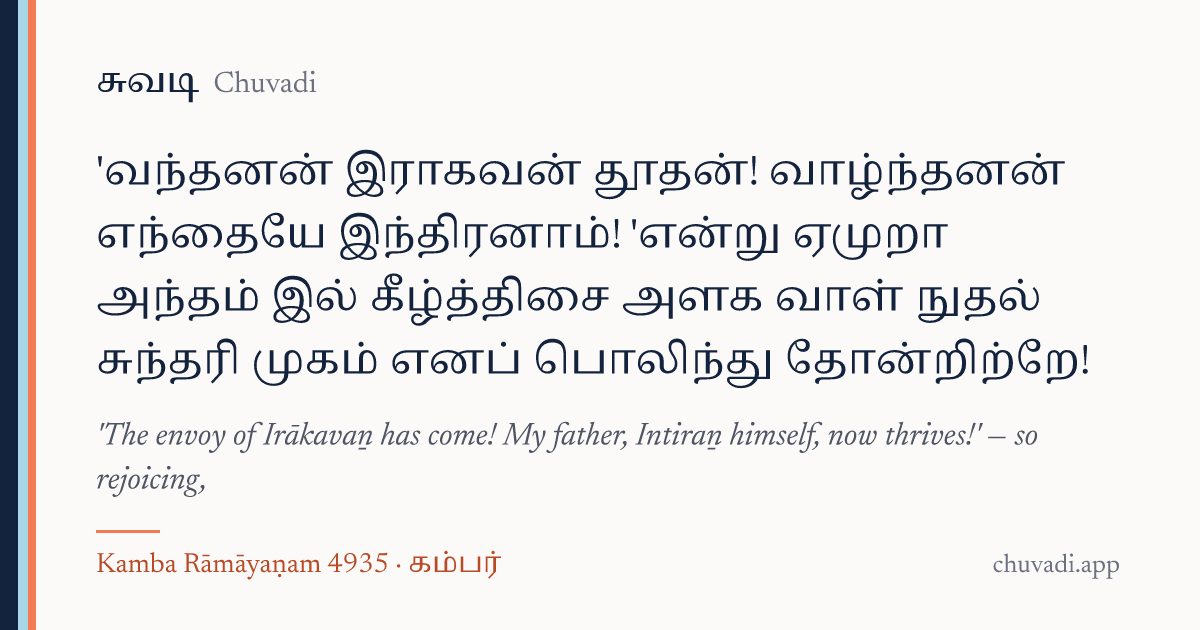
கம்பராமாயணம் 4935 · சுந்தர 3.53
பாடல் · The poem
Tap a word to see its gloss in the commentary and where else it occurs.
பாட வேறுபாடு · Project Madurai reads
பொருள் · Meaning in Tamil
(முளைத்த இந்து)
இராகவன் தூதன் - இராமபிரானுடைய தூதனாகிய அனுமன்; வந்தனன்- இலங்கைக்கு வந்துவிட்டான் (அதனால்); இந்திரனாம் - இந்திரனாகிய, எந்தையே - என்னுடைய தந்தையே; வாழ்ந்தனன் - நல்வாழ்வுபெற்றுவிட்டான்; என்று - என்று நினைத்து; ஏம்உறா- மகிழ்ச்சியடைந்து; அந்தம் இல் - எல்லை இல்லாத; கீழ்த்திசை - கிழக்குத் திசையாகிய; அளகவாள் நுதல் சுந்தரி - சுருள்குழல் அசையும் நெற்றியையுடைய சுந்தரியின்; முகம் என - முகம்போல; பொலிந்து தோன்றிற்று - வெளிப்பட்டது. அனுமன் இலங்கைக்கு வந்ததால் இந்திரன் வாழ்வுபெறுவான், என்று கிழக்குத் திசைப் பெண்ணின் முகம் போலச் சந்திரன் தோன்றினான். சந்திரன் ஆரம்பத்தில் அறம்போல முளைத்தான் இப்போது அவன் சுந்தரியின் முகம்போலப் பொலிந்தான். மனைவி கணவனைத் தந்தை என்று கூறாள், என்று கருதி “எந்தை” என்பதற்கு 'தலைவன்' என்று உரை கூறினார்கள். சங்க காலத் தலைவி, தலைவனை, அன்னையும் அத்தனும் அல்லரோ என்று பேசினாள் (குறுந்- -93). சுந்தரி - இந்திராணியையும் குறிக்கும். கிழக்குத்திசைப் பெண்ணை - இந்திரன் மனைவி என்றான் கவிச்சக்கரவர்த்தி. அளகம் - முன்நெற்றி மயிர் அது சிறிதே வளர்ந்து நெற்றியில் அசையும் 'மஞ்சொக்கும் அளக ஓதி' (கம்ப. 3130). இனி இந்திரனே சுவாமி ஆவான் எனச் சந்தோஷத்துடன் சந்திரன் எழுந்தது. இவ்உரையின்படி 'ஏமுற்று' என்ற எச்சம் இந்துவைச் சாரும். சந்திரன் இந்திரன் எந்தையென்று போற்றுகிறான்.
ஆங்கிலம் · English translationAI
Translation
- 'The envoy of Irākavaṉ has come! My father,
- Intiraṉ himself, now thrives!' — so rejoicing,
- like the face of the lovely lady of the boundless eastern quarter, with curls
- upon her bright brow, it rose, shining!
What the poem says
The moon rising in the east is compared to the face of the lady of the East, the direction ruled by Intiraṉ. She rejoices that Irāmaṉ's messenger has come, because it means her lord Intiraṉ will soon be freed from Irāvaṇaṉ's oppression.
The commentary discusses why she calls Intiraṉ "my father": some take it as "my lord". It also offers a reading in which it is the Moon itself that rejoices.