



கம்பராமாயணம் 4940 · சுந்தர 3.58
பாடல் · The poem
Tap a word to see its gloss in the commentary and where else it occurs.
பாட வேறுபாடு · Project Madurai reads
பொருள் · Meaning in Tamil
மல்லிகை மலர்தொறும் - மல்லிகைப் பூக்கள்தோறும்; வதிந்த - மொய்த்திருக்கின்ற; வண்டு எலாம் - வண்டுகள் யாவும்; எல்லியின் - இரவுக் காலத்திலே; நிமிர் - செருக்குக் கொள்ளும்; இருள் குறையும் - இருளின் துண்டங்களும்; அவ் இருள் - அந்த இருளை; கல்லிய - பெயர்த்தெடுத்த; நிலவின் வெண்முறியும் - சந்திரனின் வெள்ளிய துண்டங்களும்; கவ்வின - (தமக்குள் கடித்துப் பிடுங்கி (எதிரியை); புல்லிய பகையென - அற்பப்பகை என்று கருதி; பொருவ போன்றன - போராடுவது போன்றிருந்தன.
மல்லிகைப்பூவில் வண்டுகள் மொய்ப்பது, இருளின் துண்டமும் நிலவின் துண்டமும், தம்முள் கடித்துப் பிடுங்கிப் போராடுவது போன்றிருந்தது. சந்திரனால் ஒழிந்த இருள் துண்டம் துண்டமாக, அந்தச் சந்திரன் எடுத்த சிற்றுருவில் போர் பண்ணுகிறது போல. மல்லிகை, சந்திரன் எடுத்த சிற்றுரு. (பழைய உரை. கவ்வுதல் - கடித்துப் பிடுங்குதல். (நாலடி 70.)
ஆங்கிலம் · English translationAI
Translation
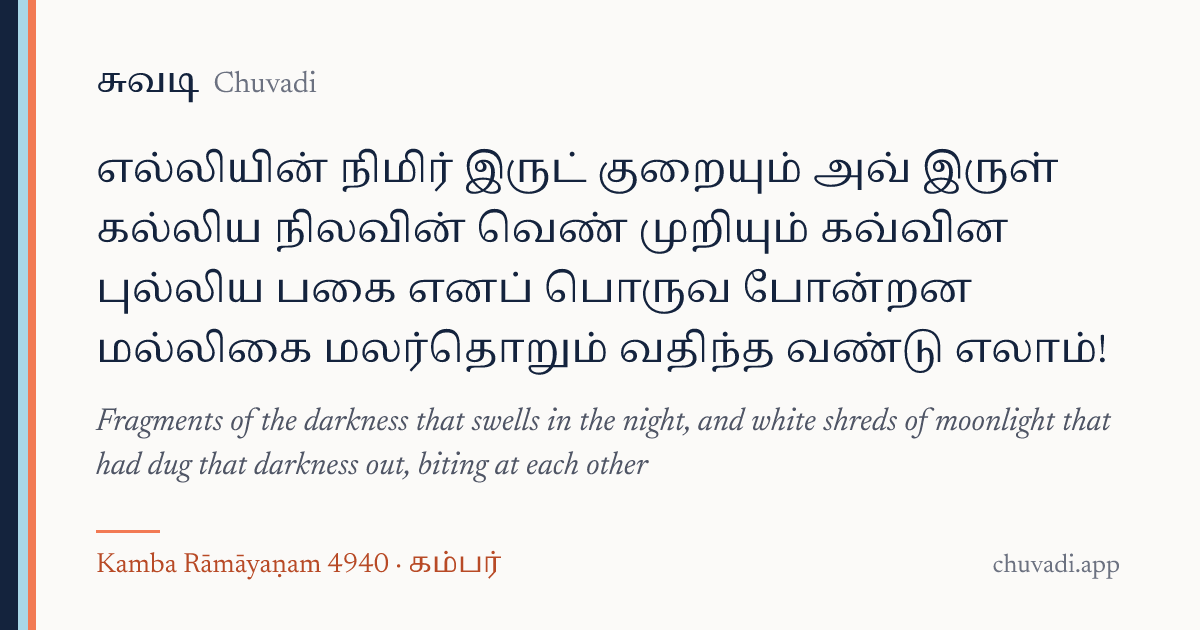
- Fragments of the darkness that swells in the night, and white shreds
- of moonlight that had dug that darkness out, biting at each other
- as at a petty foe, seemed to be fighting —
- so looked all the bees settled on every jasmine flower!
What the poem says
In the moonlit gardens, black bees cling to white jasmine blossoms. To Aṉumaṉ they look like scraps of darkness and scraps of moonlight locked in a fight, biting at each other as if each scorned the other as a petty enemy.
An older commentary explains it as the darkness, routed by the moon, carrying on the battle in miniature against the moon's small white forms, the jasmine flowers.