



கம்பராமாயணம் 4952 · சுந்தர 3.70
பாடல் · The poem
Tap a word to see its gloss in the commentary and where else it occurs.
பொருள் · Meaning in Tamil
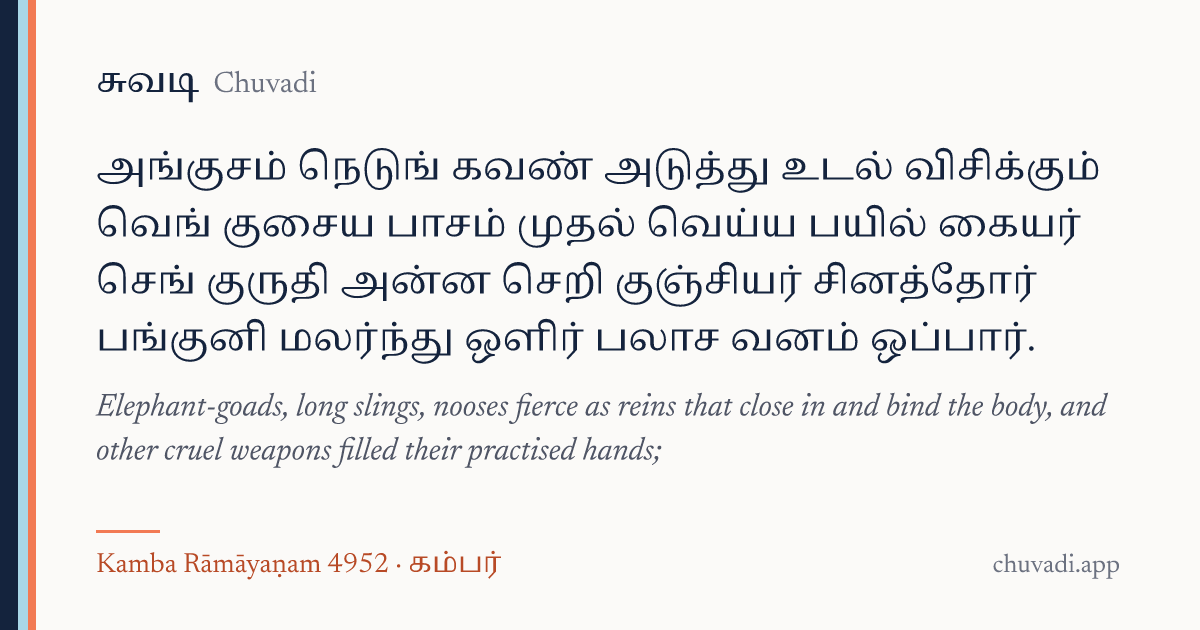
செங்குருதி அன்ன- சிவந்த இரத்தம் போன்ற; செறி குஞ்சியர் - அடர்ந்த தலைமயிரை உடையவர்களும், சினத்தோர் - கோபம் உடையவர்களும்; பங்குனி மலர்ந்து - பங்குனி மாதத்திலே பூத்து; ஒளிர் - (இலையின்றி) ஒளி வீசுகின்ற, பலாசவனம் ஒப்பார் - புரசங்காட்டிற்கு ஒப்பானவர்களுமான அரக்கர்கள்; அங்குசம் - மாவெட்டி; நெடுங்கவண் - நீண்ட தூரத்தில் கல் எறியும் கவண்; அடுத்து - பகைவரைச் சார்ந்து; உடல் விசிக்கும் - உடலைப் பிணிக்கும்; வெம்குசைய - வெவ்விய கடிவாளம் போன்ற; பாசம்முதல் - பாசம் முதலான; வெய்ய - கொடிய ஆயுதங்கள்; பயில்கையர் - பழகிய கைகளை உடையவராய் இருந்தனர். பலாச வனம்போல் சிவந்த தலைமயிரை உடைய அரக்கர்கள் அங்குசம் முதலான படைக்கலங்களை ஏந்தியவராய் இருந்தனர். குசை- கடிவாளம். இதற்குத் தருப்பை என்றும், கச்சு என்றும் பொருள் கூறப் பெற்றது. தருப்பைபோல் அறுக்கவல்ல பாசம் என்று விளக்கம் பேசப்பட்டது. குசைய - கடிவாளம் போன்ற - அ. அசை ஆளி போல் மொய்ம்பு என்றார் - நச்சர்- அ - அசை என்றார் (சிந-517)
ஆங்கிலம் · English translationAI
Translation
- Elephant-goads, long slings, nooses fierce as reins that close in
- and bind the body, and other cruel weapons filled their practised hands;
- wrathful, with thick hair like red blood,
- they were like a palāsa forest blazing in bloom in Paṅkuṉi.
What the poem says
More weapons: goads, long-range slings and binding nooses, all handled with practised skill.
The angry guards, with their thick blood-red hair, look like a forest of palāsa trees (the "flame of the forest"), which blaze with red flowers on leafless branches in the spring month of Paṅkuṉi.