



கம்பராமாயணம் 4970 · சுந்தர 3.88
பாடல் · The poem
Tap a word to see its gloss in the commentary and where else it occurs.
பாட வேறுபாடு · Project Madurai reads
பொருள் · Meaning in Tamil
எண்ணம்பிழையாதான் - நினைவாலும் தவறு செய்யாத அனுமன்; உம்பர் உவப்ப - தேவர்கள் மகிழும்படி; உயர்காலம் பிடித்தாள் - சிறந்த பாசத்தைப் பற்றிய இலங்கைத்தேவி, துண் என - திடுக்கிடும்படியாகவும்; தடித்து ஆம் என்ன - மின்னலே ஒப்பு என்று கூறும்படி; தன் எதிர் செல்லும் - தன் முன்னே வரும்; தழல்வேலை - நெருப்பைக் கக்கும் வேலாயுதத்தை; கடித்தான் - பற்களால் கடித்து; கையால் - கைகளால்; விண்ணில் - ஆகாயத்தின்கண்; நாகம் - பாம்புகளை; முரிக்கும் கலுழன்போல் - முறிக்கின்ற கருடனைப் போல; ஒடித்தான் - துண்டு துண்டாகச் சிதைத்தான்.
காலம் - பாசம். “சூலம் எனில் அன்று. இது தொல்லை வரும் காலம்” (கம்ப . 8378) அண் - கழகம்) காலம் பிடித்தாள் - அச்சூலத்தை நீண்ட காலம் பிடித்தவள் என்று கூறப் பெற்றவுரை நன்றேல் கொள்க. காலம் பிடித்தாள் (என்பதை) - சூலம் பிடித்தான் என்று பாட பேதம் செய்தாரும் உளர்.
ஆங்கிலம் · English translationAI
Translation
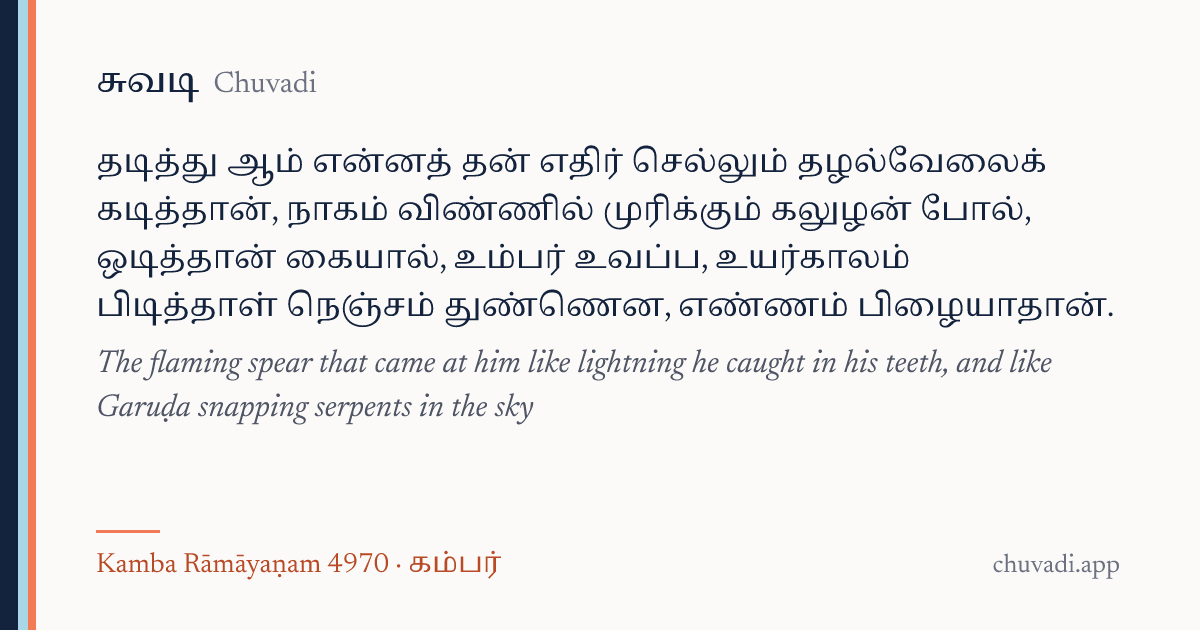
- The flaming spear that came at him like lightning
- he caught in his teeth, and like Garuḍa snapping serpents in the sky
- he broke it with his hands, so that the gods rejoiced and she who held the great noose
- was shaken to the heart — he whose thought never errs.
What the poem says
Aṉumaṉ, whose judgement never fails him, catches the blazing trident in his teeth as it streaks toward him like lightning.
He snaps it in his hands the way Garuḍa breaks serpents in mid-air. The gods watching are delighted, and the goddess, who carries a noose as well, is shocked. The commentary records other readings of the phrase about the noose.