



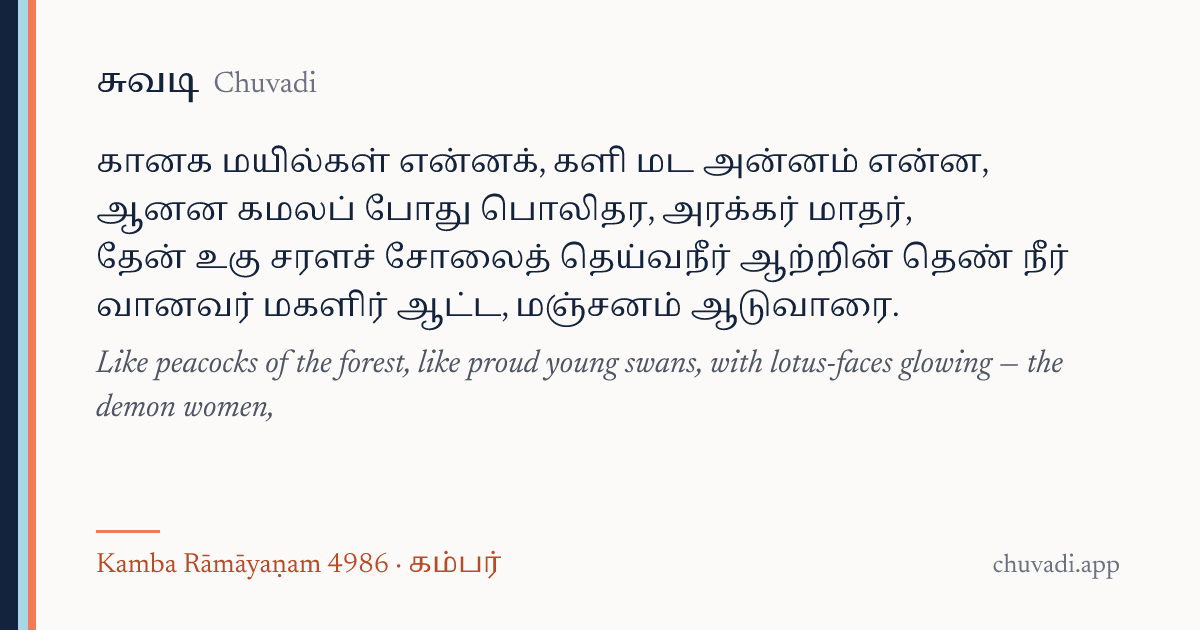
கம்பராமாயணம் 4986 · சுந்தர 3.104
பாடல் · The poem
Tap a word to see its gloss in the commentary and where else it occurs.
பாட வேறுபாடு · Project Madurai reads
பொருள் · Meaning in Tamil
ஆனன கமலம் போது- முகமாகிய தாமரை மலர்கள்; பொலிதர - விளங்கித் தோன்ற (மகிழ்ச்சியுடன்; வானவர் மகளிர் - தேவலோகப் பெண்கள்; தேன் உகு சரளச் சோலை - தேன்சிந்தும் தேவதாரு சோலையில்; தெள்நீர்- தெளிந்த தண்ணீரால்; ஆட்ட - நீராட்ட; கானக மயில்கள் என்ன - காட்டு மயில்கள் போலவும்; தெய்வநீர் ஆற்றில் - (ஆகாய) கங்கையாற்றில்; ஆட்ட - நீராட்ட; களிமட அன்னம் என்ன - களிப்பும் இளமையும் பெற்ற அன்னம் போலவும்; ஆடுவார் - நீராடுகின்ற; அரக்கர் மாதரை - அரக்கப் பெண்களையும்.
நீராட்டும் தேவமகளிர் மலர்ந்த முகத்துடன் பணி செய்கின்றனர் என்பதை விளக்க கமலப் போது பொலிதர என்றான். இவ்வடை மொழி அரக்கியர்க்கு அமையாமையை அறிக. சோலையில் மயில் போலவும், ஆற்றில் அன்னம் போலவும் நீராடினர். மயில்கள் போலவும், அன்னம் போலவும் சோலையில், ஆற்றில் ஆட்ட ஆடும் அரக்கியரை - என்று பொருள் கூறுவர். /04முதல் /2/ ஆம் பாடல் வரை ஒரு தொடர் இரண்டாம் வேற்றுமை 'ஐ' கண்டார் என்பதை அவாவும்.
ஆங்கிலம் · English translationAI
Translation
- Like peacocks of the forest, like proud young swans,
- with lotus-faces glowing — the demon women,
- in groves of honey-dripping pines and in the clear water of the divine river
- bathed by the women of the gods: these bathers too he beheld.
What the poem says
This verse starts a long sequence, running for many verses, of scenes that Aṉumaṉ sees as he searches. The verb "he saw" comes only at the end of the series.
The demon women are bathed in the groves like peacocks, and in the heavenly river like swans. The celestial women serving them keep smiling faces, "lotus-faces glowing", even in this humiliating work.