



கம்பராமாயணம் 4990 · சுந்தர 3.108
பாடல் · The poem
Tap a word to see its gloss in the commentary and where else it occurs.
பாட வேறுபாடு · Project Madurai reads
பொருள் · Meaning in Tamil
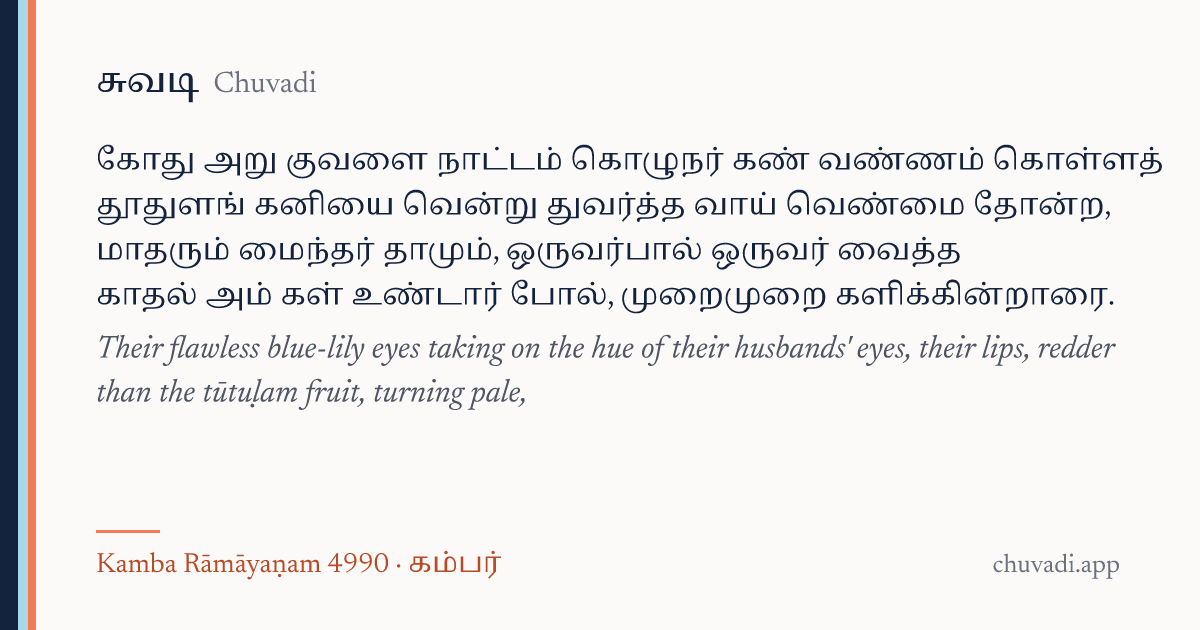
கோது அறு - குற்றம்இல்லாத, குவளை நாட்டம் - (அரக்கியரின் குவளைப் பூப் போன்ற கரிய கண்கள்; கொழுநர் - தம் கணவரின்; கண்வண்ணம் கொள்ள - கண்ணின் (சிவந்த) இயல்பைப் பெறவும்; தூதுளங்கனியை - தூதுளம் பழத்தை; வென்று - (நிறத்தால்) வெற்றி கொண்டு; துவர்த்த வாய் - செந்நிறம் பெற்ற வாயில் வெண்மை தோன்ற - வெண்மை நிறம் வெளிப்படவும்; (பூரண இன்பம் பெற்று) மாதரும் - அரக்கப் பெண்களும்; மைந்தர்தாமும் - ஆடவர்களும்; ஒருவர் மேல் ஒருவர் வைத்த - ஒருவர் பால் ஒருவர் கொண்டுள்ள; காதல்அம் கள் - காதலாகிய மதுவை; உண்டார்போல் - உண்டவர்போல்; முறைமுறை - மாறி மாறி; களிக்கின்றாரை - செருக்குக் கொள்பவராகிய காதலர்களையும்.
கரிய கண்கள் சிவத்தலும், சிவந்த வாய் விளர்த்தலும் புணர்ச்சியால் உண்டாகும். களி - உள்ளச் செருக்கு - (திருக்கோவை 52. பேராசிரியர் இச்செருக்கு - உவகை மிகுதி தந்தது. இது சம்போகம் (புணர்ச்சி)
ஆங்கிலம் · English translationAI
Translation
- Their flawless blue-lily eyes taking on the hue of their husbands' eyes,
- their lips, redder than the tūtuḷam fruit, turning pale,
- the women and the men, as if they had drunk the sweet toddy of the love
- each held for the other, revelling by turns — these he saw.
What the poem says
Other couples are in the full joy of union. The women's dark eyes have turned red like their husbands', and their red lips have gone pale, both conventional signs of lovemaking in Tamil poetry.
Men and women alike seem drunk on the wine of their love for each other. The commentary classes this as love in union.