



கம்பராமாயணம் 5000 · சுந்தர 3.118
பாடல் · The poem
Tap a word to see its gloss in the commentary and where else it occurs.
பாட வேறுபாடு · Project Madurai reads
பொருள் · Meaning in Tamil
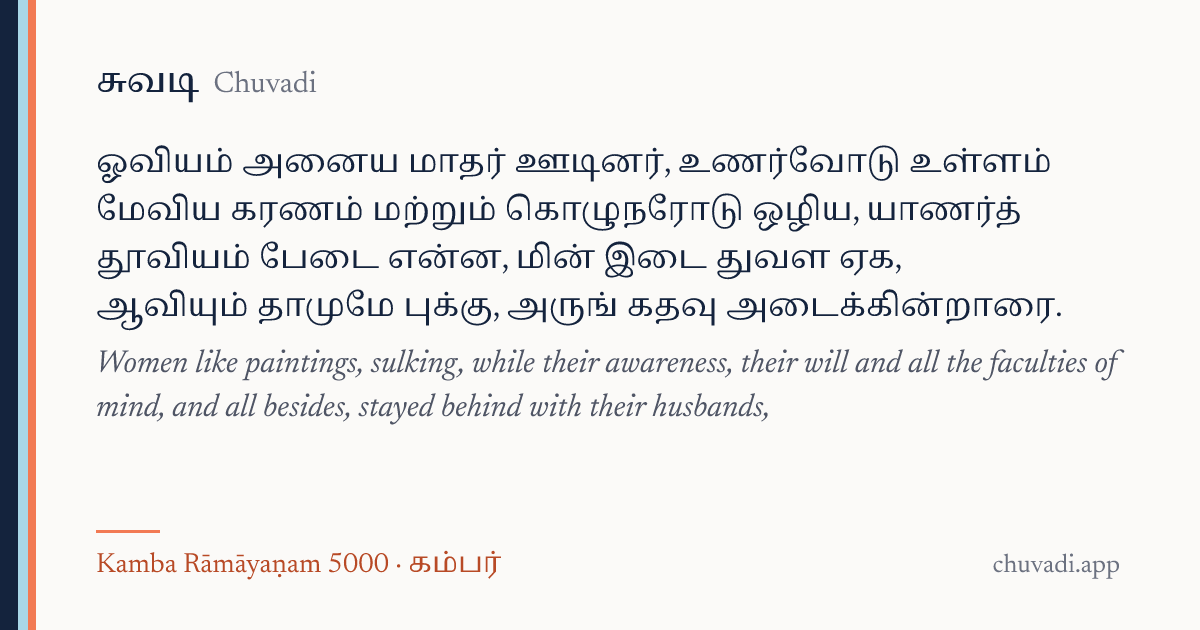
உணர்வோடு உள்ளம் - உணர்ச்சியும் ஊக்கமும், மேவிய கரணம் - ஒன்றியிருக்கும் அந்தக் கரணங்களும்; மற்றும் - பிற பொருள்களும்; கொழுநரோடு ஒழிய - கணவர்பால் சென்று தங்க (தனித்திருந்து); ஊடினர் - ஊடல் கொண்டு; யாணர் - அழகிய; தூவியம் பேடை என்ன - இறகையுடைய பெண் அன்னம் போல; மின் இடை - மின்னல் போன்ற இடையானது; துவள ஏக - துவளும்படியாகப் புறம்பே போய்; ஆவியும் தாமுமேயாம் - பெருமூச்சும் தாமுமாக இருந்துகொண்டு; அருங்கதவு அடைக்கின்றார் - சிறந்த கதவை அடைக்கின்ற, ஓவியம் அனைய மாதர் - சித்திரம் போன்ற மாதரையும். கரணம்- மனம், புத்தி சித்தம், அகங்காரம். உணர்வு-அறிவு உள்ளம்- ஊக்கம். தலைவிக்கு உதவியாக இருந்தது பெருமூச்சே. உள்ளம் மேவிய கரணம் என்பதை ஒரு தொடராக்கி அந்தக் கரணம் என்று உரை கூறுவர், சிலர் உள்ளம் - மனம் என்பர் சிலர். ஆவி-உயிர் என்று கூறப்பெற்றது. ஆவி-பெருமூச்சு. 'உணர்வு அழுங்க உயிர்த்தனள் ஆவியே' (கம்ப. 1092.) ஐ உருபு மாதருடன் கூட்டப் பெற்றது - அடைக்கின்ற மாதரை என அமைக்க.
ஆங்கிலம் · English translationAI
Translation
- Women like paintings, sulking, while their awareness, their will
- and all the faculties of mind, and all besides, stayed behind with their husbands,
- like lovely feathered hen-swans, their lightning-waists swaying, went out
- and, with only their sighs for company, entered and shut the strong doors.
What the poem says
Some women, beautiful as paintings, storm off from their husbands in a sulk. Their hearts and minds stay behind with the men, so they leave with nothing but themselves.
Swaying like swans, they go into a room alone with their sighs and shut the heavy door behind them. The commentary explains the "faculties of mind" and the double sense of the word for breath or life.