



கம்பராமாயணம் 5009 · சுந்தர 3.127
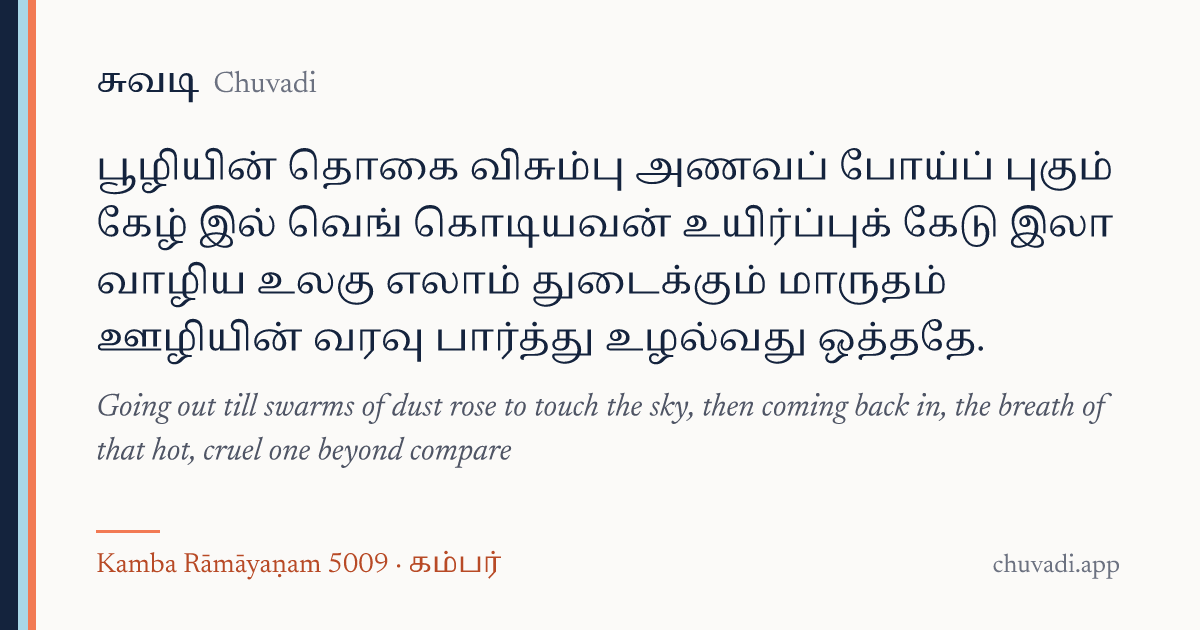
பாடல் · The poem
Tap a word to see its gloss in the commentary and where else it occurs.
பாட வேறுபாடு · Project Madurai reads
பொருள் · Meaning in Tamil
விசும்பு - ஆகாயத்தில்; பூழியின் தொகை - புழுதிக்கூட்டம்; அணவ - மேல் நோக்கிச் செல்லும்படி; போய் - வெளியே சென்று; புகும் - உள்ளே நுழையும், கேழ் இல் - ஒப்புமையற்றதும் வெம் - வெப்பமானதும் ஆய; கொடியவன் - கும்பகர்ணனது; உயிர்ப்பு - உறக்க மூச்சு; கேடு இலா - கெடுதல் இல்லாத; உலகு எலாம் - எல்லா உலகங்களையும்; துடைக்கும் - அழிக்கின்ற; மாருதம் - பிரளயக் காற்று; ஊழியின் வரவு பார்த்து - யுகமுடிவை எதிர்பார்த்து; உழல்வது ஒத்ததே - திரிந்து கொண்டிருப்பதைப் போன்றது.
புழுதித் தொகை விண்ணிற் படர விண்ணிலே சென்று மீண்டு வரும் உறக்க மூச்சு, ஊழிக்காலத்தை எதிர்பார்க்கும் பிரளயக்காற்று ஒத்தது. சண்டமாருதம் ஊழிக்காலம் வருதே என்று பார்ப்பது போன்று மூச்சு வெளியே புறப்பட்டது. அந்த வாயு நமக்கு இன்னும் காலம் வரவில்லை என்று பின்வாங்கல் ஒத்தது என்ற உ.வே.சா. நூல்நிலையப் பதிப்பு உரை சிறப்பாக உள்ளது. வாழிய - அசை
ஆங்கிலம் · English translationAI
Translation
- Going out till swarms of dust rose to touch the sky, then coming back in,
- the breath of that hot, cruel one beyond compare
- was like the wind that sweeps away all the undying worlds,
- roaming about as it watches for the coming of the end of the age.
What the poem says
Kumpakaruṇaṉ's breath rushes out, stirring clouds of dust as high as the sky, then rushes back in.
It is like the great wind that destroys the worlds at the end of an age. That wind seems to step out to see whether the time has come, then draw back because it is not yet due. The commentary praises this interpretation from an earlier edition.