



கம்பராமாயணம் 5021 · சுந்தர 3.139
பாடல் · The poem
Tap a word to see its gloss in the commentary and where else it occurs.
பொருள் · Meaning in Tamil
(அவ்விடத்தில்) (அனுமன்) ஏதி ஏந்திய - ஆயுதங்களைத் தாங்கிய; தடக்கையர் - பெருங்கரங்களைப் பெற்றவர்களும்; ஓதில் - பேசத் தொடங்கினால்; பிறை எயிறு இலங்க - பிறையைப் போன்ற பற்கள் துலங்க; மூதுரை - பழமொழிகளையும்; பெருங்கதைகளும் - பெரிய கதைகளையும்; பிதிர்களும் - விடுகதைகளையும்; மொழிவார் - பேசுபவர்களும்; காது - பகைவர்களைக் கொல்லும்; வெஞ்சினக் களியினர் - செற்றமாகிய மதுவை அருந்தியவர்களும் ஆகிய; உறுவலி - மிக்க வலிமையுடைய; ஆயிரம் ஆயிரம் அரக்கர் - பல்லாயிரக்கணக்கான எண்ணிக்கை பெற்ற அரக்கர்கள்; காவலை - காக்கும் இடங்களை; கடந்தான் - தாண்டி உள்ளே போனான்.
ஓதில் என்னும் எச்சச் சொல் மூதுரை முதலானவற்றைப் பேசுபவர்களைச் சாரும். பலர் பழமொழியில்லாமலும் விடுகதையில்லாமலும் பேசத்தெரியாமல் உள்ளனர். ஏது நுதலிய முதுமொழி என்பர் காப்பியர். பிசியைக் கவிச்சக்கரவர்த்தி ‘பிதிர்’ என்றார். பிசியின் இலக்கணம் தொல்காப்பியச் செய்யுளியலிற் காண்க. பிசி, பிதிராகி இன்று புதிராகிவிட்டது.
ஆங்கிலம் · English translationAI
Translation
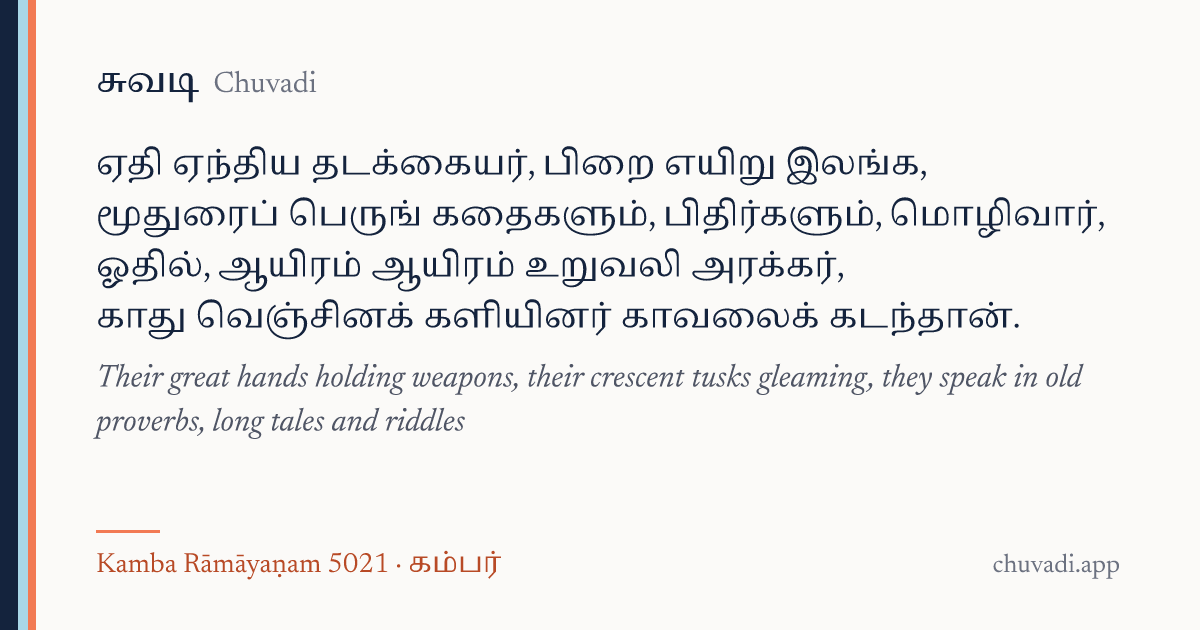
- Their great hands holding weapons, their crescent tusks gleaming,
- they speak in old proverbs, long tales and riddles
- whenever they open their mouths; thousands upon thousands of mighty demons,
- drunk on killing rage: he passed beyond their guard.
What the poem says
At the prison gate stand thousands of armed demon guards, fierce and drunk on their own rage. They pass the time talking, and whenever they speak it is all proverbs, long stories and riddles. Aṉumaṉ slips past them all.
The commentary enjoys the realistic touch: many people cannot talk at all without proverbs and riddles. It notes that the old Tamil word for riddle, pici, became pitir in Kampaṉ's time and putir today.