



கம்பராமாயணம் 5022 · சுந்தர 3.140
பாடல் · The poem
Tap a word to see its gloss in the commentary and where else it occurs.
பாட வேறுபாடு · Project Madurai reads
பொருள் · Meaning in Tamil
புகைபுகா வாயிலும் புகுவான் - புகை நுழையாத இடத்திலும் புகும் அனுமன்; முக்கண் நோக்கினன் - மூன்று கண்ணாற் பார்க்கின்ற இறைவனின்; முதல்மகன் - சிறப்புற்ற மகனான முருகப்பிரான்; அறுவகை முகமும் - ஆறுவகையான முகங்களிலும்; திக்கு நோக்கிய புயங்களும் (கரங்களும்) - திசைகளை நோக்கிய பன்னிருகரங்களிலும்; சில - சில முகங்களையும் சில கரங்களையும்; கரந்தனையான் - ஒளித்துக் கொண்டாற் போன்று தோன்றுபவனும்; ஒக்க நோக்கியர் - ஒரேபடித்தான அழகுடைய மகளிர்களின்; குழாத்திடை - கூட்டத்தின் நடுவில்; உறங்குகின்றானை - உறங்குபவனும் ஆகிய இந்திரஜித்தனை; புக்கு - அவன் அரண்மனைக்குள் புகுந்து; நோக்கினன் - பார்த்தான்.
ஒக்கநோக்கியர் - அவயவம் முழுதும் அழகிய பெண்கள் என்பது பழையவுரை (அடை - பதி)
ஆங்கிலம் · English translationAI
Translation
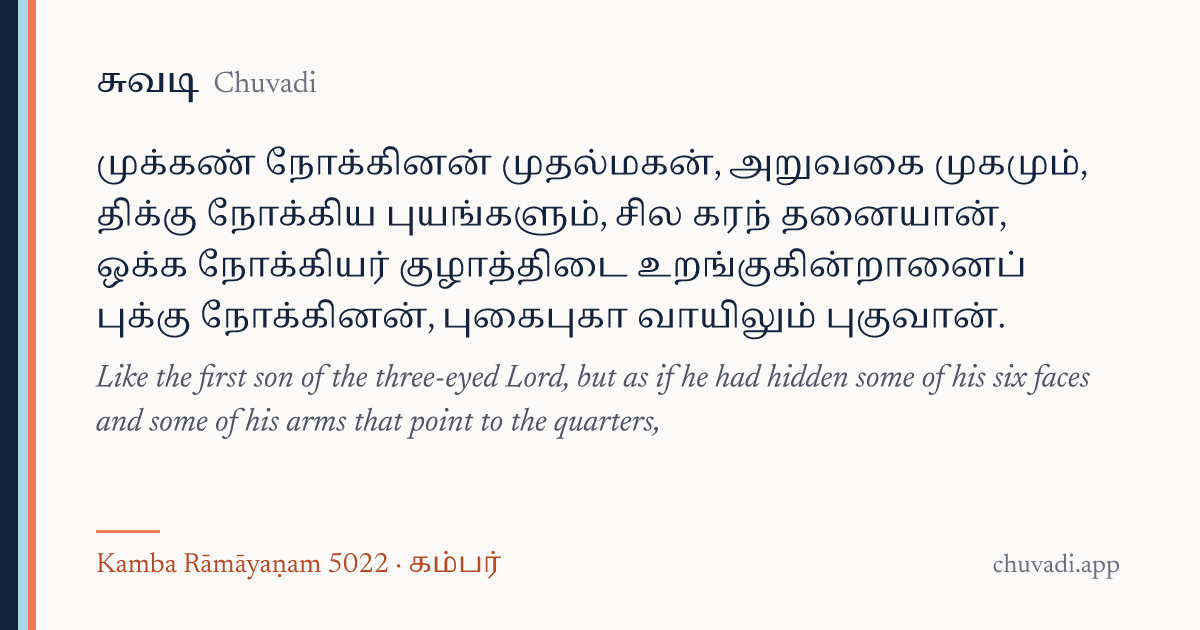
- Like the first son of the three-eyed Lord, but as if he had hidden
- some of his six faces and some of his arms that point to the quarters,
- was one sleeping amid a throng of women equal in beauty;
- he went in and looked at him, he who enters even doorways smoke cannot enter.
What the poem says
Aṉumaṉ, who can slip in where not even smoke can go, enters the palace of Intiracittu, Irāvaṇaṉ's warrior son, and finds him asleep among many lovely women.
The sleeping prince looks like Murukaṉ, the son of three-eyed Civaṉ, except that he seems to have hidden some of Murukaṉ's six faces and twelve arms. So he looks like the war god with only one face and two arms: a hint at his matchless prowess in battle.