



கம்பராமாயணம் 5029 · சுந்தர 3.147
பாடல் · The poem
Tap a word to see its gloss in the commentary and where else it occurs.
பாட வேறுபாடு · Project Madurai reads
பொருள் · Meaning in Tamil
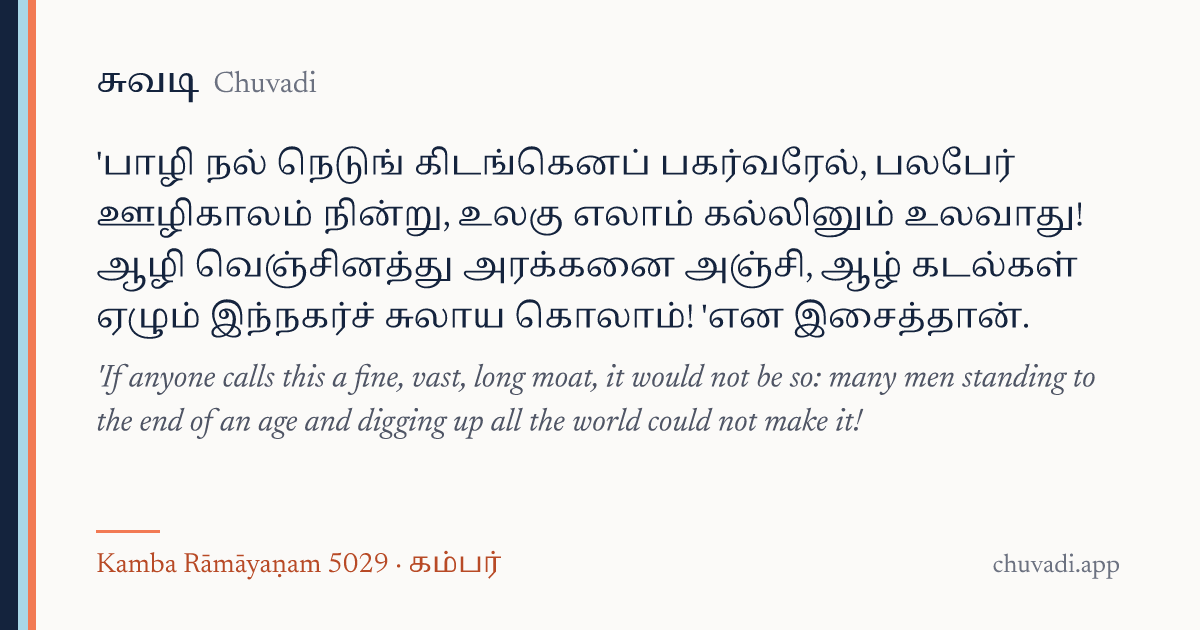
(அனுமன்) (இந்நீர்ப்பரப்பை) பாழி - பெரும்பரப்புடைய; நல் - சிறந்த; நெடுங் கிடங்கு என - நீண்ட அகழி என்று; பகர்வரேல் - யாவராவது கூறுவாரேயானால்; (பொருந்தாது ஏன் எனில்) பலபேர் - பலமனிதர்கள்; ஊழிகாலம் நின்று - உகமுடிவுக்காலம் வரை உறுதியாயிருந்து; உலகு எலாம் - எல்லாவுலகங்களையும்; கல்லினும் - தோண்டினும்; உலவாது - அமைக்கவியலாது; (ஆதலால்) இஃது ஆழி - ஆழமான; வெஞ்சினத்து - கொடுஞ்சினத்தையுடைய; அரக்கனை அஞ்சி - அரக்கனுக்குப் பயந்து; ஆழ்கடல்கள் ஏழும் - ஏழுபெருங்கடல்களும்; இந்நகர் - இந்த இலங்கையை; சுலாய கொல் - சுற்றியுள்ளனவே; என - என்று; இசைத்தான் - கூறினான்.
மனிதரால் படைக்கப்படுவது அகழி. இஃது அன்னது அன்று, என்பது கருத்து. கொல் - ஐயம். ஆம் - அசை.
ஆங்கிலம் · English translationAI
Translation
- 'If anyone calls this a fine, vast, long moat, it would not be so: many men
- standing to the end of an age and digging up all the world could not make it!
- Out of fear of the demon of fierce, sea-deep wrath, the deep seas,
- all seven, must have come to circle this city!' So he said.
What the poem says
Aṉumaṉ goes on marvelling at the moat. No moat dug by people could be this size, even if crowds of workers dug up the whole earth until the end of an age.
He concludes, with wit, that the seven seas must have come of their own accord to coil around Ilaṅkai out of fear of Irāvaṇaṉ's terrible anger. The point is that this is no ordinary man-made moat.