



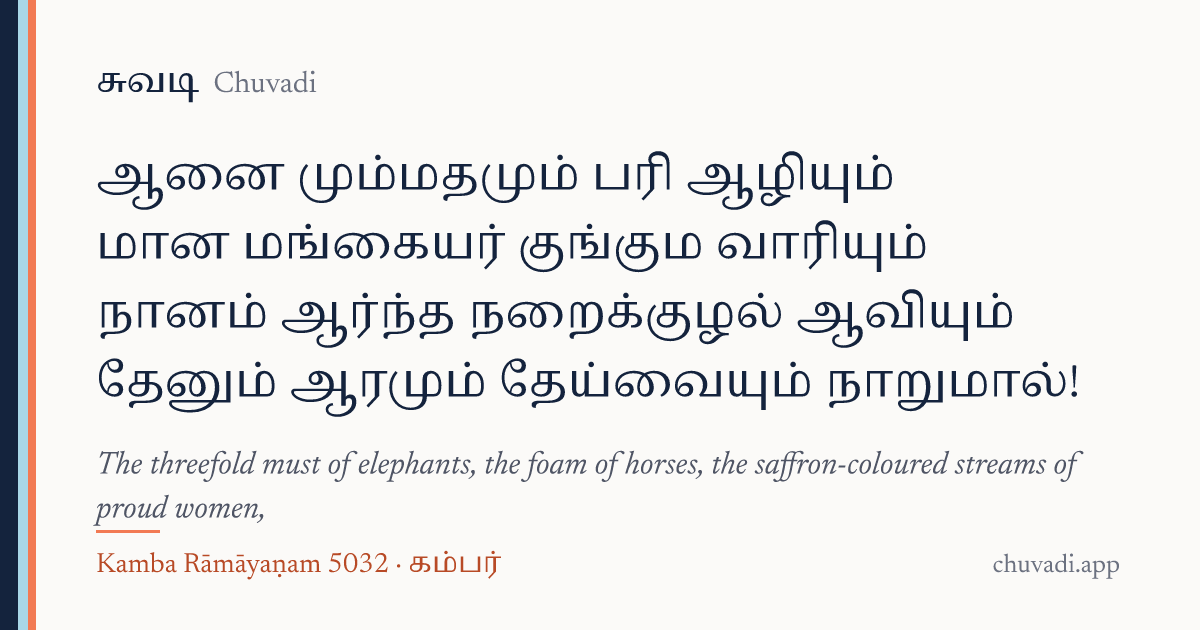
கம்பராமாயணம் 5032 · சுந்தர 3.150
பாடல் · The poem
Tap a word to see its gloss in the commentary and where else it occurs.
பொருள் · Meaning in Tamil
(அவ்வகழி) ஆனை மும்மதமும் - யானைகள் வெளிப்படுத்தும் மூன்று மதப் புனல்களும்; பரி ஆழியும் - குதிரையின் வாயின் நுரையும்; மானமங்கையர் - பெருமைமிக்க பெண்களின்; குங்கும வாரியும் - குங்குமம் கலந்த நீர்ப் பெருக்கும்; நானம் ஆர்ந்த - நீராடும் பெண்களின்; நறை - நறுமணம் வீசும்; குழல் ஆவியும் - கூந்தலிற் பூசிய கஸ்தூரியும்; தேனும் ஆரமும் - தேனும் சந்தனமும்; தேய்வையும் - கலவைக் குழம்பும்; நாறும் - கமழும். அகழி, மும்மதம் முதலானவை மணக்கும். மகளிர் கூந்தல் மணமுடையது என்னும் இலக்கிய வழக்கு நறைக்குழல் என்று பேசச் செய்தது, கூந்தலின் நறியவும் உளவோ என்று குறுந்தொகை பேசும். ஆரம் - சந்தனம். “கோவா மலை ஆரம் கோத்த கடலாரம்” என்று சிலம்பு பேசும். தேய்வை - குழம்பு. ஆல் - அசை
ஆங்கிலம் · English translationAI
Translation
- The threefold must of elephants, the foam of horses,
- the saffron-coloured streams of proud women,
- the scent of fragrant tresses steeped in musk,
- honey, sandal and paste: of all these it smells!
What the poem says
The moat is fragrant with everything that has been washed into it: the musth fluid of the war elephants, the foam from the horses' mouths, saffron from bathing women, and the musk, honey, sandal and perfumed pastes from their hair and bodies.
The scents show both the military strength and the luxury of Irāvaṇaṉ's capital. The fragrant hair of women is an old convention of Tamil poetry.