



கம்பராமாயணம் 5087 · சுந்தர 3.205
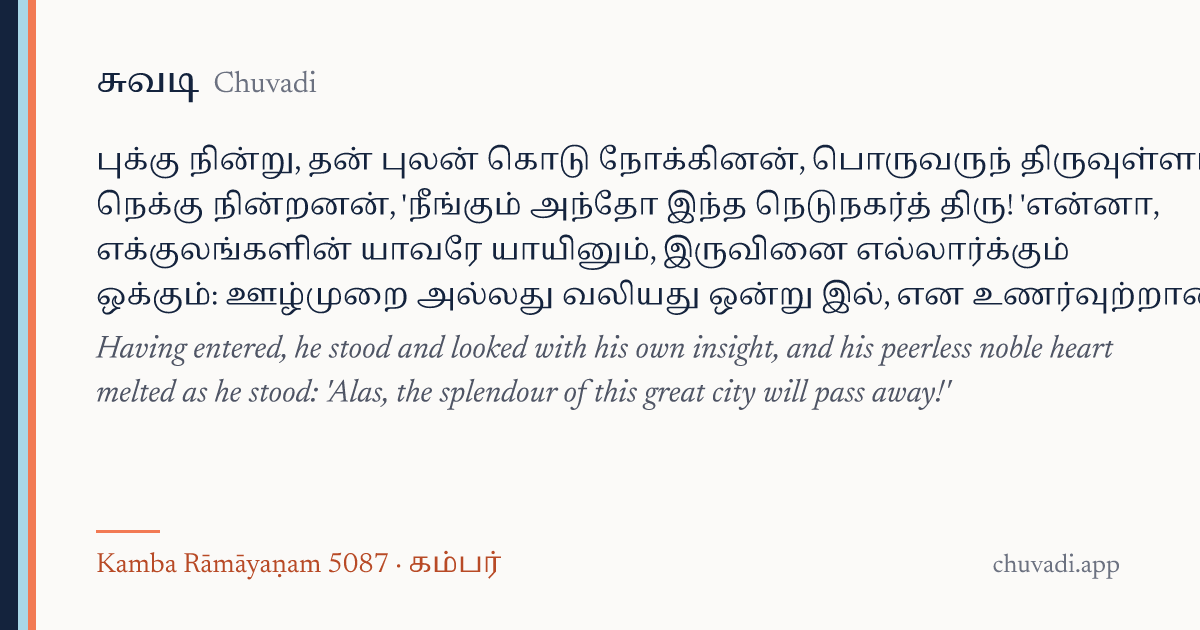
பாடல் · The poem
Tap a word to see its gloss in the commentary and where else it occurs.
பாட வேறுபாடு · Project Madurai reads
பொருள் · Meaning in Tamil
(அனுமன்) புக்கு நின்று - போய்நின்று; தன் - தன்னுடைய; புலன்கொடு - அறிவைக்கொண்டு; நோக்கினன் - பார்த்து; இந்த நெடுநகர்த்திரு - இந்த பெரிய நகரின் செல்வம்; நீங்கும் - அழியும்; அந்தோ - ஐயோ!; என்னா - என்று கருதி; பொரு அரு - ஒப்புமை இல்லாத; திருவுள்ளம் - நன்மனம்; நெக்கு நின்றனன் - நெகிழ்ந்து நின்றான்; எக்குலங்களின் - எந்தக் குலத்தினில் (தோன்றிய); யாவரேயாயினும் - எவராக இருந்தாலும்; எல்லோர்க்கும் - யாவருக்கும்; இருவினை - நல்வினை தீவினைகள்; ஒக்கும் - ஒரு மாதிரியே ஆகும்; ஊழ் - ஊழ் வினையின்; முறையல்லது - நியதியைத் தவிர; வலியது - வலிமையுடையது; ஒன்று - வேறொரு பொருள்; இல் என - இல்லை என்று; உணர்வுற்றான் - சிந்தித்தான்.
அனுமன், இலங்கையில் நிகழ்ந்த நிலன் துடித்தல் முதலிய உற்பாதங்களைக் கண்டு இந்நகரின் நிலைமை அறிந்து வருந்தினான்.
‘ஊழிற் பெருவலியாவுள’ என்னும் தமிழ்மறை (குறள் 380) அனுமன் மூலம் வெளிப்படுகிறது. பிறர்கேட்டை நினைந்து வருந்தினான் ஆதலின் பொருவறு திருவுள்ளம் என்றான்.
ஆங்கிலம் · English translationAI
Translation
- Having entered, he stood and looked with his own insight, and his peerless noble heart
- melted as he stood: 'Alas, the splendour of this great city will pass away!'
- and he understood: 'Whoever they may be, of whatever race, the two kinds of deeds
- work alike for all; there is nothing stronger than the order of fate.'
What the poem says
Standing inside the palace and seeing these omens, Aṉumaṉ understands that the glory of this great city is about to end, and his heart melts with pity.
He reflects that good and bad deeds bear fruit alike for every being, whatever race they belong to, and nothing is stronger than fate. This echoes the Tirukkuṟaḷ: "What is stronger than fate?" Aṉumaṉ's heart is called peerless because he grieves even for the ruin of his enemies.