



கம்பராமாயணம் 5089 · சுந்தர 3.207
பாடல் · The poem
Tap a word to see its gloss in the commentary and where else it occurs.
பொருள் · Meaning in Tamil
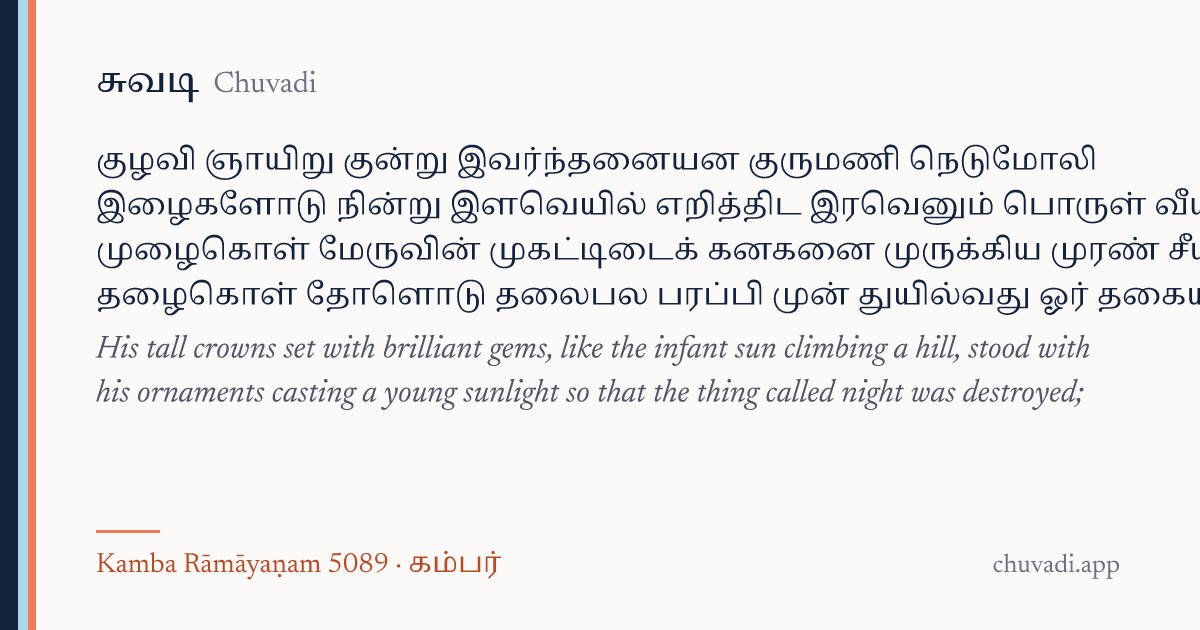
குன்று இவர்ந்தனையன - மலையின்கண் ஏறிய; குழவி ஞாயிறு அனைய - இளஞ்சூரியன் போன்ற; குருமணி - ஒளிமிக்க மணிகள் பதிக்கப்பெற்ற; நெடுமோலி - நீண்ட கிரீடங்கள்; இழைகளோடு நின்று - ஆபரணங்களுடன் நிலைத்து; இளவெயில் - மெல்லிய ஒளி; எறித்திட - வீசவும்; இரவெனும் - இருள் என்று பேசப்படும்; பொருள் வீய - பொருள் அழியவும்; முழைகொள் - குகைகளைப் பெற்ற; மேருவின் முகட்டிடை - மேருமலையின் உச்சியில்; கனகனை முருக்கி - இரணியனைக் கொன்ற; முரண்சீயம் - வலிமைபெற்ற நரசிங்கமூர்த்தி; தழைகொள் - (பலவாக) தழைத்தலைக் கொண்ட; தோளொடு - தோள்களையும்; தலை பல - பல தலைகளையும்; பரப்பி - பரப்பிக்கொண்டு; முன் துயில்வது - முன்னே உறங்குவதைப் போன்ற; ஓர் - ஒப்பற்ற; தகையானை - தன்மை உடையவனை (இராவணனை).
நரசிம்மமூர்த்தி மலையின் குகையில் இருப்பதாக உபநிடதம் (நரசிம்ம உபநிடதம் 409) பேசும். அது இங்கு நினைவுக்கு வருகிறது. முழையில் இருந்த சிங்கம் முகட்டில் வந்து இரணியனைக் கொன்றது போலும்.
ஆங்கிலம் · English translationAI
Translation
- His tall crowns set with brilliant gems, like the infant sun climbing a hill,
- stood with his ornaments casting a young sunlight so that the thing called night was destroyed;
- he was like the mighty lion who tore Kaṉakaṉ apart on the summit of cave-filled Mēru,
- lying asleep with its spreading shoulders and many heads stretched out before it!
What the poem says
Irāvaṇaṉ's many crowns, studded with gems, shine like the rising sun on a mountaintop, so that night itself seems to vanish around him.
With his many heads and spreading shoulders, he looks like Narasiṃha, the man-lion form of Viṣṇu, who killed the demon king Kaṉakaṉ (Hiraṇyakaśipu), resting on the peak of Mount Mēru. The comparison is full of irony, since Narasiṃha is a god who destroys demon kings.