



கம்பராமாயணம் 5093 · சுந்தர 3.211
பாடல் · The poem
Tap a word to see its gloss in the commentary and where else it occurs.
பாட வேறுபாடு · Project Madurai reads
பொருள் · Meaning in Tamil
மேல்நாள் - முற்காலத்தில்; கொண்ட பேர் ஊக்கம் மூள - மேற்கொண்ட பெரிய கிளர்ச்சி பெருக; திசைதொறும் - திக்குகள் தோறும்; குறித்து - பகைவர்களை வெல்ல எண்ணி; மண்டிய செருவில் - நெருங்கிய போரில்; மானத்தோள்களால் - மானமுடைய கைகளால்; வாரி வாரி - எடுத்தெடுத்து; உண்டது - உட்கொண்டது; தெவிட்டி - தேக்கிட்டு; பேழ் - பெரிய; கடைவாய்கள் தோறும் - கடைவாய்கள் தோறும்; ஒழுகிப்பாயும் - ஒழுகி வழிகின்ற; அண்டர்தம் புகழின் - தேவர்களின் புகழைப்போல; தோன்றும் - காணப்படும்; வெள் எயிறு - வெண்மையான (கோரைப்) பற்களின்; அமைதியானை - தோற்றத்தை உடையவனை (இராவணனை). தோள் - கை. தோள் உற்று ஓர் தெய்வம் (சிந்தாமணி 10 நச்) தெவிட்டுதல் - உண்டது வெளிப்படல். எனக்குத் தெவிட்டி விடுகின்றேனோ என்றபடி (திருவாய் 6-5-5 நம்பிள்ளை) புகழ் வெண்ணிறமாய்ப் பேசப்படும். இவ்விருத்தம் மூன்றும் ஆறும் காய்ச்சீர்கள்; மற்றைய நான்கும் மாச்சீர்கள். இந்நூலில் இத்தகைய பாடல்கள் //0. (மணிமலர் 76)
ஆங்கிலம் · English translationAI
Translation
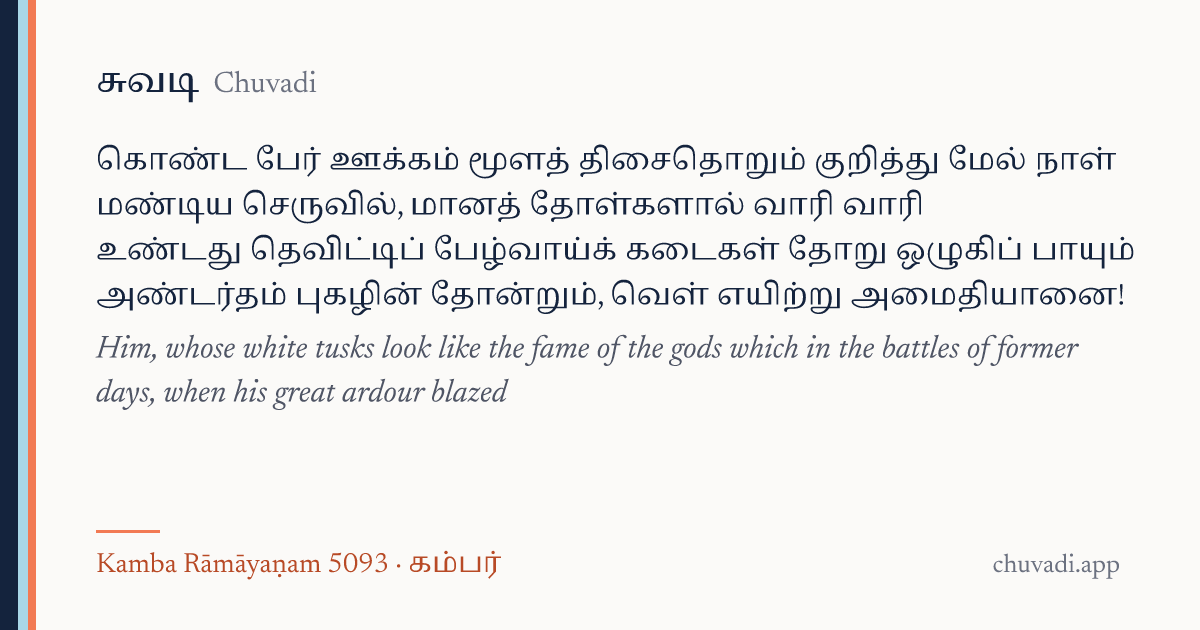
- Him, whose white tusks look like the fame of the gods
- which in the battles of former days, when his great ardour blazed
- and he set out against every quarter, he scooped up again and again with his proud arms
- and devoured, till, glutted, it ran out and spilled from every corner of his wide mouth!
What the poem says
The metre changes. Aṉumaṉ studies Irāvaṇaṉ's face, and the poet gives a bold image for his gleaming white fangs.
In Indian poetry fame is white. In his past campaigns Irāvaṇaṉ conquered every direction and swallowed up the fame of the gods, scooping it into his mouth by the handful. He took in so much that he is glutted, and it spills out of the corners of his huge mouth: those white tusks are the gods' stolen glory.