



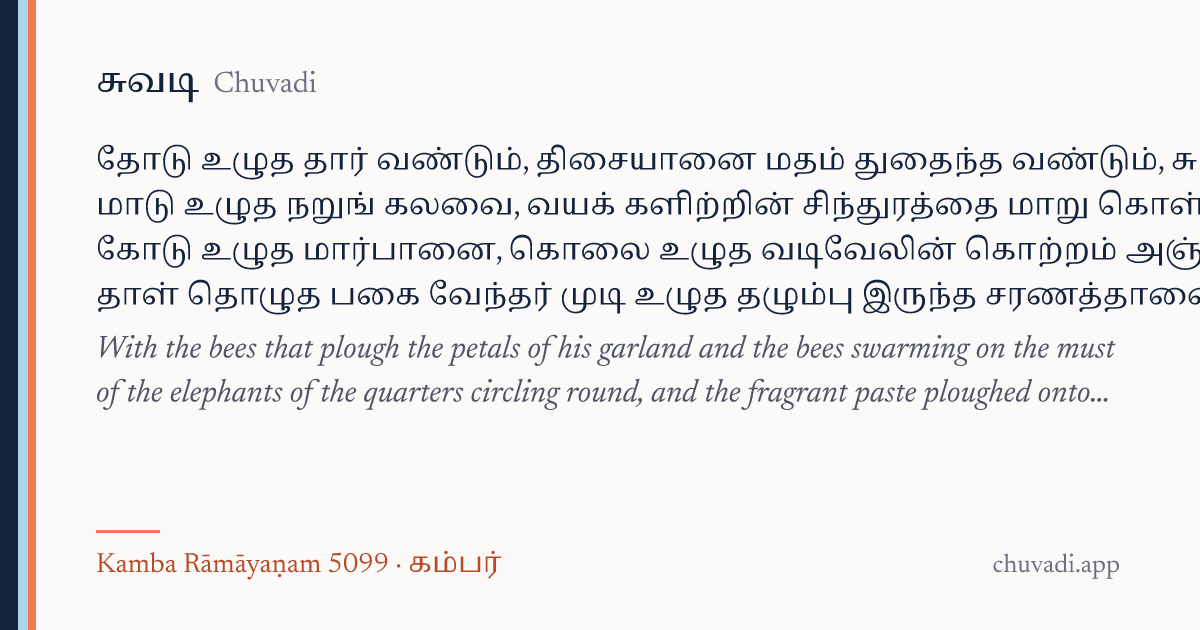
கம்பராமாயணம் 5099 · சுந்தர 3.217
பாடல் · The poem
Tap a word to see its gloss in the commentary and where else it occurs.
பாட வேறுபாடு · Project Madurai reads
பொருள் · Meaning in Tamil
தார் - (இராவணன் அணிந்த) மாலையில் உள்ள; தோடு உழுத - இதழ்களைக் கிண்டுகின்ற; வண்டும் - வண்டுகளும்; திசையானை - திக்குகளில் இருக்கும் யானையின்; மதம் துதைந்த - மதத்தில் மொய்த்த; வண்டும் - வண்டுகளும்; சுற்றி - இங்கும் அங்குமாகச் சுழன்று; மாடு - (இராவணனின்) மார்பில்; உழுத - பூசப்பெற்ற; நறுங்கலவை - நறுமணமிக்க கலவைச் சந்தனம்; வயக்களிற்றின் - வெற்றிமிக்க திக்குயானைகளின்; சிந்துரத்தை - (நெற்றியிலணிந்த) சிந்தூர திலகத்தோடு; மாறுகொள்ள - மாறுபாட்டைப் பெறவும் (நிகழ்ந்த போரில்); கோடு - திக்கு யானைகளின் கொம்புகளால்; உழுத - உழப்பெற்ற; மார்பானை - மார்பை உடையவனை; கொலை உழுத - கொல்லுதலாகிய உழவுத்தொழில் செய்த; வடி - கூர்மையான; வேலின் கொற்றம் அஞ்சி - வேலின் வலிமைக்குப் பயந்து; தாள் தொழுத - பாதத்தைக் கும்பிட்ட; பகை வேந்தர் - பகை அரசர்களின்; முடி உழுத - கிரீடத்தால் உழப்பெற்ற; தழும்பு இருந்த - தழும்புகள் தங்கியுள்ள; சரணத்தானை - பாதங்களையுடையவனை.
இராவணனுக்கும் யானைகட்கும் நிகழ்ந்த போர் இரண்டு அடிகளால் பேசப்பெற்றன. சிந்துரம் யானைத்திலகத்திற்கு உபயோகப்படும் சுண்ணம். ‘சிந்தூரத்திலக நுதல் சிந்துரத்தின் மருப் பொசித்த செங்கண் மாலே’ (வில்லிபாரதம் கிருட்டினன் தூது). சிந்துரம் என்பது யானையின் புகர் முகம் என்று பிங்கலம் பேசும். புகர்முகம் சிந்துரம் (பிங்கலம் 2440). வண்டு உழுத தோடு - வண்டுகள் கிளரும் மலர் இதழ். ‘அறுகால் உழுமலர்சேர் நீர்வஞ்சி’ (இரகுவம்சம் தசரதன் சாபம் 95).
இவ்விருத்தம் 4 காய்ச்சீரும் 2 மாச்சீரும் முறையே பெற்று வரும். இத்தகைய பாடல்கள் இந்நூலில் 132 காணப்படுகின்றன (மணிமலர் 70).
ஆங்கிலம் · English translationAI
Translation
- With the bees that plough the petals of his garland and the bees swarming on the must of the elephants of the quarters circling round,
- and the fragrant paste ploughed onto his chest clashing with the red sindūra of those mighty tuskers,
- him whose chest was ploughed by their tusks; and him whose feet bore scars ploughed by the crowns
- of enemy kings who bowed at his feet in fear of the might of his sharp, death-ploughing spear!
What the poem says
The metre changes again. The poet describes Irāvaṇaṉ's chest and feet with the repeated word 'ploughed'. In his battle with the elephants that guard the eight directions, their tusks furrowed his chest. Bees from his garland mix with bees drawn to the elephants' musth, and his sandal paste is smeared with the red sindūra from their foreheads.
His feet are scarred too, worn into furrows by the crowns of the many kings who bowed down before him in terror of his spear.