



கம்பராமாயணம் 5137 · சுந்தர 4.21
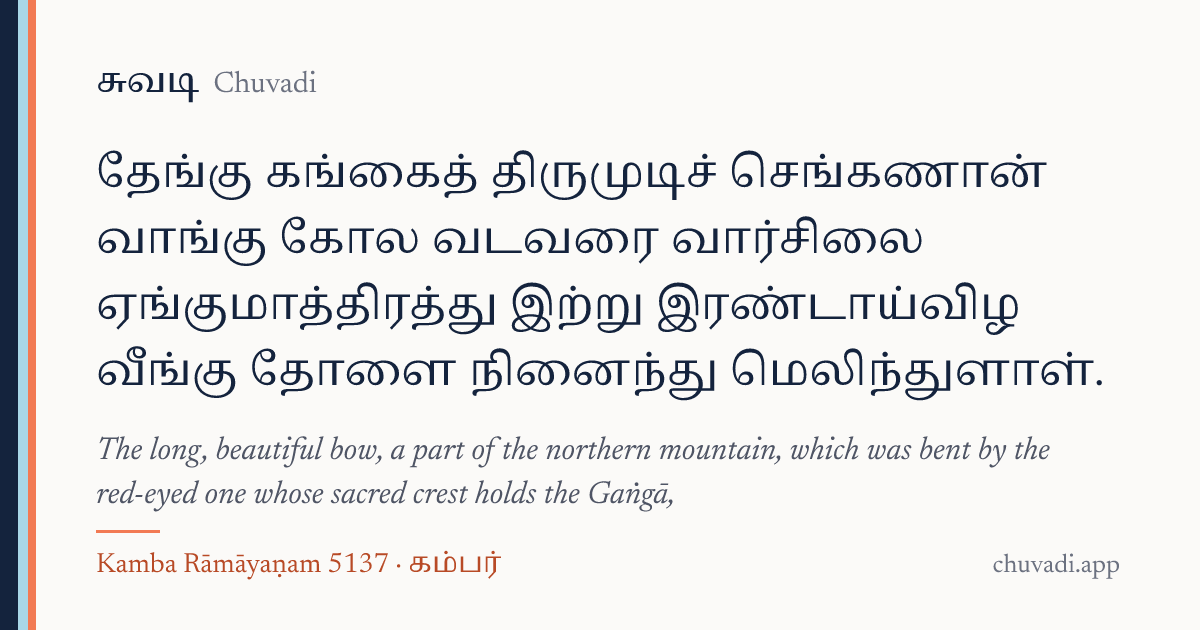
பாடல் · The poem
Tap a word to see its gloss in the commentary and where else it occurs.
பொருள் · Meaning in Tamil
ஏங்குமாத்திரத்து - (சனகன் முதலானோர் வில்லை வளைப்பானோ என்று) வருந்திய காலத்தில்; கங்கை தேங்கு திருமுடி - கங்கை தங்கிய சடையையும்; செங்கணான் - சிவந்த கண்களையும் பெற்ற சிவபிரான்; வாங்கும் - வளைத்த; கோல வடவரைவார்சிலை - அழகிய மேருமலையின் அம்சமாகிய நீண்ட வில்; இரண்டாய் இற்று விழ - இரண்டாக ஒடிந்து கீழே விழும்படி; வீங்கு தோளை - பூரித்த (இராமபிரானின்) தோள்களை; நினைந்து மெலிந்துளாள் - எண்ணி மனந் தளர்ந்தாள்.
தோள் வீங்கியதாலேயே வில் முறிந்தது. வில்லை நோக்கவும் வெந்தது வேலை என்னும் ஒற்றர் மொழியை உன்னுக (ஒற்றுக் கேள்வி 69) விழ என்னும் செய என்னும் வாய்ப்பாட்டு எச்சம் காரணப் பொருளில் வந்தது. வில் ஒடிந்ததால் தோள் வீங்கிற்று என்று கூறுவாரும் உளர். தகவு அறிக. சனகன் வேதனை தருகின்ற வில் என்பான் (கார்முகம் 11) இராமபிரான் வில் முறிப்பானோ மாட்டானோ என்று மிதிலை மகளிர் ஏங்கிய ஏக்கத்தைக் கார்முகப் படலம் பேசும் (கம்ப. 692 - 696) மெலிந்து (உள்) ஆள். உள் - துணை வினை. இதற்கு என்று தனிப்பொருள் இல்லை. “உள்” என்பதற்குத் தனிப் பொருள் செய்து இடர்ப்பாடுற்றோர் பலர். “நின்றிருந்தேன்” என்பது போலக் கொள்க.
ஆங்கிலம் · English translationAI
Translation
- The long, beautiful bow, a part of the northern mountain, which was bent
- by the red-eyed one whose sacred crest holds the Gaṅgā,
- broke in two and fell even while they were anxiously waiting:
- thinking of those swelling shoulders, she wasted away.
What the poem says
Cītai remembers the bow contest at Mithilā that won her hand. The great bow had once been bent by Civaṉ, the red-eyed god with the Gaṅgā in his hair, and it was said to be part of Mount Mēru. King Caṉakaṉ and the women of the city were anxiously wondering whether young Irāmaṉ could even bend it.
While they were still worrying, it snapped in two the moment his mighty shoulders took it up. Remembering those shoulders, she grows weak with longing.