



கம்பராமாயணம் 5143 · சுந்தர 4.27
பாடல் · The poem
Tap a word to see its gloss in the commentary and where else it occurs.
பாட வேறுபாடு · Project Madurai reads
பொருள் · Meaning in Tamil
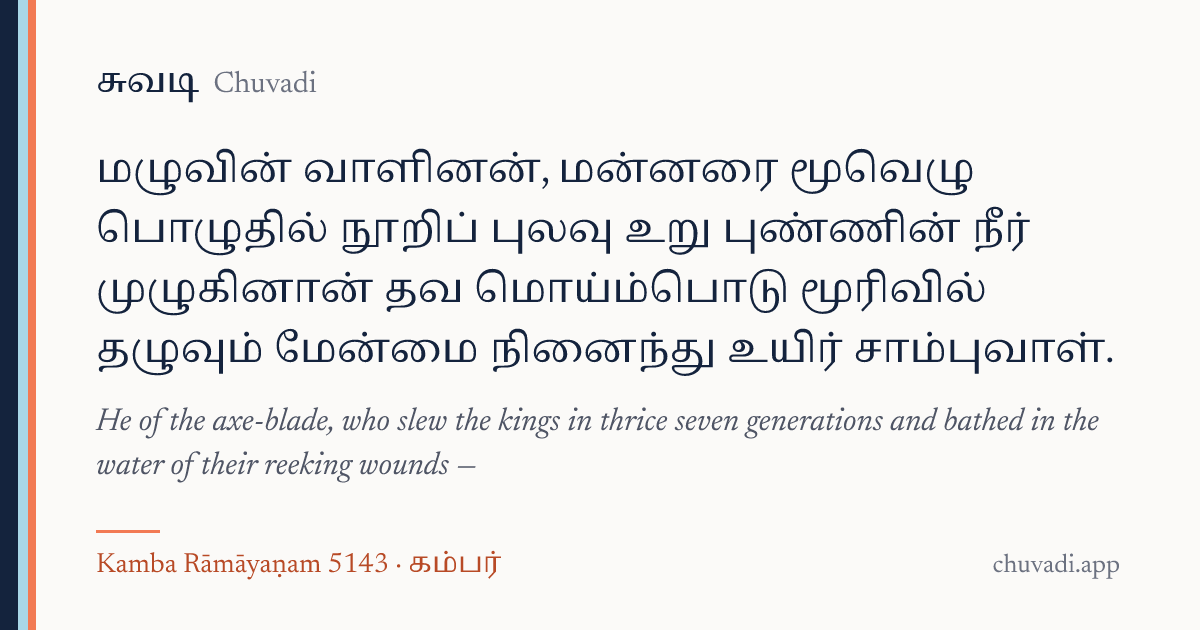
மன்னரை - அரசர்களை; மூவெழு பொழுதில் - இருபத்தொரு தலைமுறையில், நூறி - கொன்று; புலவு உறு புண்ணின் நீர் - புலால் கமழும் இரத்தத்தில்; முழுகினான் - நீராடிய; மழுவின் வாளினன் - மழுவாகிய ஆயுதம் ஏந்திய பரசுராமனின்; தவம் - தவத்தையும்; மொய்ம்பொடு - வலிமையையும், மூரிவில் - பெரிய வில்லையும்; தழுவும் மேன்மை - தழுவிக் கொண்ட சிறப்பை; நினைந்து - எண்ணி; உயிர்சாம்புவாள் - உயிர் வாடுவாள்.
மழுவின் வாளினன் - என்பதில் உள்ள இன் அசை காப்பு ஒப்பு என்று கூற வேண்டியதைக் காப்பின் ஒப்பின் என்று கூறினர் தொல்காப்பியர் (வேற்றுமை 117) மழுவாளியர் என்பாரும் உளர் 'மழுவாளவன் இழுக்கம்' - என்பது கம்பன் வாக்கு (கம்ப. 1354.) இன் என்பது உருபாயின் இடர்பட்டுப் பொருள் கொள்ள நேரும். வி.கோ. 'மழுவாயுதத்தை உடையவராய்' என்றே உரை கூறினார். மொய்ம்பொடு என்பதில் உள்ள 'ஒடு' தவம், மூரிவில் என்பவற்றுடன் சேர்க்கவும். மழுவின் வாளின் நன்மன்னரை என்று பிரித்துப் பொருள் கோடல் எளிது. வாளில் நன்மன்னரை நூறி முழுனெ பரசுராமன் என்றும் பொருள் தரும். அப்போது முழுகினான் - வினையால் அணையும் பெயர் முழுகினான் வாளினன் என்று இசையும், முழுகினான் என்னும் தெரிநிலைவினைமுற்று பெயரெச்சமாக வந்தது (நன் - புறனடை)
ஆங்கிலம் · English translationAI
Translation
- He of the axe-blade, who slew the kings in thrice seven
- generations and bathed in the water of their reeking wounds —
- his penance, together with his might and his great bow,
- her lord took to himself; thinking of that glory, her life wilts.
What the poem says
Cītai remembers Paracurāmaṉ, the axe-bearing warrior who had wiped out the ruling kings twenty-one times over and bathed in their blood. When he confronted Irāmaṉ on the road home from the wedding, Irāmaṉ took his great bow and with it his strength and the merit of his penance.
The recollection of her husband's might only makes her weaker with longing. The commentary discusses several ways of parsing the phrase 'of the axe-blade', none of which change the sense.