



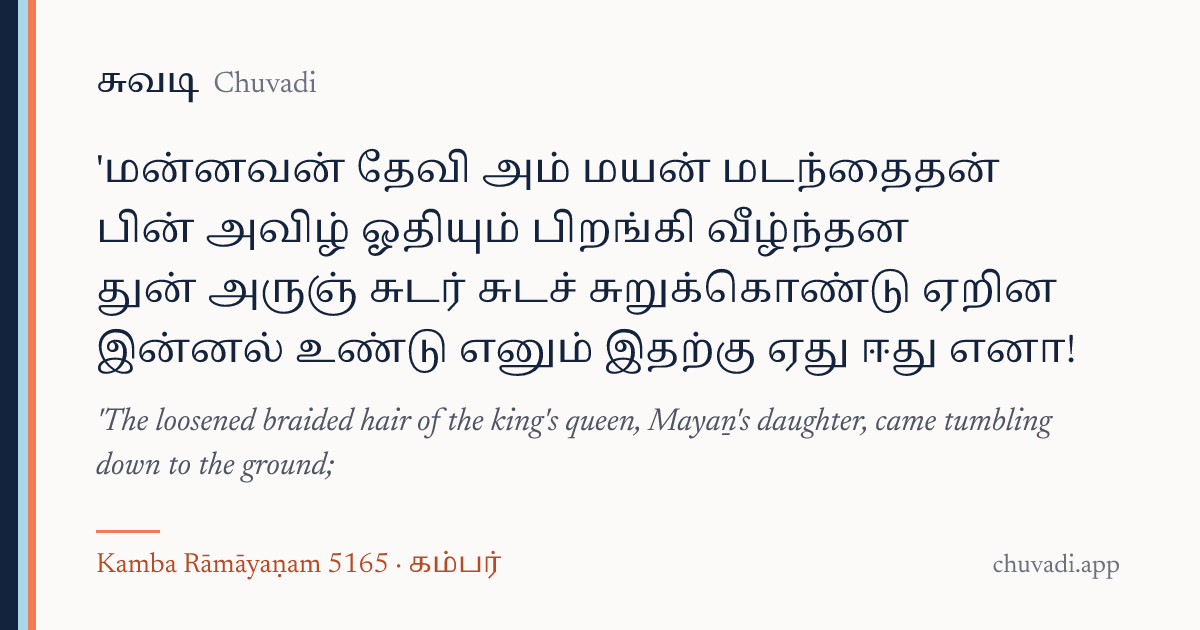
கம்பராமாயணம் 5165 · சுந்தர 4.49
பாடல் · The poem
Tap a word to see its gloss in the commentary and where else it occurs.
பொருள் · Meaning in Tamil
மன்னவன் தேவி - அரசனான இராவணனின் தேவியாகிய; அ மயன் மடந்தை தன் - அந்த மயனின் புதல்வியாகிய மண்டோதரியின்; அவிழ் பின் ஓதியும் - நெகிழ்ந்த பின்னலையுடைய கூந்தலும்; பிறங்கி வீழ்ந்தன - மாறுபட்டுப் பூமியில் விழுந்தன (அந்தக் கூந்தல்); துன் அரும் - நெருங்க முடியாத (வெப்பமான); சுடர் சுட - நெருப்புச் சுடுதலால்; சுறுக்கொண்டு ஏறின - சுறு நாற்றம் மிக்கன; இதற்கு ஏது ஈது - இந்த நிகழ்ச்சிக்கு ஏது வாசகம். இதுவே; இன்னல் உண்டு எனும் - (இராவணன் செய்த) துன்பம் மிகுதி; என்பதே எனா - என்பதேயாகும். என்று சொன்னாள்.
கொண்டு - அசை அன்றேல், சுறு நாற்றத்தைப் பரப்பிக் கொண்டு இருந்தன என்றும் கூறலாம். 'என்று கொண்டு இளையர் கூறி' ஏது - ஆராய்ச்சி. (கம்ப. 1605)
ஆங்கிலம் · English translationAI
Translation
- 'The loosened braided hair of the king's queen, Mayaṉ's daughter,
- came tumbling down to the ground;
- scorched by an unapproachable flame, it rose in a stench of singeing —
- and the reason for this is that grief is coming,' she said.
What the poem says
Tiricaṭai's dream turns to Maṇṭōtari, Irāvaṇaṉ's chief queen and daughter of the architect Mayaṉ. Her braided hair came loose and fell, and was scorched by a fierce fire until it gave off the smell of burning hair.
Loosened hair is the sign of a widow in mourning. Tiricaṭai draws the conclusion: all this means that calamity is coming.