



கம்பராமாயணம் 5166 · சுந்தர 4.50
பாடல் · The poem
Tap a word to see its gloss in the commentary and where else it occurs.
பாட வேறுபாடு · Project Madurai reads
பொருள் · Meaning in Tamil
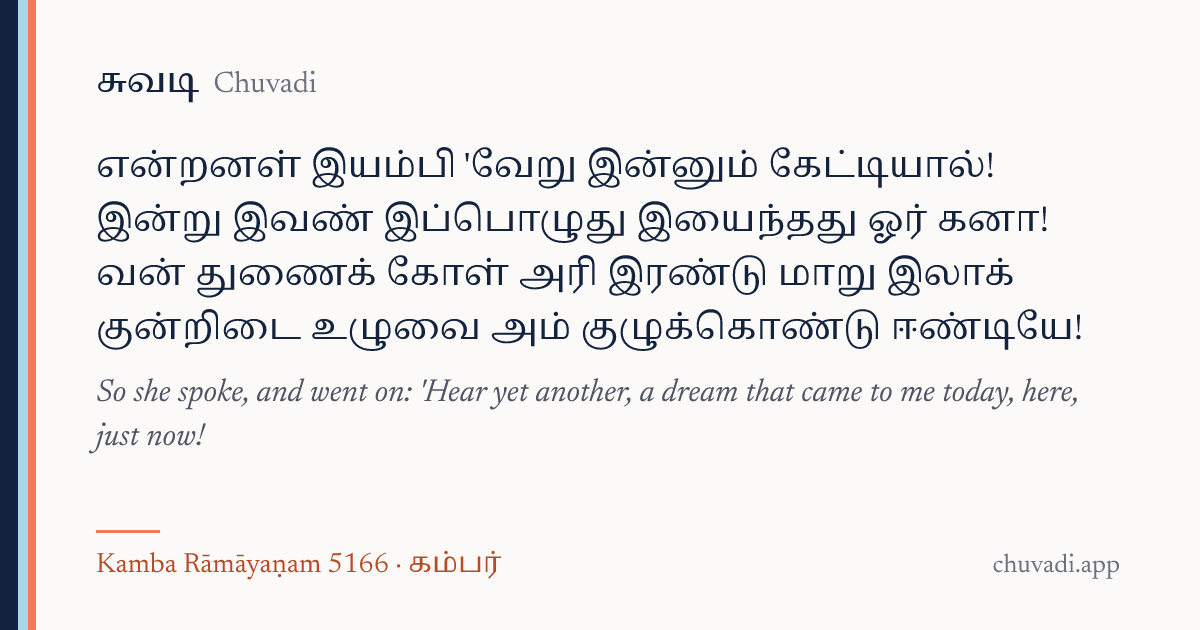
என்றனள் இயம்பி - என்று கூறி (திரிசடை), வேறு - வேறுபட்ட, ஓர் கனா, இன்னும் கேட்டி - ஒரு கனவுக் காட்சியை மேலும் கேள் (அக்காட்சி); இன்று இவண் இப்பொழுது - இன்றைத் தினத்தில் இவ்விடத்தில் இச்சமயத்தில்; இயைந்தது - உண்டாகியது; வன் - வலிமை மிக்க; துணை - ஒன்றற்கொன்று துணையாயிருக்கும், இரண்டு கோள் அரி - இரட்டைச் சிங்கங்கள்; குன்றிடை - மலையின் கண்ணே (இருந்த); மாறு இலா - தமக்குள் கருத்து வேறுபாடில்லாத; உழுவை குழுக் கொண்டு - புலிக்கூட்டத்தைத் துணையாகச் சேர்த்துக் கொண்டு; ஈண்டி - (இலங்கையில்) நெருங்கி.
இம் மண் உலகில்செல்வர் இப்போது இல்லை நோக்கினோம் (திருவாய் -3-96) என்ற இடத்தில் உலகில் செல்வர் இல்லை. இப்போதுநோக்கினோம் என்றுகூட்டிப் பொருள் செய்த நம்பிள்ளையை உள்ளுக. கவிதை கிடந்தபடியே பொருள் கொள்வதில் இடர்ப்பாடுகள் பலவுள.
ஆங்கிலம் · English translationAI
Translation
- So she spoke, and went on: 'Hear yet another,
- a dream that came to me today, here, just now!
- Two mighty lions, each the other's companion,
- gathered a band of tigers, loyal to them, from the hills, and drew close —'
What the poem says
Tiricaṭai tells a second dream, seen that very night. Two strong lions, inseparable companions, came down from the mountains with a pack of tigers who were wholly of one mind with them, and closed in.
The lions stand for Irāmaṉ and Ilakkuvaṉ, and the tigers for the monkey army. The sentence continues into the next verse; the commentary notes that, as with some old hymns, the words must be regrouped to make the sense run.