



கம்பராமாயணம் 517 · பால 9.51
பாடல் · The poem
Tap a word to see its gloss in the commentary and where else it occurs.
பாட வேறுபாடு · Project Madurai reads
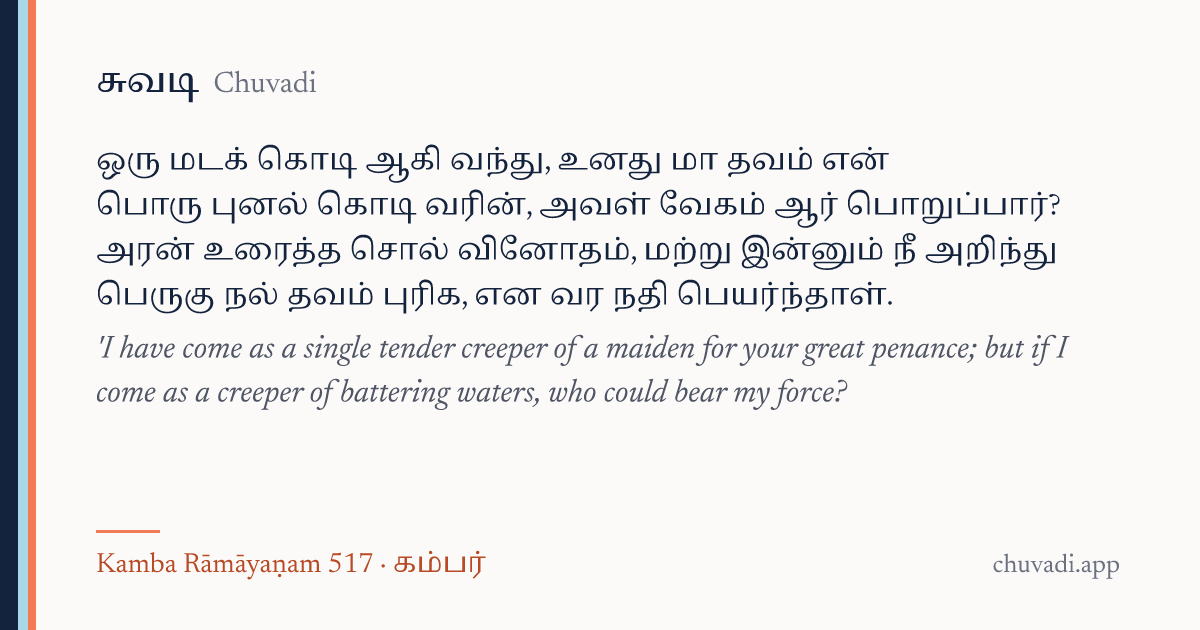
1ஒரு மடம் கொடி ஆகி வந்து, உனது மா தவத்து என்
பொரு புனல் கொடி வரின், அதன் வேகம் ஆர் பொறுப்பார்?
அரன் உரைத்த சொல் வினோதம், மற்று இன்னும் நீ அறிந்து
பெருகும் நல் தவம் புரிக, என வர நதி பெயர்ந்தாள்.
பொருள் · Meaning in Tamil
அரன் - ஊழிக் காலத்தில் எல்லா உயிர்களையும் அழிப்பவன்; எப்பொழுதும் தன்னைச் சரண் புகுந்தவர்களின் துயரை அழிப்பவன்; வரநதி - சிறந்த நதியான கங்கா தேவி.
பகீரதனது வழிபாட்டை ஏற்றுக் கொண்ட கங்காதேவி இந்தக் கங்கை மண்ணுலகம் வந்தால் அதன் வேகத்தைச் சிவனால் தாங்க முடியுமா என்பதை அறியுமாறு கேட்டாள் என்பது.
ஆங்கிலம் · English translationAI
Translation
- 'I have come as a single tender creeper of a maiden for your great penance; but if I
- come as a creeper of battering waters, who could bear my force?
- What Araṉ told you is a jest; learn more of this,
- and perform still greater penance,' said the noble river, and went away.
What the poem says
Gaṅgai appears to the king in the form of a slender young woman. She doubts that even Śiva can bear her force when she falls as a torrent, and she calls his promise a mere jest. She tells Pakīrataṉ to find out more and to do further penance. Araṉ (Hara) is Śiva, who destroys all at the end of an age and destroys the sorrow of those who take refuge in him.
ஒலிபெயர்ப்பு · Transliteration (ISO 15919)
1oru maṭak koṭi āki vantu, uṉatu mā tavam eṉ
poru puṉal koṭi variṉ, avaḷ vēkam ār poṟuppār?
araṉ uraitta col viṉōtam, maṟṟu iṉṉum nī aṟintu
peruku nal tavam purika, eṉa vara nati peyarntāḷ.