



கம்பராமாயணம் 5188 · சுந்தர 4.72
பாடல் · The poem
Tap a word to see its gloss in the commentary and where else it occurs.
பொருள் · Meaning in Tamil
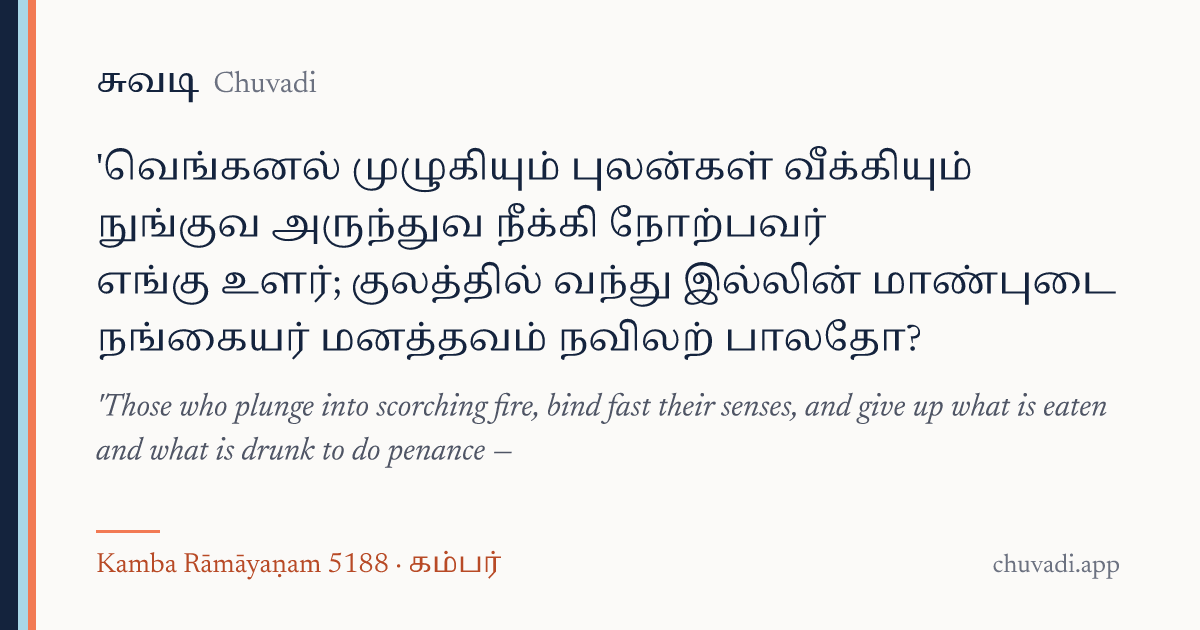
குலத்தின் வந்து - நல்ல குலத்திலே பிறந்து; இல்லின் மாண்புடை - இல்லறச் சிறப்பைப்பெற்ற; நங்கையர் மனத்தவம் - பெண்கள் மனத்தால் செய்யும் தவமானது; நவிலற் பாலதோ - நம்மால் கூறத்தக்க எளிமையானதா. (இம்மங்கையர்களுக்கு முன்); வெங்கனல் முழுகியும் - கொடிய (ஐந்துவித) நெருப்பில் குளித்தும்; புலன்கள் வீக்கியும் - (ஓடும்) ஐந்து புலன்களைக் கட்டியும்; நுங்குவ அருந்துவ - உண்ணும் உணவையும் பருகும் புனலையும்; நீக்கி - ஒதுக்கிவிட்டு; நோற்பவர் - தவம் செய்பவர்கள்; எங்குளர் - எங்கே இருக்கிறார்கள்.
கற்பு மகளிர்க்கு முனிவர்கள் ஒப்பாகார் என்க. எங்கே என்பது ஏற்றத் தாழ்வை உணர்த்தும் உலகச் சொல் 'அவன் எவரிடத்தான் யார் யார்' என்னும் ஆழ்வார் பாசுரம் கருதுக (5-1-7) நங்கையர் என்றது பிராட்டியை.
ஆங்கிலம் · English translationAI
Translation
- 'Those who plunge into scorching fire, bind fast their senses,
- and give up what is eaten and what is drunk to do penance —
- where do they stand? Can the penance of the heart
- of noble-born women, glory of their homes, even be told?'
What the poem says
Aṉumaṉ compares Cītai with the great ascetics who sit amid five fires, restrain their senses and give up food and water.
Such hermits are nowhere beside a chaste wife of noble family whose penance is carried in her heart. 'Where are they?' is an idiom meaning 'how can they compare?'. The 'women' here refers to Cītai herself.