



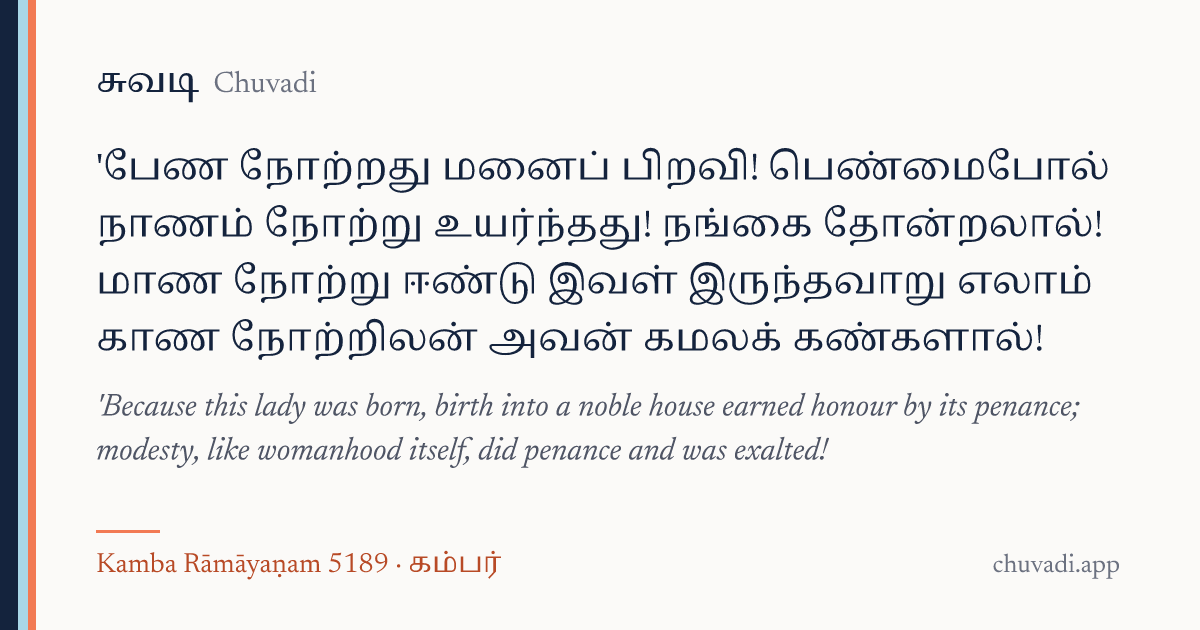
கம்பராமாயணம் 5189 · சுந்தர 4.73
பாடல் · The poem
Tap a word to see its gloss in the commentary and where else it occurs.
பொருள் · Meaning in Tamil
நங்கை தோன்றலால் - பிராட்டி உலகில் அவதரித்ததால்; மனைப் பிறவி - உயர்ந்த குலப்பிறப்பானது; பேண - மற்றவர்கள் மதிக்கும் படி; நோற்றது - தவம் செய்தது; பெண்மை போல் - பெண் தன்மையைப் போல; நாணம் - (மகளிரின்) நாணமானது; நோற்று உயர்ந்தது - தவஞ்செய்து சிறப்பைப் பெற்றது (ஆனால்); ஈண்டு - இந்த இலங்கையில்; இவள் - இந்தப் பிராட்டி; மாண நோற்று - மாண்படையத் தவம் செய்து (கற்பைக் காத்து); இருந்த ஆறு எலாம் - இருந்த பண்பின் முழுமையையும்; அவன் - அந்த இராமபிரான்; கமலக் கண்களால் - தாமரைபோன்ற கண்களினாலே, காண நோற்றிலன் - காண்பதற்குத் தவம் செய்தானில்லையே.
கமலக் கண்களே காண நோற்றில என்னும் பாடம் சிறக்கும் போலும். பிராட்டியின் தொடர்புடைய மனைப் பிறவி முதலானவை உயர்ந்தன ஆனால் இராவணனுடன் வாழும் கண்கள் தவம் செய்யவில்லையே என்னும் பொருள் நன்று போலும். கமலக் கண்கள் நோற்றில என்பதில் அருமைப்பாடுள்ளது. திறனாய்வுப் புயலில் இது சிதையினும் சிதையும் இது கம்ப சூத்திரம். நான் காண நோற்றேன் என்ற அநுமன் பெருமிதம் உள்ளுறை.
ஆங்கிலம் · English translationAI
Translation
- 'Because this lady was born, birth into a noble house earned honour by its penance;
- modesty, like womanhood itself, did penance and was exalted!
- Yet all the ways in which she has lived here, doing such great penance,
- he has not earned the merit to see with his lotus eyes!'
What the poem says
Aṉumaṉ says that Cītai's birth has lifted the very ideas of noble family, womanhood and modesty, as though each had performed austerities to be honoured by her.
Yet Irāmaṉ, of all people, has not been granted the fortune of seeing with his own eyes how heroically she has kept her vow here. Beneath the words lies Aṉumaṉ's quiet pride that he himself has been so blessed. The commentary calls the line a characteristic Kampaṉ subtlety.