



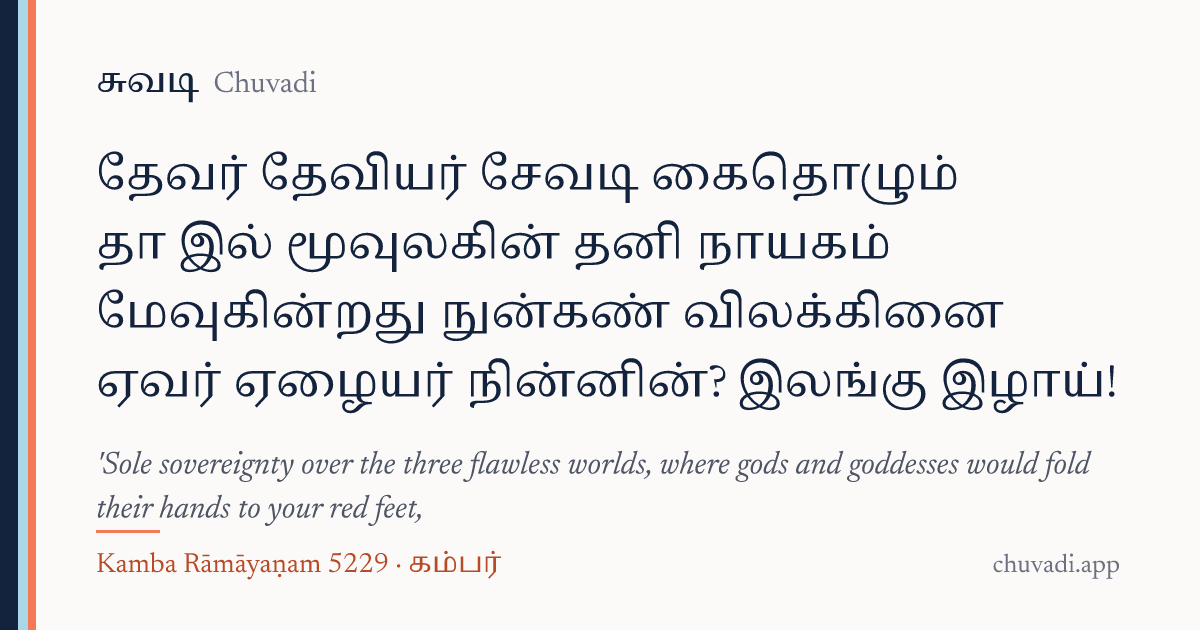
கம்பராமாயணம் 5229 · சுந்தர 4.113
பாடல் · The poem
Tap a word to see its gloss in the commentary and where else it occurs.
பாட வேறுபாடு · Project Madurai reads
பொருள் · Meaning in Tamil
இலங்கிழாய்! - விளக்கமான ஆபரணம் அணிந்த பெண்ணே; தேவர் - தேவர்களும்; தேவியர் - தெய்வப் பெண்களும்; சேவடி கை தொழும் - உன் சிவந்த அடிகளைக் கை கூப்பி வணங்கும்படியான; தாவு இல் - அழிவு இல்லாத; மூ உலகின் - மூன்று உலகங்களின்; தனி நாயகம் - ஒப்பற்ற தலைமைப் பதவி; நுன்கண் மேவுகின்றது - உன்பால் வந்து சேர்கின்றது; விலக்கினை - அதனை ஒதுக்கி விட்டாய்; நின்னின் - உன்னைப் போல; ஏழையர் - அறிவற்றவர்கள்; ஏவர் - யாவர்.
நாயகம் - தலைமைப் பதவி. மூவுலகுக்கும் தரும் ஒரு நாயகமே (திருவாய்மொழி - 3.10.11) தாவு - அழிவு தாவா நல்லறம் (சிலம்பு 30;125) ஏழை - அறிவற்றவர் 'ஏமுற்றவரினும் ஏழை..... பகை கொள்பவன்' (குறள் 873)
ஆங்கிலம் · English translationAI
Translation
- 'Sole sovereignty over the three flawless worlds,
- where gods and goddesses would fold their hands to your red feet,
- comes to you of its own accord, and you push it away!
- Who could be more foolish than you, O lady of shining jewels?'
What the poem says
Irāvaṇaṉ ends this part of his plea by calling Cītai a fool. Supreme queenship over the three imperishable worlds, with gods and goddesses worshipping at her feet, is hers for the taking, and she rejects it.
The commentary cites a Kuṟaḷ couplet on the folly of making enemies, which turns the charge back on Irāvaṇaṉ.