



கம்பராமாயணம் 5238 · சுந்தர 4.122
பாடல் · The poem
Tap a word to see its gloss in the commentary and where else it occurs.
பொருள் · Meaning in Tamil
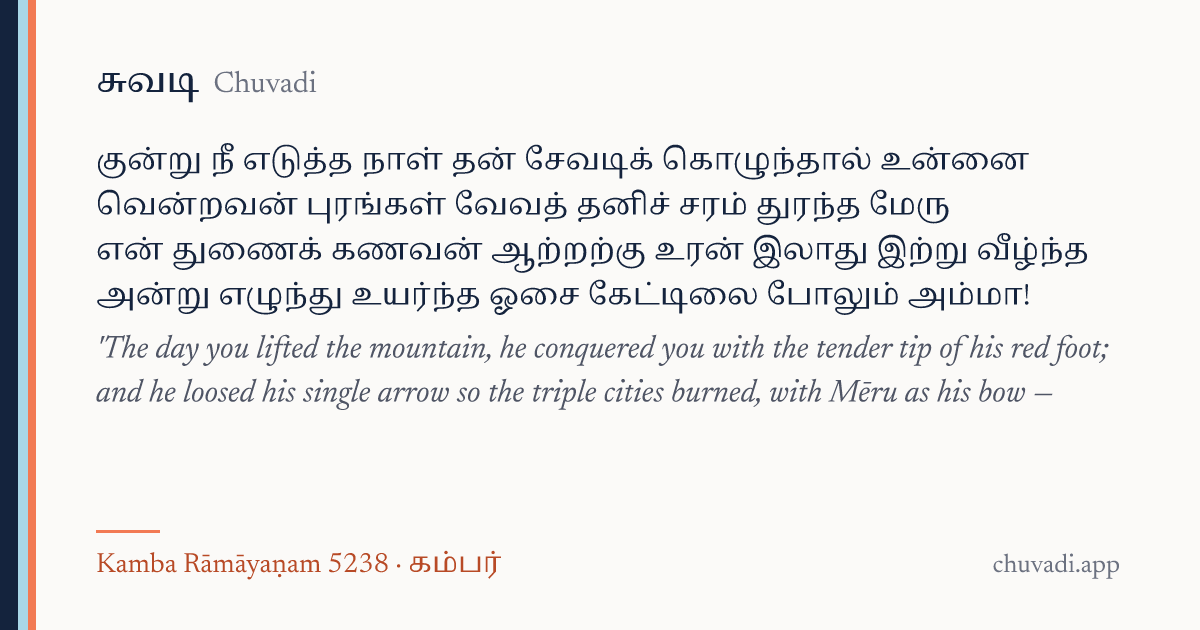
நீ குன்று எடுத்தநாள் - நீ கயிலாய மலையைப் பெயர்த்த அந்தக் காலத்தில்; தன் சேவடிக் கொழுந்தால் - தன்னுடைய திருவடியின் கொழுந்து போலும் விரலால்; உன்னை வென்றவன் - உன்னை அடக்கிய சிவபெருமான்; புரங்கள் வேவ - முப்புரங்கள் வெந்து போக; தனிச்சரம் துரந்த - ஒப்பற்ற அம்பை ஏவிய; மேரு - மகா மேரு மலையாகிய வில்; என் துணைக் கணவன் ஆற்றற்கு - என்னுடைய ஆதாரமான தலைவனின் வலிமைக்கு; உரன் இலாது - ஈடு கொடுக்கும் வலிமை இல்லாமல்; இற்று வீழ்ந்த அன்று - ஒடிந்து வீழ்ந்த அக்காலத்தில்; எழுந்து உயர்ந்த ஓசை - தோன்றிப் பெருகிய ஒலியை; கேட்டிலை போலும் - கேட்கவில்லையோ (இது.
வெல்லுதல் - அடக்குதல். இராமன் இருக்குமிடம் அயோத்தி. அதுபோல் சிவபிரான் பற்றிய வில் எல்லாம் மேரு. சிவபிரானுக்கு முறியாத வில் இராமன் பற்ற முறிந்தது. இறைவன் வில்லே முறிந்தது என்றால் நீ அவன் முன் பொடிப் பொடியாவாய் என்பது குறிப்பெச்சம். இதனை வடநூலார் 'தொனி' என்பர் (புறம் 1]. குறள் 1090) அம்மா - வியப்படைச் சொல்.
ஆங்கிலம் · English translationAI
Translation
- 'The day you lifted the mountain, he conquered you with the tender tip of his red foot;
- and he loosed his single arrow so the triple cities burned, with Mēru as his bow —
- when that bow, with no strength to bear my husband's might,
- snapped and fell, did you not hear the roar that rose up? How strange!'
What the poem says
Cītai recalls two stories. When Irāvaṇaṉ tried to lift Mount Kailāsam, Civaṉ pinned him under it with the tip of one toe. Civaṉ's bow, the one he used to burn the three flying cities, is called Mēru here.
That very bow could not withstand Irāmaṉ's strength and broke when he strung it at Cītai's bridal contest in Mitilai. Did Irāvaṇaṉ not hear the deafening crack? If the god's own bow broke in Irāmaṉ's hands, Irāvaṇaṉ will be crushed to powder.