



கம்பராமாயணம் 5243 · சுந்தர 4.127
பாடல் · The poem
Tap a word to see its gloss in the commentary and where else it occurs.
பாட வேறுபாடு · Project Madurai reads
பொருள் · Meaning in Tamil
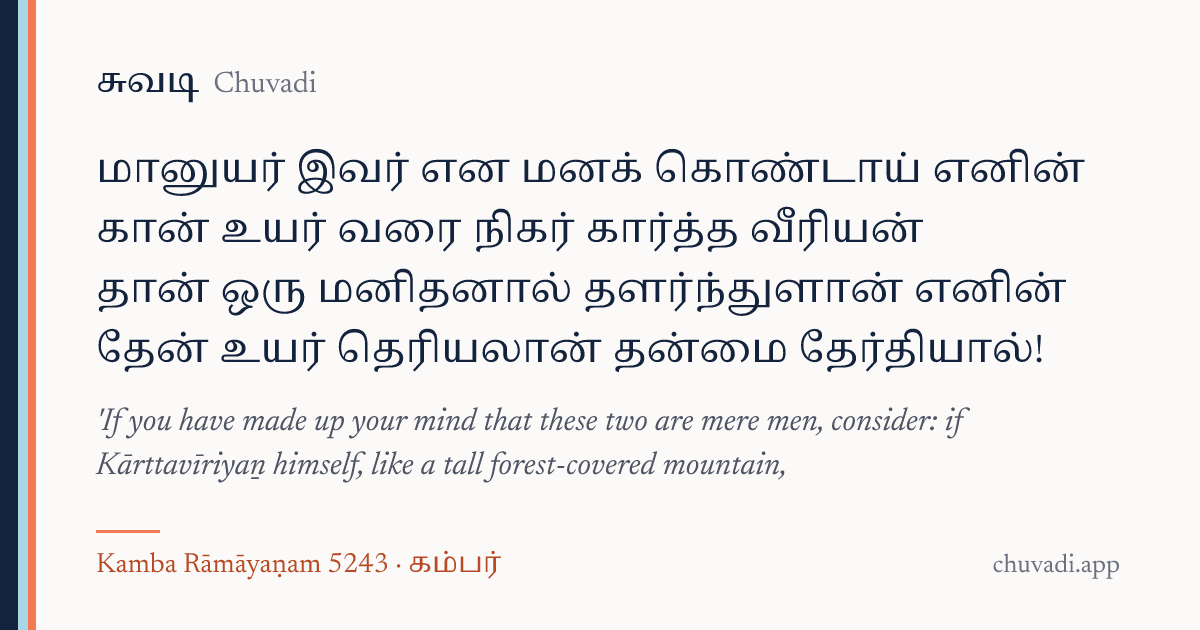
இவர் - இந்த இராமலக்குவர்கள்; மானுயர் என - மனிதர் தானே (வெல்லலாம்) என்று; மனக் கொண்டாய் எனின் - நீ மனத்தில் எண்ணினால் (அது தவறு); கான் உயர் - காடுகளால் உயர்வு பெற்ற; வரை நிகர் - மலையை ஒத்த; கார்த்த வீரியன்தான் - கார்த்த வீரியார்ச்சுனனே; ஒருமனிதனால் - ஒரு மனிதன் ஆகிய பரசுராமனால்; தளர்ந்துளான் எனின் - தோல்வி அடைந்து அழிந்தான் என்றால்; (உன்னை அடக்கிய) தேன் உயர் - தேனாற் சிறப்புப் பெற்ற; தெரியலான் - மாலையணிந்த இராமனின்; தன்மை - இயல்பை; தேர்தி - அறிக.
நான் புலத்தியன் மரபினன். இராமலக்குவர்கள் மனிதர்கள். தவம் செய்பவர்கள் என்று இராவணன் கருதினான். பிராட்டி, உன்னை வாட்டியவர்களில் ஒருவன் மனிதன்; மற்றொருவன் தவசி என்று கூறினாள். இப்படி ஒரு மெய்ப் பொருளை அண்ணாமலைப் பதிப்பு துலக்கிற்று. தான் ஒரு மனிதனால் - என்பதில் உள்ள 'தான்' என்பது உரை அசை - தேர்தியால் - ஆல் - அசை. மானுயர் - மனிதர். சிறு மானுயர் தம்மை என்றான் (நீலகேசி 406)
ஆங்கிலம் · English translationAI
Translation
- 'If you have made up your mind that these two are mere men,
- consider: if Kārttavīriyaṉ himself, like a tall forest-covered mountain,
- was laid low by one man,
- then judge the nature of him who wears the honey-rich garland!'
What the poem says
Cītai answers Irāvaṇaṉ's contempt for Irāmaṉ and Ilakkuvaṉ as mere humans. Kārttavīriyaṉ, the thousand-armed king who once defeated and imprisoned Irāvaṇaṉ himself, was destroyed by a single man, Paracurāmaṉ.
And Paracurāmaṉ was in turn humbled by Irāmaṉ. So Irāvaṇaṉ had better consider what kind of being Irāmaṉ is. The commentary notes the barb: of those who have shamed Irāvaṇaṉ, one was a man and the other an ascetic.