



கம்பராமாயணம் 5261 · சுந்தர 4.145
பாடல் · The poem
Tap a word to see its gloss in the commentary and where else it occurs.
பாட வேறுபாடு · Project Madurai reads
பொருள் · Meaning in Tamil
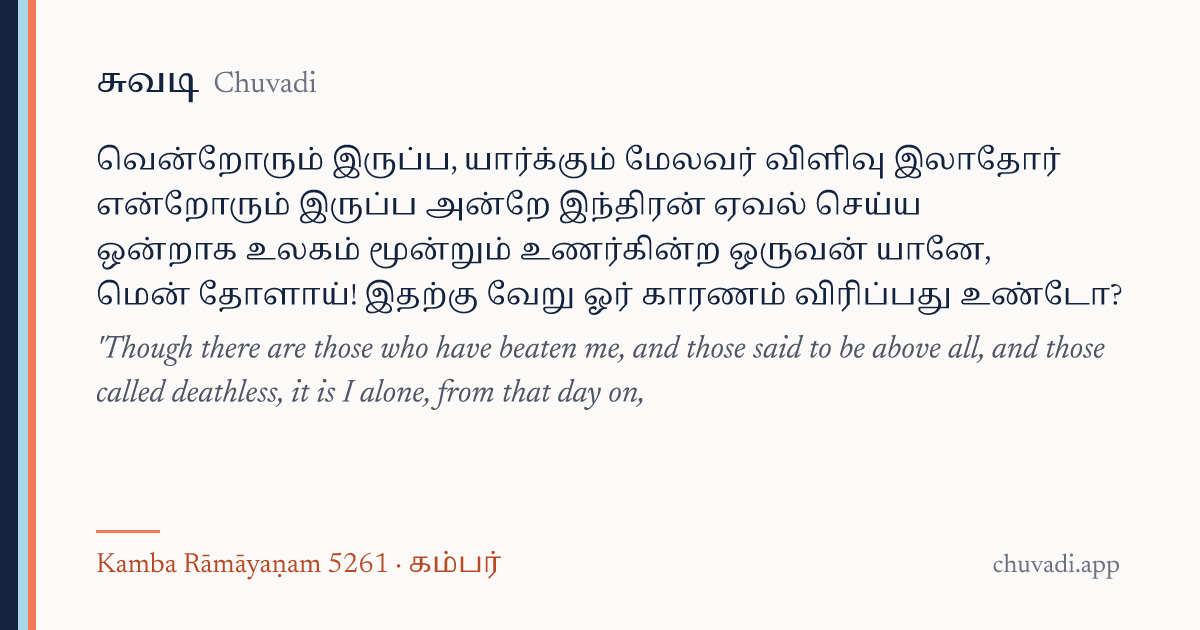
மென் தோளாய்! - மெல்லிய தோளையுடையவளே; வென்றோரும் இருப்ப - என்னை வென்ற வாலி முதலானோர் இருக்கவும்; யார்க்கும் மேலவர் - எவர்க்கும் மேலாய மும்மூர்த்திகளும்; விளிவு இலாதோர் என்றோரும் இருப்ப - அழிவற்றவர் என்று பேசப்படும் தேவர்களும் இருக்கவும்; அன்றே - அந்த நாளிலிருந்து; இந்திரன் ஏவல் செய்ய - இந்திரன் அடிமைப் பணி செய்ய; உலகம் மூன்றும் - மூன்று உலகங்களையும்; ஒன்றாக உணர்கின்ற - ஒரு சேர ஆட்சியுணர்வு செய்கின்ற; ஒருவன் - ஒப்பற்றவன்; யானே - யானே ஆவேன்; இதற்கு - இவ்வாறு யான் ஆள்வதற்கு வேறு ஓர் காரணம் - பிறிதொரு காரணத்தை, விரிப்பது உண்டா - விளக்கிக் கூறுவதற்குள்ளதா?
என்னினும் மேலானவர் இருப்பின் அவர்கள் என்னை அடக்கியிருக்கலாமே. அவ்வாறு நேராமையின் யானே பெரியவன் என்பது இராவணன் எண்ணம்.
ஆங்கிலம் · English translationAI
Translation
- 'Though there are those who have beaten me, and those said to be above all,
- and those called deathless, it is I alone, from that day on,
- who rule all three worlds as one, with Indiran doing my bidding —
- soft-shouldered one, is there any other reason that needs spelling out?'
What the poem says
Irāvaṇaṉ argues from his position. There are those who have beaten him, such as Vālī, there are the three supreme gods, and there are the immortal gods; yet he alone rules the three worlds with Indiran as his servant.
If anyone were really greater than he, they would have put him down long ago. That, to him, is proof enough of his supremacy.