



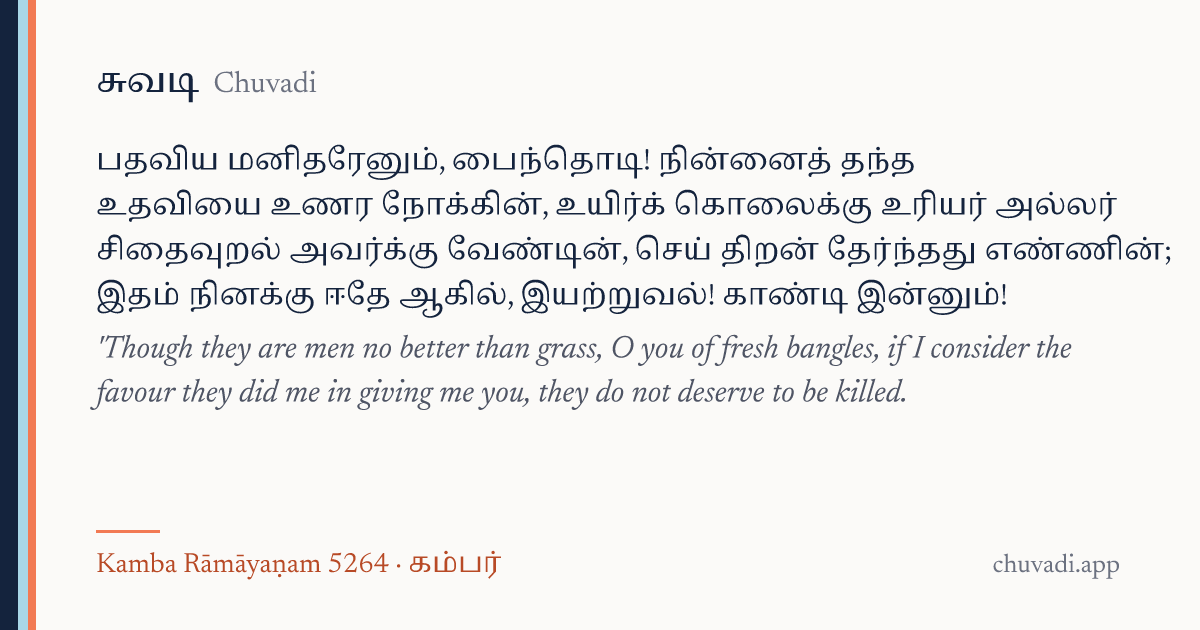
கம்பராமாயணம் 5264 · சுந்தர 4.148
பாடல் · The poem
Tap a word to see its gloss in the commentary and where else it occurs.
பாட வேறுபாடு · Project Madurai reads
பொருள் · Meaning in Tamil
பைந்தொடி - பசிய வளையல் அணிந்தவளே; (இராமலக்குவர்கள்) பதவு இயல் - புல்லின் இயல்பைப் பெற்ற; மனிதரேனும் - மனிதராக இருந்தாலும்; நின்னைத் தந்த - உன்னை எனக்குக் கொடுத்த; உதவியை - உபகாரத்தை; உணர நோக்கின் - சிந்தித்துப் பார்த்தால்; (அவர்கள்) உயிர்க் கொலைக்கு உரியர் அல்லர் - உயிரைக் கொல்வதற்குத் தக்கவராகார்; அவர்க்கு - அந்த இராமலக்குவர்க்கு; சிதைவு உறல் வேண்டின் - அழிவு வருதலை நீ விரும்பினால்; செய்திறன் - யான் செய்யும் உபாயம்; நேர்ந்தது எண்ணின் - உன்னால் ஏற்றுக்கொள்ளப்பட்டால்; நினக்கு - உனக்கு; ஈதே இதம் - இச்செயல் (கொல்லுதல்) நன்மை; ஆகின் - ஆனால், (அச் செயலை) இன்னும் - இப்போதே; இயற்றுவன் - செய்வேன்.
புல் போன்ற மனிதர்கள்; அவர்களைக் கொல்வது எளிது. என்றாலும் நன்றியால் கொல்லேன் என்பது இராவணன் பண்பு. பதவு இயல் - பதவியல் - பதவு - புல். நல்வேறு செங்கோற் பதவின் வார் குரல் கறிக்கும் (குறுந்தொகை 363) இராமலக்குவர்களை, முன்பாட்டில் பசு என்றான். இப்பாட்டில் அதனால் மேயப்படும் புல் என்றான் - உண்பதும், உண்ணப்படுவதும் பிரமம் என்னும் கொள்கை அவன் அறியாமல் வந்தது போலும். சீதையே உனக்கு விருப்பம் இருப்பின் அவர்களைக் கொல்வேன் என்பது இராவணாகாரம். கணவனைக் கொன்று மனையாளை அடையும் பண்பு பாலைப்பண்பு விரிப்பின் பெருகும் தொகுப்பின் குறுகும். திறன் - உபாயம். 'உய்திறம் இல்லை என்று உயிர்ப்பு வீங்கினார்' (கம்ப. 190)
ஆங்கிலம் · English translationAI
Translation
- 'Though they are men no better than grass, O you of fresh bangles,
- if I consider the favour they did me in giving me you, they do not deserve to be killed.
- But if you want them destroyed, and you agree to the way I would do it,
- if that is what pleases you, I will do it — you shall see, even now!'
What the poem says
Irāvaṇaṉ, with mock generosity, says the brothers are as worthless as grass, but he owes them a debt of gratitude: by leaving her unguarded, they 'gave' her to him, so he will spare their lives.
But if Cītai wants them destroyed, he will do it at once. In the previous verse he called them cattle; now they are the grass cattle eat, and the commentary sees an unwitting echo of the teaching that eater and eaten are both Brahman.