



கம்பராமாயணம் 5274 · சுந்தர 4.158
பாடல் · The poem
Tap a word to see its gloss in the commentary and where else it occurs.
பொருள் · Meaning in Tamil
இன்னோரன்ன - இப்படிப்பட்ட அவலங்கள்; எய்திய காலத்து - (பிராட்டிக்கு) வந்த சமயத்தில்; இடை நின்றாள் - (அரக்கிகட்கும் பிராட்டிக்கும்) நடுவிலிருந்த திரிசடை (பிராட்டியை நோக்கி); அம்மா - தாயே; கண்ட கனாவின் முடிவு - அறித கனவின் முடிவை; முன்னே சொன்னேன் - முன்பு கூறினேன்; பின்னே - மறுபடியும்; வாளா - வீணாக; பேதுறுவீரேல்- மனங்கலங்கினால்; பிழை என்றாள் - குற்றம் என்று கூறினாள் (அப்போதுபிராட்டி); அன்னே - தாயே; நன்று - நீ கூறியது நல்லது; என்றாள் - என்றுகூறித் தேறினாள் (இம்மொழி கேட்ட); அவரெல்லாம் - வருத்திய அந்தஅரக்கிகள்; அவிவுற்றார் - அடங்கினார்கள்.
திரிசடை கனவுகண்டதாகக் கூறியதைக் கேட்ட அரக்கிமார்கள் ஏதோ நம் அறியாததொன்று உள்ளது என்று யூகித்தறிந்து அமைதி பெற்றனர் திரிசடை பிராட்டியின்பால் கனவுச் செய்தியைக் கூறியபோது அரக்கிகள் துயின்றனர் ஆதலின் இப்போது திரிசடை மொழியிலிருந்து அதை அறிந்தனர் என்க. திரிசடை முன்பு கனவின் இடையில் விழித்துக்கொண்டாள். அதன் முடிவைக் கூறு என்று பிராட்டி திரிசடையின்பால் பேசினாள் - திரிசடை உறங்கி முடிவைக் கூறினாள் போலும். “கனவின் முடிவு” என்னும் சொல் நாடக உத்தியை அடிப்படையாகக் கொண்டது.
ஆங்கிலம் · English translationAI
Translation
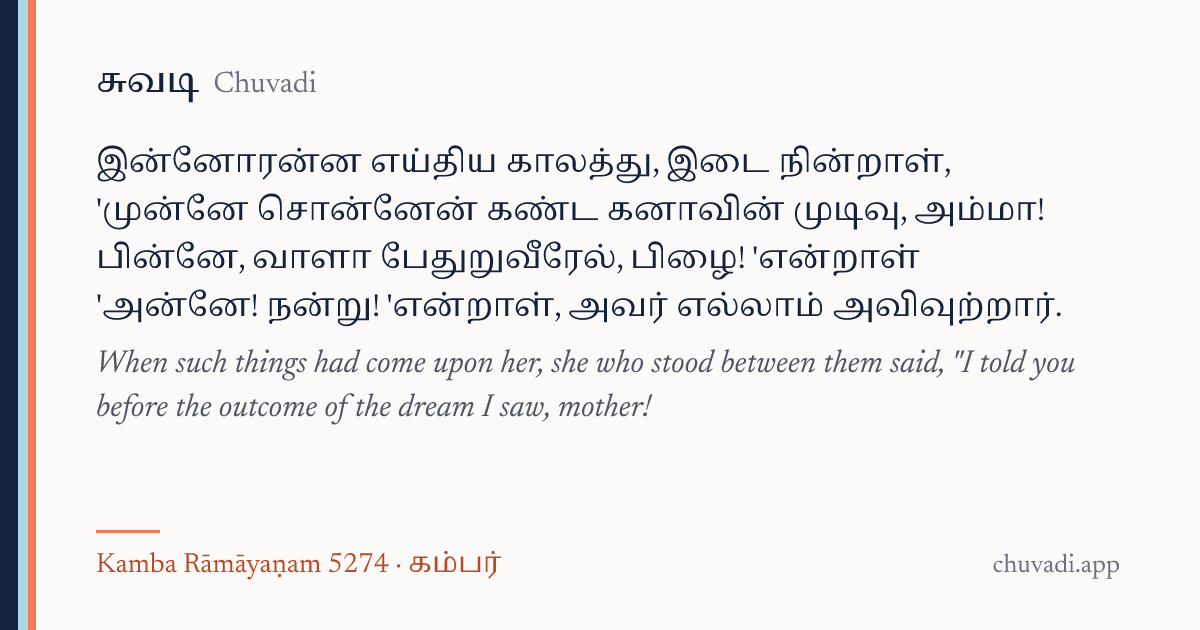
- When such things had come upon her, she who stood between them said,
- "I told you before the outcome of the dream I saw, mother!
- If after that you are troubled for nothing, it is wrong."
- "Mother, it is well," said she, and all the others fell quiet.
What the poem says
Tiricaṭai, the kindly daughter of Vīṭaṇaṉ who stands between the guards and Cītai, steps in. She reminds Cītai that she has already told her how her dream turned out, a dream that foretold the demons' ruin, so it is wrong to give way to fear now.
Cītai takes comfort and answers, 'Mother, it is well.' Hearing talk of a dream, the guards sense that something is going on that they do not know about, and they fall silent. The commentary notes that the dream's 'outcome' works as a dramatic device.