



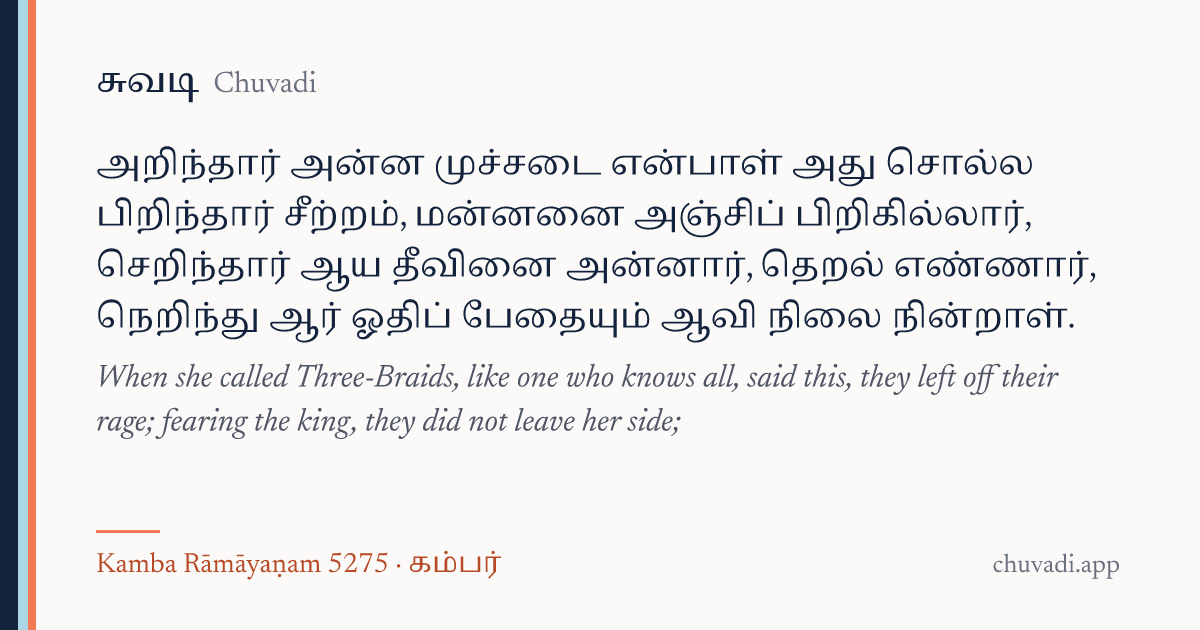
கம்பராமாயணம் 5275 · சுந்தர 4.159
பாடல் · The poem
Tap a word to see its gloss in the commentary and where else it occurs.
பொருள் · Meaning in Tamil
அறிந்தார் அன்ன - முக்காலமும் அறிந்தவரை ஒத்த; முச்சடை என்பாள் - திரிசடை என்பவள்; அது சொல்ல - அம்மொழியைக்கூற; மன்னனை அஞ்சிப் பிரிகில்லார் - அரசனுக்காகப் பயப்பட்டு சீதையை விட்டுப் பிரியாத அரக்கிகள்; சீற்றம் பிரிந்தார் - கோபத்திலிருந்து விலகினர்; ஆய தீவினை அன்னார் - அந்த தீவினைபோலும் அரக்கிகள்; தெறல் எண்ணார்- துன்புறுத்த நினையாமல், செறிந்தார் - அடங்கியிருந்தனர்; நெறிந்து ஆர் ஓதி - சுருண்ட கூந்தலையுடைய; பேதையும் - பிராட்டியும்; ஆவி நிலை நின்றாள் - உயிர் நிலைக்கப் பெற்றாள்.
அறிந்தார் -முக்காலமும் அறிந்த ஞானிகள் மன்னனை அஞ்சிப் பிரியாதார், சீற்றம் பிரிந்தார். தீவினை அன்னார் தெறல் எண்ணார் செறிந்தார், பேதையும் ஆவி நிலை நின்றாள் என்று கூறுக. திரிசடையைத் தமிழாக்கி முச்சடை என்றான்.
ஆங்கிலம் · English translationAI
Translation
- When she called Three-Braids, like one who knows all, said this,
- they left off their rage; fearing the king, they did not leave her side;
- those who were like evil karma itself stayed close, no longer thinking to harm her;
- and the simple girl with dense curling hair held on to life.
What the poem says
Tiricaṭai speaks like a seer who knows past, present and future. Her words calm the guards. Out of fear of Irāvaṇaṉ they do not leave Cītai's side, but they stop raging and no longer think of hurting her.
The guards are compared to evil deeds made flesh. Cītai, who had been close to despair, holds on to life. The poet renders the name Tiricaṭai, 'three braids', into pure Tamil as Muccaṭai. This verse closes the Episode of the Sighting.