



கம்பராமாயணம் 5278 · சுந்தர 5.3
பாடல் · The poem
Tap a word to see its gloss in the commentary and where else it occurs.
பாட வேறுபாடு · Project Madurai reads
பொருள் · Meaning in Tamil
இராமலக்குவர்பால் உள்ள வலிமையே !; கருமேகம் - கருத்த மேகமும்; நெடுங்கடல்- நெடுங்கடலும்; கா- சோலையும்; அனையான் - ஒத்த இராமபிரான்; தனியேன் - தனித்திருக்கும்; எனது ஆருயிர் - எனது (ஆருயிறை அரிய உயிரை; தருமே - எனக்குத் தருவாரா ?; உரும் ஏறு உறழ் - பேரிடி போன்ற; வெஞ்சிலை நாண் ஒலி - கொடிய வில்லின் ஒலியானது; வருமே - இலங்கைக்கு வருமா; உரையாய் - கூறுக.
இராமபிரானுக்குமேகம் முதலானவை உவமை. ஆழ்வார் கற்பகக் காவன நற்பெருந் தோளற்கு (திருவாய் 6.6.6) என்றார். அதைப்பின்பற்றி இராமபிரானைக் 'கா' என்றார். தேசிகன், இராமபிரானை, “நடையாடும் பாரிசாதம்” என்று ரகுவீரகத்தியத்தில் பேசினார் (தண்டகா தபோவந ஜங்கம பாரிஜாத) ஆருயிர்தான் ஒலிதான் - தான் உரை அசை. வலியார் விதியே - என்னும் பாடம் ஒதுக்கப்பட்டது. இராமனின் வில்லை நம்பியிருக்கும் பிராட்டி, விதியை அழைத்துப் பேசாள் என்பது சிலருடைய கருத்தாக இருக்கும். இவ்விருத்தம் மா- புளிமா - புளிமா - புளிமா - என்னும் நான்கு சீர்களைப் பெற்று வரும். இப்பாடல் நேரசையில் தொடங்கினால் // எழுத்தையும்நிரையசையில் தொடங்கினால் /2 எழுத்தையும் பெற்றுவரும். இப்பாடல்கள் இந்நூலில் 2/2 இடங்களில் காட்சி தருகின்றன.
ஆங்கிலம் · English translationAI
Translation
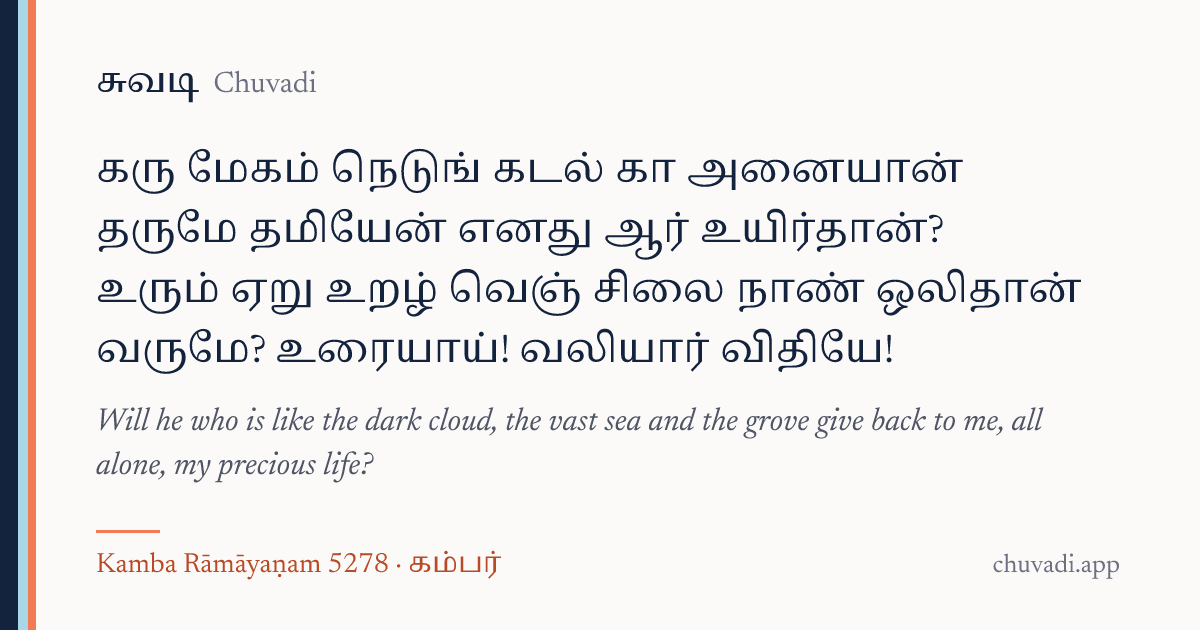
- Will he who is like the dark cloud, the vast sea and the grove
- give back to me, all alone, my precious life?
- Will the twang of his cruel bowstring, fierce as the thunderbolt,
- ever come here? Tell me, O fate of the mighty!
What the poem says
Cītai's lament begins in a new, shorter metre. She asks whether Irāmaṉ will come to give her back her life, and whether the thunder of his bowstring will ever be heard in Ilaṅkai.
Irāmaṉ is likened to a dark rain cloud, the deep sea and a grove: dark-hued, deep, and a shelter for those who come to him. The grove image follows a Vaiṣṇava saint's hymn, and a later poet called Irāmaṉ 'the wish-granting tree that walks'. The commentary notes that some prefer a reading in which Cītai calls not on fate but on the strength of Irāmaṉ and Ilakkuvaṉ, since she trusts his bow.