



கம்பராமாயணம் 5279 · சுந்தர 5.4
பாடல் · The poem
Tap a word to see its gloss in the commentary and where else it occurs.
பொருள் · Meaning in Tamil
கல்லா மதியே - (நன்மையைப்) பயின்று அறியாத சந்திரனே; கதிர்வாள் நிலவே - சூரியனின் ஒளியைப் பெற்ற நிலவே; செல்லா இரவே - கழியாத இராக்காலமே; சிறுகா இருளே - குறைவற்ற இருளே; எல்லாம் - நீங்கள் யாவரும்; எனையே முனிவீர்- தனித்துள்ள என்னையே சீறுகிறீர்; நினையா - என்னைக் கருதிப்பாராத; வில்லாளனை - வில்லேந்திய இராமபிரானை; யாதும் விளித்திலிர் - சிறிதும் கோபிக்கமாட்டீர்.
கல்லா - பயிலாத கல்லாமதியே என்பதில் உள்ள “கல்லா” என்பதை செய்யா என்னும் வாய்ப்பாட்டெச்சமாக்கிக் 'கற்றமதியே' எனப் பொருள் கோடலும் நன்று.
கல்லா இளைஞர்(பொருநர் - ஆற்றுப்படை 100) என்னும் தொடருக்கு இனியர் “முற்றக் கற்ற இளையர்” என்று பொருள் கூறினர் கல்லா என்பது செய்யா என்னும் எச்சம் என்றார். கற்ற சந்திரன், இப்படிச் செய்யலாமா என்றால் பொருள் சிறக்கும். மதியின் கல்வியைப் பற்றிப் பேச வேண்டா. அவன் வில்லைக்கண்டு அஞ்சினிரோ என்று குறிப்பிடுகின்றாள். இதுவும் அடுத்த பாடலும் ஒரு தொடர் ஓ. அசை.
ஆங்கிலம் · English translationAI
Translation
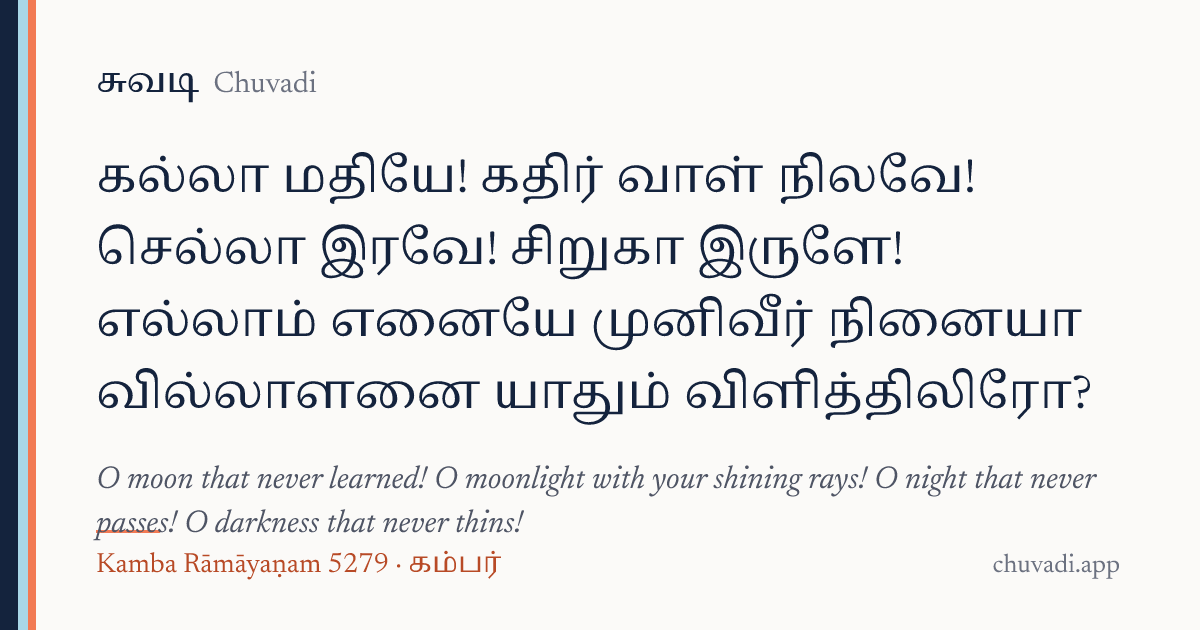
- O moon that never learned! O moonlight with your shining rays!
- O night that never passes! O darkness that never thins!
- All of you are angry only with me; have you said nothing at all
- to the bowman who does not think of me?
What the poem says
Cītai turns on the moon, the moonlight, the endless night and the darkness, the classic tormentors of a lover separated from her beloved. They vent their spite on her alone, she says, but never dare to challenge Irāmaṉ, the archer who seems to have forgotten her.
The hint is that they fear his bow. The commentary notes that 'the moon that never learned' can also be read as 'the moon that has learned', which sharpens the reproach: should a learned moon behave like this?